
Steering the cook’s dilemma of serving meat to vegetarians takes some finesse. You’ll want to gauge everyone’s dietary preferences beforehand. Offering creative meat alternatives like tofu tacos or cauliflower wings keeps everyone happy at the table. Balance flavors by mastering umami and use vibrant, seasonal ingredients for appeal. Open communication about dietary needs fosters inclusivity, making sure all guests feel valued. Discover how to enhance hospitality and create a welcoming atmosphere for every guest.
Understanding the Cook’s Dilemma in Dining
When you’re tasked with preparing a meal for a mixed group of diners, it can feel like walking a tightrope. Balancing the tastes and preferences of meat-lovers and vegetarians requires a keen understanding of dining etiquette and culinary diplomacy.
You want everyone to feel included and satisfied, but that often means managing complex dietary restrictions and personal choices.
Start by gauging your guests’ preferences—ask about any dietary restrictions ahead of time.
When planning the menu, consider offering dishes that highlight fresh vegetables and grains while keeping meat as a side option. This approach not only respects your vegetarian guests but also enhances the overall dining experience, ensuring that everyone feels valued and welcomed at the table. Engaging in shared experiences can also foster a sense of unity among diners, making the meal more enjoyable for all.
Creative Meat Alternatives for Vegetarian Guests

While it’s important to respect your vegetarian guests, you can easily create delicious meat alternatives that satisfy everyone.
Start with Tofu Tacos topped with fresh salsa for a zesty kick. Cauliflower Wings tossed in buffalo sauce provide that satisfying crunch.
For a hearty option, serve a Lentil Loaf or juicy Mushroom Burgers, both packed with flavor. Jackfruit Pulled “pork” makes an excellent sandwich filling, while Quinoa Salad offers a revitalizing side.
Tempeh Skewers can be grilled to perfection, and a comforting Chickpea Curry will warm hearts.
Don’t forget a slice of Vegan Pizza loaded with veggies!
Finally, a Seitan Stir Fry can mimic the textures of meat, ensuring all your guests leave happy and satisfied. By embracing mindful consumption, you can create meals that delight and respect diverse dietary choices.
Balancing Flavors: Harmonizing Meat and Plant-Based Dishes
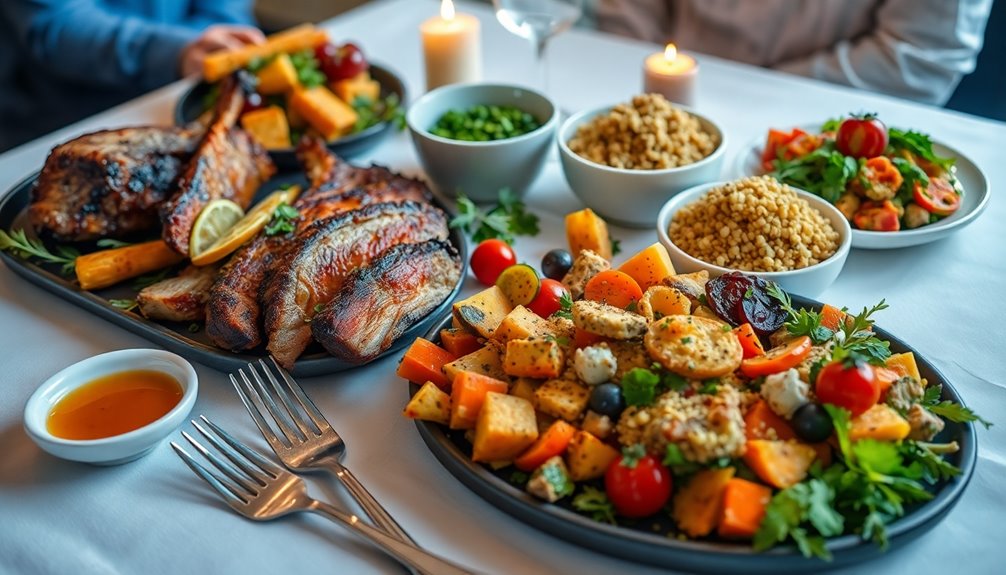
When you’re serving both meat and plant-based dishes, balancing flavors is key. Think about flavor pairing techniques that enhance each dish, making them complement rather than compete. Don’t forget to choose side dishes that bring out the best in both, creating a harmonious meal for everyone. Incorporating mindful consumption practices can also help you select ingredients that enhance the overall dining experience while being sustainable.
Flavor Pairing Techniques
To create a memorable dining experience that satisfies both meat lovers and vegetarians, you’ll want to master flavor pairing techniques that harmonize the two.
Start with umami enhancement; think mushrooms or miso to deepen the flavor profile. Experiment with spice combinations to add warmth and complexity.
Sauce versatility is key—try a rich, herb-infused sauce that complements both meat and plant-based dishes.
Focus on texture contrasts; crispy veggies alongside tender meat create interest. Aroma balancing can elevate your dishes, so consider herbs like basil or cilantro.
Don’t forget about ingredient sourcing; fresh, seasonal pairings make a difference.
Finally, explore various cooking techniques to bring out the best in both meat and vegetables, ensuring every bite is a delight.
Complementary Side Dishes
Creating complementary side dishes can elevate your meal, harmonizing flavors between meat and plant-based options. You might start with seasonal vegetables, roasted root veggies, or a colorful platter of fresh produce.
Grain salads packed with herbs and nuts provide a satisfying contrast, while hearty soups warm the soul. For a zesty kick, vibrant salsas and invigorating pickles can brighten up your table.
Flavorful dips like hummus or tzatziki invite everyone to share and enjoy together. Don’t forget creative slaws that add crunch and freshness. Pair these with aromatic breads to round out the meal.
Menu Planning Tips for Mixed Dietary Preferences
While catering to a group with mixed dietary preferences can seem challenging, it’s entirely manageable with the right approach.
Start by using seasonal ingredients to guarantee freshness and enhance flavor profiles. Consider various cooking techniques that can accommodate both vegetarian and meaty dishes, like grilling or roasting, which add depth to flavors.
Use ingredient substitutions creatively; for instance, swap meat with hearty mushrooms or legumes that satisfy protein needs. Embrace cultural influences to diversify your menu, offering dishes from various cuisines.
Focus on meal aesthetics; a beautifully presented plate can elevate any dish. Finally, stay updated on dietary trends to make certain your menu reflects contemporary tastes while pleasing everyone at the table. Additionally, prioritizing meaningful experiences in your meal planning can foster deeper connections among guests, enhancing the overall dining experience.
Navigating Guest Preferences: Asking the Right Questions?
When you’re planning a meal, it’s essential to understand your guests’ dietary restrictions. Don’t hesitate to ask open questions about their preferences to guarantee everyone feels included. Offering tasty alternatives can make all the difference in creating a welcoming atmosphere. Additionally, recognizing healthy boundaries allows you to respect individual choices while fostering an inclusive dining experience.
Understanding Dietary Restrictions
Ask about cultural influences that might shape your guests’ preferences, as these can greatly affect their choices. Acknowledging the environmental impact of food production can also enhance your menu’s appeal, showing you care about more than just taste.
Incorporate seasonal ingredients to elevate flavor profiles and keep your dishes fresh.
Finally, remember the social dynamics at play; creating an inclusive atmosphere where everyone feels comfortable can make all the difference.
Communicating Preferences Openly
To create a welcoming atmosphere for your vegetarian guests, open communication about food preferences is key. Start by asking direct questions about their dietary needs and preferences. This shows respect and encourages an open dialogue, which helps you understand what they enjoy or avoid.
Use preference etiquette by being mindful of their choices without making assumptions. Instead of saying, “You don’t eat meat, right?” try asking, “What are your favorite vegetarian dishes?” This approach fosters a friendly environment and allows guests to share their preferences comfortably.
Offering Tasty Alternatives
While you may want to please all your guests, offering tasty alternatives for vegetarians can elevate the dining experience.
Think about incorporating plant-based innovations that excite the palate. Use savory substitutions like lentils or mushrooms to create hearty dishes, and add texture contrasts with crunchy veggies or creamy sauces.
For flavor explosions, consider ingredient swaps that enhance traditional recipes, like using cashew cream instead of dairy.
Draw inspiration from various cultures, experimenting with seasonal selections that highlight local produce.
Don’t forget about DIY sauces; they can transform simple dishes into culinary delights.
Enhancing Hospitality: Making Everyone Feel Included
Creating a welcoming atmosphere for all guests enhances the dining experience, especially when you’re serving meat to vegetarians. To make everyone feel included, focus on inclusive recipes that cater to various dietary preferences. Offer dishes featuring diverse ingredients that can stand alongside meat options, ensuring everyone has something delicious to enjoy.
Consider setting the table with a variety of colorful sides and vibrant salads that highlight fresh produce.
When discussing the menu, invite your guests to share their preferences and dietary needs—this shows you value their choices. By fostering open communication, you create a space where everyone feels comfortable. Ultimately, your effort to accommodate all tastes not only enriches the meal but also strengthens the bonds among your guests, fostering emotional safety nets that enhance the overall experience.
Conclusion
In the end, your kitchen can be a bridge, not a battleground. By embracing creativity and open communication, you can craft a menu that celebrates both meat and plant-based dishes, ensuring every guest feels valued. After all, it’s not just about the food; it’s about the connections we forge around the table. So, let’s elevate the dining experience, turning the cook’s dilemma into a delightful harmony where everyone leaves with full hearts and satisfied palates.