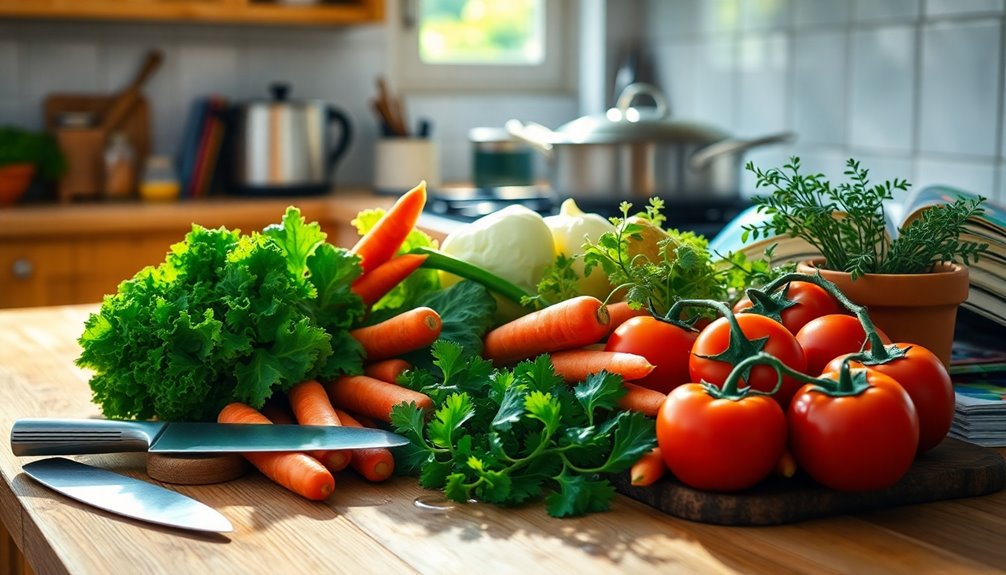
To cook anything vegetarian and actually enjoy it, start by embracing vibrant vegetables, aromatic herbs, and hearty plant-based proteins. Focus on balance by including whole grains, colorful veggies, and healthy fats on your plate. Experiment with creative cooking methods like roasting or stir-frying to enhance flavor. Don’t shy away from bold seasonings and umami-rich ingredients like mushrooms or nutritional yeast. By the way, there are plenty more tips and tasty recipes waiting for you to explore!
Why Choose Vegetarian Cooking?
Choosing vegetarian cooking can transform your meals and your health, especially if you’re looking to embrace a more sustainable lifestyle. By opting for plant-based ingredients, you gain numerous health benefits, like lower cholesterol and improved digestion.
Embracing vegetarian cooking not only enhances your meals but also boosts your health and supports a sustainable lifestyle.
Plus, it greatly reduces your environmental impact, making a positive difference for the planet. You’ll find plenty of budget-friendly options, often utilizing seasonal ingredients that enhance meal variety.
Engaging in culinary creativity opens doors to exciting flavor profiles, allowing you to experiment with different cooking techniques. Involving your family in the process not only makes it fun but also fosters a connection to local sourcing.
Ultimately, vegetarian cooking can invigorate your dining experience while aligning with your values and health goals. Additionally, embracing mindfulness practices can enhance your cooking experience by fostering deeper appreciation and connection to the food you prepare.
Essential Ingredients for Flavorful Vegetarian Meals
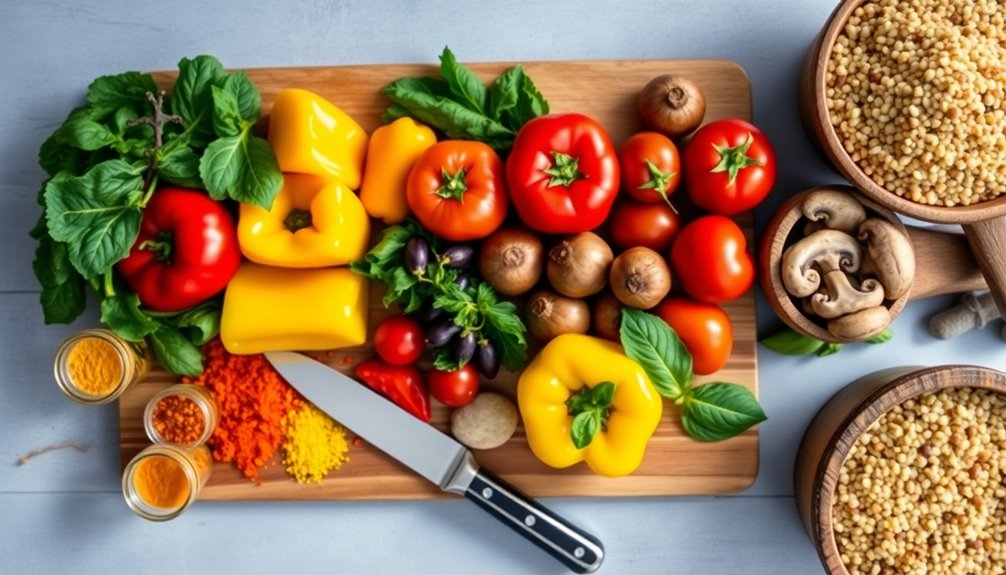
To create delicious vegetarian meals, you’ll want to stock up on vibrant vegetables, aromatic herbs, and spices. These ingredients bring depth and flavor to your dishes, making them satisfying and exciting. Don’t forget to include savory plant-based proteins to round out your meals and keep you feeling full. Incorporating mindful consumption into your cooking practices can also enhance the overall experience by encouraging intentional choices in ingredient selection.
Vibrant Vegetables Variety
A colorful variety of vegetables can transform any vegetarian meal into a vibrant feast for the senses. By experimenting with seasonal selections, you can guarantee freshness and maximum flavor.
Think bright bell peppers, deep purple eggplant, and sunny yellow zucchini; these colorful combinations not only look appealing but also deliver diverse tastes and textures. Don’t hesitate to mix in leafy greens like kale or spinach for added nutrition and color.
Roasting, sautéing, or grilling your veggies can enhance their natural sweetness, making your dishes even more enjoyable. Remember, the more colors on your plate, the more nutrients you’re likely to consume.
Aromatic Herbs And Spices
Embracing vibrant vegetables is just the beginning of creating delicious vegetarian meals. To elevate your dishes, focus on aromatic herbs and spices that bring depth and character.
Experiment with herb blends like Italian seasoning or za’atar to add complexity without overwhelming your palate. Spice combinations, such as cumin and coriander or smoked paprika and garlic powder, can transform simple ingredients into flavor-packed creations.
Fresh herbs like basil, cilantro, and parsley provide brightness, while dried spices offer warmth and earthiness. Don’t hesitate to mix and match, discovering your unique flavor profile.
With the right herbs and spices, every bite of your vegetarian meal will be a delightful experience that you’ll savor. Enjoy the journey of flavor exploration!
Savory Plant-Based Proteins
While vibrant vegetables steal the show, savory plant-based proteins are essential for creating satisfying vegetarian meals.
Start with tofu marinades to infuse flavor into your stir-fries or bake it for a hearty addition to quinoa bowls. Lentil salads packed with spices offer both texture and nutrition, while chickpea curries bring warmth to your table.
Don’t forget about tempeh in your stir-fries or seitan for delicious tacos. Black bean burgers are a classic choice for grilling, and edamame snacks provide a quick protein boost.
For a creamy touch, try nut-based sauces over your dishes. Finally, blend up pea protein smoothies for a nutritious breakfast that keeps you energized throughout the day.
Embrace these proteins for flavor-packed meals!
How to Build a Balanced Vegetarian Plate
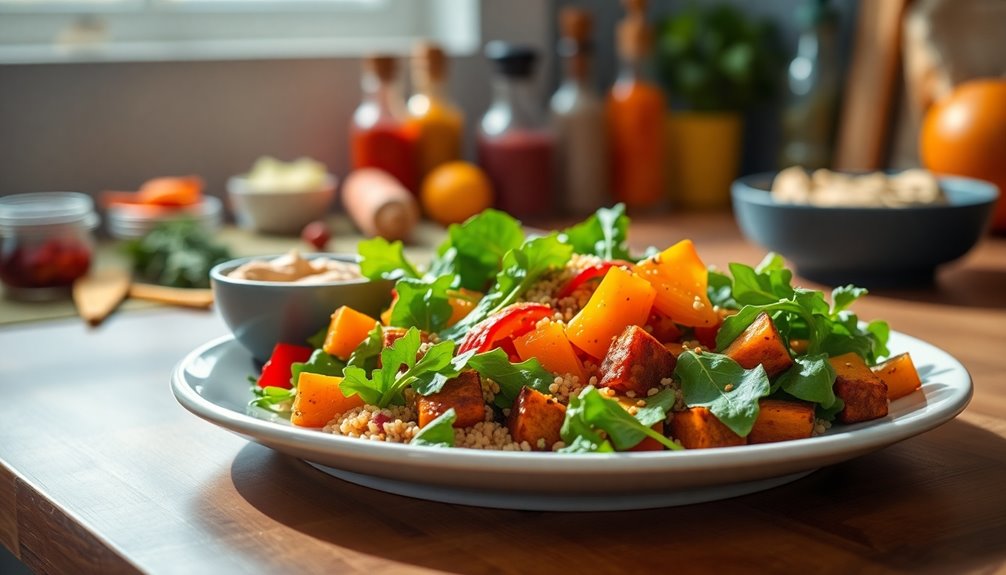
Building a balanced vegetarian plate is all about incorporating essential food groups to guarantee you’re getting the nutrients you need.
By focusing on portion control, you can create meals that are satisfying and healthy. Additionally, incorporating colorful fruits and vegetables can enhance both the visual appeal and nutritional value of your meals.
Let’s explore how to mix and match different elements for a well-rounded diet.
Essential Food Groups
Creating a balanced vegetarian plate requires understanding the essential food groups that contribute to a nutritious diet. Start with whole grains like quinoa or brown rice, which provide energy and fiber.
Next, include a variety of colorful vegetables; they’re packed with vitamins and minerals. Don’t forget about protein sources—think legumes, tofu, or tempeh—to keep you feeling full and satisfied.
Healthy fats from nuts, seeds, or avocados are also vital for balanced nutrition. Finally, incorporate fruits for natural sweetness and additional nutrients.
Portion Control Tips
To guarantee you enjoy a balanced vegetarian plate, mastering portion control is essential. Here are some tips to help you achieve that:
- Use the plate method: Fill half your plate with veggies, a quarter with grains, and a quarter with protein.
- Pay attention to portion sizes using serving utensils for accuracy.
- Practice mindful eating by savoring each bite and tuning into your hunger cues.
- Keep a food diary to track your meals and increase portion awareness.
- Incorporate healthy snacking between meals to maintain energy without overeating.
Tips for Cooking With Plant-Based Proteins
While exploring plant-based proteins, you’ll discover a world of flavors and textures that can elevate your meals.
Start with tofu techniques; marinating it enhances flavor and grilling adds a nice char.
For lentil layering, mix different types for a hearty dish.
Tempeh texture offers a nutty bite, perfect for stir-fries or sandwiches.
Experiment with chickpea combinations in salads or hummus for a protein boost.
If you’re looking for seitan substitutes, consider mushrooms for umami.
Pay attention to quinoa quality; rinsing it removes bitterness and enhances taste.
Don’t overlook nut nutrition—nuts provide healthy fats and protein.
Finally, embrace bean benefits by adding them to soups or stews for a satisfying meal.
Incorporating energy-efficient appliances can further enhance your cooking experience while reducing electricity use.
Enjoy the versatility of these ingredients!
Creative Ways to Use Vegetables in Your Dishes
Vegetables can transform your dishes, adding both flavor and nutrition when you think outside the box. Here are some creative ways to elevate your cooking:
- Experiment with creative vegetable pairings to surprise your palate.
- Use innovative cooking methods like spiralizing or sous-vide for unique textures.
- Focus on seasonal vegetable selection for the freshest flavors.
- Explore unexpected flavor combinations, like roasted beets with citrus.
- Master vegetable presentation techniques for stunning plates.
Don’t shy away from fusion vegetable dishes that blend cultures, and always incorporate vibrant vegetable garnishes to make your meals pop. Additionally, embracing mindfulness during cooking can enhance your culinary experience by fostering a deeper appreciation for the ingredients you use.
Exploring Global Vegetarian Cuisine
You can immerse yourself in Mediterranean marvels like stuffed grape leaves and fresh tabbouleh, or savor Asian delights such as stir-fried tofu with vegetables.
Latin flavors bring vibrant dishes like black bean tacos and plantain fritters to your table.
Embrace the vibrant essence of Latin cuisine with lively black bean tacos and crispy plantain fritters.
Don’t forget the aromatic Middle Eastern spices that transform chickpeas into delicious falafel.
African stews, rich with vegetables and spices, offer hearty warmth, while Indian curries delight with their blend of spices and creamy textures.
You can also enjoy European classics like ratatouille, or get creative with fusion dishes that mix elements from various cuisines.
Each bite tells a story, inviting you to explore further, much like how community support enhances the resilience of individuals facing challenges.
How to Make Hearty Vegetarian Comfort Foods
Making hearty vegetarian comfort foods starts with stocking your kitchen with essential ingredients that pack a punch. You’ll want to master flavorful cooking techniques that bring out the best in your veggies and grains. Additionally, embracing the power of quiet in your cooking space can enhance your creativity and enjoyment in the kitchen. Let’s explore how to transform simple ingredients into satisfying meals you’ll crave.
Essential Ingredients to Stock
To create hearty vegetarian comfort foods, it’s essential to have a well-stocked pantry filled with crucial ingredients. These ingredients enhance nutrient absorption, support sustainable sourcing, and offer meal versatility.
Here are five must-haves for your pantry:
- Legumes: Beans and lentils add protein and texture contrast.
- Whole Grains: Quinoa or brown rice provide a hearty base.
- Nuts and Seeds: Great for healthy fats and flavor combinations.
- Herbs and Spices: Elevate dishes with aromatic profiles.
- Vegetable Storage Essentials: Keep fresh produce and frozen options on hand for seasonal selections.
With these pantry essentials, you’ll be prepared to tackle various cooking methods and make ingredient substitutions that elevate your vegetarian meals.
Enjoy the process of creating comforting dishes!
Flavorful Cooking Techniques
Transform your vegetarian dishes by mastering a few flavorful cooking techniques that bring comfort foods to life.
Start with sautéing techniques to caramelize veggies, enhancing their natural sweetness. Use marinating methods to infuse your proteins with bold flavors, making each bite a delight.
Roasting tips can elevate root vegetables, creating crispy edges while keeping them tender inside. Don’t overlook the steaming benefits; it preserves nutrients and adds a delicate texture.
Explore grilling options for smoky notes that complement your ingredients. For heartiness, braising basics can meld flavors beautifully, while layering flavors throughout your dish guarantees depth.
With these methods, you’ll create hearty vegetarian meals that satisfy and comfort. Enjoy the process and savor every bite!
Easy Meal Prep Ideas for Busy Weeknights
When your evenings are packed, having a few easy meal prep ideas can make all the difference in maintaining a healthy vegetarian diet. Here are some strategies to streamline your cooking:
- Quick stir fries: Toss together your favorite veggies and tofu for a fast meal.
- One pan dinners: Cook everything on a single sheet pan for easy cleanup.
- Batch cooking: Prepare large portions of grains or beans to use throughout the week.
- Salad jars: Layer ingredients in jars for grab-and-go lunches.
- Freezer friendly meals: Make and freeze dishes for those extra busy nights.
Using time-saving tools and flavor boosters can also elevate these meals. Additionally, embracing minimalism in cooking can help simplify your meal prep and reduce kitchen clutter.
Time-saving tools and flavor boosters can elevate your meals, making quick cooking both delicious and effortless.
Plus, try some leftover makeovers to keep things exciting!
Tips for Enhancing Flavor Without Meat
Enhancing flavor in vegetarian meals can be a delightful challenge, especially since you’re skipping meat. Start by incorporating umami boosters like mushrooms, tomatoes, or nutritional yeast to build depth.
Use flavor layering techniques with spices, herbs, and seasoning techniques; they elevate your dish’s profile. Experiment with ingredient substitutions, like using lentils or chickpeas for heartiness.
Try various cooking methods—roasting, sautéing, or grilling—to create texture contrasts that keep your palate engaged. Balance acidity with a splash of vinegar or citrus to brighten flavors, while sweetness enhancement from fruits or honey can round things out.
Finish your dishes with broth bases for richness and consider adding finishing touches like fresh herbs or a drizzle of olive oil for that extra pop. Additionally, embracing mindful eating can significantly improve your appreciation for flavors and enhance your overall dining experience.
How to Cater to Different Dietary Preferences?
Cooking vegetarian meals means considering a variety of dietary preferences, ensuring everyone at the table feels included.
To cater to different needs, keep these tips in mind:
- Understand dietary restrictions: Be aware of allergies and intolerances.
- Explore flavor preferences: Get to know what spices and ingredients excite your guests.
- Utilize ingredient substitutions: Swap out items to align with specific nutritional needs.
- Encourage meal customization: Let diners build their own plates, accommodating various tastes.
- Incorporate cultural influences: Draw inspiration from global cuisines to create diverse options.
Common Mistakes to Avoid in Vegetarian Cooking
While exploring vegetarian cooking, it’s easy to fall into some common traps that can hinder your culinary success. One mistake is relying too heavily on meat substitutes without considering their flavor profiles and cooking techniques.
Don’t forget the importance of ingredient combinations; they can elevate your dishes. Pay attention to seasoning tips to enhance taste and avoid bland meals.
Meal planning can help you maintain nutrient balance, so always include diverse ingredients. Also, experiment with different cooking methods to create texture contrasts that keep your meals interesting.
Ultimately, invest in kitchen essentials that simplify your cooking process. Additionally, understanding the brain’s role in habit formation can help you develop consistent cooking routines. By avoiding these pitfalls, you’ll enjoy a more satisfying vegetarian cooking experience.
Delicious Vegetarian Recipes to Get You Started
Initiating a vegetarian journey can be exciting, especially when you discover delicious recipes that showcase vibrant flavors and textures.
With a few easy cooking techniques, you’ll whip up meals that tantalize your taste buds and nourish your body.
Here are some must-try recipes to kickstart your vegetarian meal plans:
- Chickpea Curry: A hearty blend of spices and protein.
- Quinoa Salad: Toss in your favorite veggies for a revitalizing dish.
- Stuffed Bell Peppers: Fill them with rice, beans, and cheese.
- Vegetable Stir-Fry: Quick and colorful, perfect over rice or noodles.
- Lentil Soup: Comforting and rich, ideal for chilly evenings.
These recipes won’t only excite your palate but also inspire your vegetarian journey!
Conclusion
Embracing vegetarian cooking is like discovering a vibrant garden bursting with colors and flavors. With the right ingredients and techniques, you can create meals that not only satisfy but also excite your taste buds. Remember, it’s all about balance, creativity, and a dash of passion. So, immerse yourself in this culinary adventure and let your kitchen bloom with delicious vegetarian dishes that everyone will love. Your plate is a canvas—paint it with fresh, bold flavors!