
You might find food boring because distractions steal your attention during meals. When you scroll on your phone or multitask, you miss out on the flavors, textures, and aromas that make eating enjoyable. Mindful eating helps you reconnect with the sensory experience of your meals, enhancing appreciation and joy. By embracing rituals like setting a serene table, you can transform mealtime into a vibrant journey. Want to explore more ways to elevate your dining experience?
What Is Mindful Eating and Why Does It Matter?
Mindful eating invites you to savor each bite, transforming meals into a rich sensory experience. By practicing mindful awareness, you engage fully with your food, enhancing your emotional connection to what you eat.
This approach encourages intentional choices, making you more conscious of flavors, textures, and aromas in the present moment. As you explore different tastes, you cultivate food appreciation and deepen your understanding of cultural mindfulness. Gratitude for the food on your plate can enhance this experience, reminding you of the importance of gratitude in nurturing a positive relationship with your meals.
Savoring experiences allows you to relish in holistic nourishment, turning meals into opportunities for reflection and joy. Mindful eating isn’t just about nutrition; it’s about building a relationship with food that honors your body and spirit, making every meal an enriching experience rather than a mundane task.
The Impact of Distractions on Our Eating Habits

As you navigate your day, distractions can easily pull you away from the simple act of eating. To enhance your eating experience, consider these strategies:
- Distraction Awareness: Recognize what pulls your attention away during meals.
- Mindful Reminders: Set cues to bring your focus back to the food in front of you.
- Sensory Engagement: Fully immerse yourself in the flavors and textures, boosting your flavor curiosity.
- Digital Detox: Put away devices to restore your attention and truly enjoy your meal.
Additionally, practicing mindfulness techniques can help you stay present, ultimately enhancing your connection to food and improving your overall eating experience.
How Do Smartphones Change Our Relationship With Food?
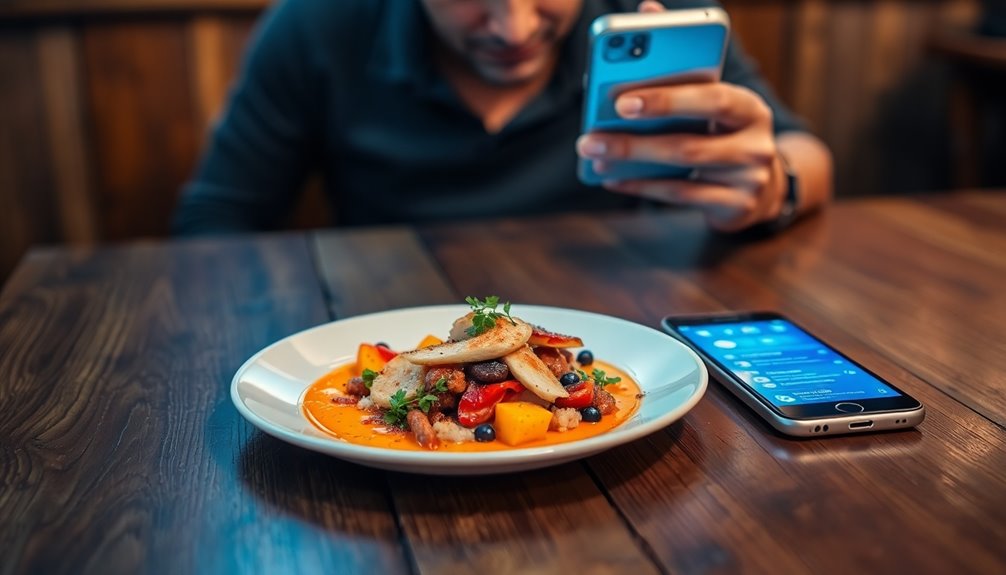
Smartphones can really shift how you experience food. With constant notifications and social media scrolling, you might find yourself eating mindlessly and missing out on the flavors in front of you. Plus, sharing your meals online can distract from the simple pleasure of enjoying them. Engaging in mindfulness practices can help you reconnect with the experience of eating, allowing you to savor each bite more fully.
Mindless Eating Habits
While you scroll through endless feeds and notifications, your meals often fade into the background, becoming just another task to accomplish. This mindless eating can diminish your connection to food, robbing you of true meal enjoyment.
To rekindle your relationship with food, consider these practices:
- Snack Mindfulness: Focus on each bite, appreciating flavors and textures.
- Flavor Exploration: Experiment with new ingredients to spark flavor curiosity.
- Eating Awareness: Avoid distractions to enhance taste engagement during meals.
- Mindful Indulgence: Savor treats consciously, fostering food appreciation.
Distraction During Meals
Even though meals should be a time for connection and enjoyment, smartphones often steal our attention, transforming dining into a distracted chore. You miss out on meal engagement and sensory exploration, reducing culinary curiosity to mere routine.
By being aware of your distractions, you can reclaim those mindful moments, savoring each bite. Focus techniques, like putting your phone away, help restore attention, allowing for richer flavor discovery and taste adventures.
Reviving eating rituals can deepen your connection to food, enhancing your overall experience. When you prioritize meals without distraction, you engage fully, transforming ordinary meals into extraordinary experiences.
It’s about restoring that connection and embracing the joy of eating with awareness.
Social Media Influence
How has social media reshaped our relationship with food? It’s transformed the way you interact with meals, often blurring the lines between enjoyment and distraction. You might find yourself scrolling through food photography instead of savoring your dish.
Here are four key influences:
- Food Trends: You’re constantly exposed to the latest culinary fads and viral challenges, making it hard to focus on what you truly enjoy.
- Online Recipes: You can easily discover new dishes but may feel pressured to recreate them perfectly.
- Influencer Impact: Influencers shape your expectations, making meals feel less personal.
- Meal Sharing: Social engagement often prioritizes posting over appreciating your food, leading to more digital distractions than genuine enjoyment.
The Science Behind Flavor Appreciation
When you think about flavor, it’s not just about what’s on your plate.
Your perception of taste is shaped by factors like mindfulness, cultural background, and even your mood. Engaging in mindfulness practices can enhance your appreciation for flavors, making meals more satisfying and enjoyable.
Understanding these influences can transform how you experience food and make every bite more enjoyable.
Flavor Perception Factors
While you might think flavor appreciation is simply about what tastes good, several factors influence how you perceive flavors. Understanding these can enhance your culinary experiences.
- Taste Memory: Your past experiences shape how you perceive new flavors.
- Context Influence: The environment or setting can dramatically alter your taste perception.
- Emotional Connections: Feelings associated with certain foods can enhance or detract from enjoyment.
- Culinary Experimentation: Trying new combinations through flavor pairing ignites novelty seeking and sensory exploration.
Mindfulness And Eating
Savoring each bite can transform your dining experience, making you more aware of the flavors and textures on your plate.
By practicing mindful choices, you enhance your food awareness and deepen sensory engagement. Intentional dining turns meals into culinary exploration, where every dish invites tasting rituals.
You can cultivate eating presence by slowing down and fully immersing yourself in the experience. Incorporating gratitude practices while you eat helps you appreciate the effort behind each meal.
Flavor journaling lets you capture your thoughts on different tastes, creating a personal archive of your culinary adventures.
Embrace these techniques, and you’ll discover that food isn’t boring—it’s a vibrant world waiting to be explored.
Cultural Influences On Taste
Cultural influences shape your taste buds more than you might realize, as flavors are intertwined with traditions, memories, and even geography. Your taste preferences evolve through exposure to various regional cuisines and culinary traditions.
Historical influences and food symbolism further enrich this experience, creating cultural discrepancies that define what’s considered delicious.
Consider these aspects:
- Flavor Evolution: Taste changes over generations, influenced by migration and trade.
- Regional Cuisines: Ingredients and cooking methods vary, affecting flavor profiles.
- Culinary Traditions: Family recipes carry historical significance and emotional connections.
- Sensory Anthropology: Understanding how culture affects taste can enhance your appreciation of food.
Embracing these influences can transform your relationship with flavor, making every meal a unique experience.
Why Does Routine Make Food Feel Boring?
When you eat the same meals day after day, it’s easy to see why food can start to feel dull. Routine flavors can lead to taste fatigue, stifling your culinary creativity.
You may fall into predictable eating patterns that promote recipe monotony, making each meal feel like a chore. Without flavor exploration and sensory engagement, mealtime rituals lose their excitement.
To reignite your food enthusiasm, introduce novel ingredients or experiment with different cooking techniques. This shift can turn mundane meals into vibrant experiences, sparking joy and curiosity at the dinner table. Embracing change is key; it transforms every bite into an adventure, breaking the cycle of boredom and bringing back that food excitement you’ve been missing. Additionally, practicing mindful eating fosters a deeper appreciation for flavors and enhances your overall dining experience.
The Benefits of Intentional Meal Preparation
Routines can drain the excitement from meals, but intentional meal preparation can breathe new life into your dining experience. By embracing this approach, you can enhance your meals in several ways:
Routines may dull your meals, but intentional preparation can transform your dining experience into something vibrant and exciting.
- Meal Planning: Organize your week, reducing stress and ensuring variety.
- Ingredient Sourcing: Choose fresh, seasonal ingredients that inspire culinary exploration.
- Flavor Experimentation: Try new cooking techniques and creative pairings to elevate your dishes.
- Nutrition Awareness: Focus on portion control and balanced meals, possibly through food journaling.
With intentional meal prep, you’ll not only enjoy delicious food but also develop a deeper connection to what you eat, making every meal an opportunity for flavor and health. This practice can also enhance your overall well-being by fostering mindfulness and self-reflection, leading to a more satisfying dining experience.
Exploring the Art of Food Presentation
When you plate your meals, remember that visual appeal matters just as much as taste. Using simple plate design techniques and focusing on color harmony can transform any dish into a feast for the eyes. Let’s explore how these elements can elevate your food presentation and make every meal more exciting, as savoring enhances overall happiness by appreciating good experiences.
Visual Appeal Matters Most
Although taste is essential, the visual appeal of food often steals the show. When you plate a dish, you engage your diners through visual stimulation, enhancing their overall experience.
Here are four key aspects to reflect on for aesthetic plating:
- Color Contrast: Use vibrant ingredients to create a striking visual effect.
- Artistic Garnishing: Add unique touches that reflect culinary creativity and elevate your dish.
- Dish Arrangement: Contemplate the layout; a thoughtful presentation can make a simple meal look gourmet.
- Plating Styles: Experiment with different techniques to discover which best showcases your food.
These presentation techniques not only enhance food photography but also promote sensory engagement, making every meal memorable.
Plate Design Techniques
As you immerse yourself in the world of food presentation, understanding plate design techniques can transform your culinary creations into visual masterpieces.
Start by choosing the right plate color to enhance your dish’s appeal. Experiment with plating techniques like stacking or drizzling to create height and intrigue.
Don’t forget to incorporate texture contrast; a crisp garnish next to a creamy puree can captivate the senses. Use various garnishing styles to add flair, and be mindful of portion creativity to avoid overwhelming the plate.
Endeavor for arrangement symmetry for a balanced look, and consider your serving methods—like bowls or platters—that align with your theme coordination.
Ultimately, aim for visual storytelling that invites your guests to savor each bite.
Color Harmony Essentials
To create visually stunning dishes, mastering color harmony is essential. By understanding color theory and applying it effectively, you can elevate your food aesthetics.
Here are four key elements to reflect upon:
- Color Contrast: Use opposing hues to draw attention and create visual balance.
- Hue Saturation: Incorporate vibrant colors to enhance the aesthetic appeal of your plates.
- Color Combinations: Choose complementary colors for harmonized plating techniques, ensuring each dish is inviting.
- Color Psychology: Recognize how colors influence emotions and perceptions, making your dishes not just food, but experiences.
The Role of Environment in the Dining Experience
While you might think the food is the main attraction, the environment plays a crucial role in shaping your dining experience. Environmental influences, like lighting and decor, can enhance sensory stimulation, making each bite more enjoyable.
Consider the ambiance effects of a cozy café versus a bustling restaurant; each meal environment creates distinct dining aesthetics. The atmosphere’s importance is especially evident in cultural settings, where the surroundings reflect local traditions and flavors.
Your taste surroundings affect not just what you eat, but how you feel while eating. A welcoming space can transform a simple meal into a memorable occasion, proving that it’s not just the food, but the entire experience that truly matters. Embracing mindful purchasing can also help you choose foods that align with your values, enhancing your overall dining experience.
How to Engage All Your Senses While Eating
Eating shouldn’t be a mindless routine; it can be an exciting experience that awakens all your senses.
By focusing on taste beyond the basics, appreciating visual appeal, and inhaling the aromas, you can elevate every meal. Engaging in this mindful approach can also enhance your overall well-being, similar to how supportive relationships contribute to happiness and resilience.
Let’s explore how to transform your dining moments into a sensory feast.
Taste Beyond The Basics
Although food often seems monotonous, engaging all your senses can transform a simple meal into an extraordinary experience.
Embrace taste exploration and begin a sensory adventure that ignites your culinary curiosity. Here’s how to engage fully:
- Flavor Experimentation: Try bold ingredient pairing to create unexpected combinations.
- Texture Diversity: Combine crunchy, creamy, and chewy elements for a delightful palate discovery.
- Aroma Enhancement: Infuse dishes with herbs and spices to elevate the flavor layering and aroma.
- Cooking Techniques: Experiment with different methods like roasting or sous-vide to enrich your taste memory.
Visual Appeal Matters
When you take a moment to appreciate the visual presentation of your meal, you reveal a deeper connection to the food on your plate. Embracing visual stimulation enhances your dining experience, transforming each bite into an artistic presentation.
Notice the color contrast and visual textures that make your meal pop. Creative plating not only showcases culinary artistry but also encourages sensory engagement.
As you admire your dish, think about how food photography captures these elements, highlighting the beauty of plate aesthetics. By focusing on the aesthetics, you cultivate an aesthetic appreciation that elevates your meals from mundane to memorable.
Engaging all your senses while eating makes every meal a celebration, turning ordinary moments into extraordinary experiences.
Aromas Enhance Experience
Visual appeal sets the stage, but aromas play a pivotal role in enhancing your dining experience. Engaging your sense of smell transforms meals into aromatic experiences, heightening your enjoyment.
To fully embrace sensory exploration, consider these tips:
- Choose Fresh Ingredients: The fresher the food, the more vibrant the aromas.
- Experiment with Herbs and Spices: They can elevate even the simplest dishes with complex scents.
- Mind Your Cooking Methods: Grilling or roasting can enhance aromas, making your meal enticing.
- Create a Relaxed Atmosphere: Dimming the lights and playing soft music can help you focus on those delightful scents.
The Power of Storytelling in Food Choices
Stories shape our food choices in profound ways, as they connect us to cultures, traditions, and memories. When you savor a dish, think about the culinary narratives behind it. Each meal carries flavor stories that evoke emotional connections.
Maybe it reminds you of family gatherings or a special trip. These food memories enrich your dining experience, making every bite more meaningful. By employing storytelling techniques, chefs craft narrative flavors that resonate deeply, transforming simple ingredients into cultural tales.
Sensory storytelling enhances your palate, inviting you to explore new dimensions in familiar foods. So, next time you eat, remember the power of stories; they can turn ordinary meals into extraordinary experiences. Embrace the narratives, and your food will never feel boring again. In uncertain times, these stories can also provide comfort and connection, reminding us of the joy that can be found in shared meals.
Discovering New Ingredients to Ignite Your Palate
Exploring new ingredients can transform your meals and revitalize your culinary experience. Embrace ingredient exploration to ignite your palate and satisfy your culinary curiosity.
Here are four ways to immerse yourself in flavor experimentation:
- Seasonal Produce: Discover fruits and veggies from local farmers’ markets to enhance your dishes.
- Aromatic Herbs: Experiment with herb varieties like lemongrass or Thai basil for unique flavor profiles.
- Spice Discovery: Try different spices, such as sumac or za’atar, to elevate your taste adventures.
- Fusion Flavors: Combine regional ingredients and cooking techniques to create unique combinations that surprise your senses.
How to Create Mindful Eating Rituals
While you might rush through meals in your busy life, creating mindful eating rituals can transform the way you experience food. Start by embracing meal mindfulness; dedicate time to savor each bite.
Amidst life’s hustle, embrace mindful eating to truly savor and appreciate each meal.
Incorporate ritual significance by setting a serene table or lighting a candle. Engage your senses with sensory engagement—notice colors, textures, and aromas.
Explore flavors through ingredient discovery and flavor exploration, allowing each dish to tell a story. Connect with your roots by celebrating cultural connections, cooking traditional recipes that bring joy.
Finally, weave in a gratitude practice, reflecting on the nourishment and effort behind your meal. These rituals not only enhance your dining experience but also deepen your appreciation for food and its role in your life.
The Importance of Gratitude in Eating
Gratitude can transform your eating experience, turning a mundane meal into a moment of appreciation. By cultivating gratitude practices, you deepen your emotional connection to food.
Consider these ways to enhance your meals:
- Mindful Appreciation: Take a moment to recognize the effort that went into your meal.
- Food Journaling: Write down what you’re grateful for after each meal to enhance sensory awareness.
- Sharing Meals: Enjoying food with others fosters connections and enriches cultural traditions.
- Gratitude Rituals: Incorporate a simple thank-you before eating, creating a mindful pause.
These gratitude rituals elevate your eating experience, making it more fulfilling and engaging.
When you embrace gratitude, every bite becomes a celebration of flavors and connections.
Finding Joy in Cooking: Tips for Beginners
Cooking can be a delightful extension of the appreciation you cultivate at the dining table. Start by exploring different cooking techniques and methods that excite you.
Don’t shy away from ingredient sourcing; fresh, seasonal produce can elevate your dishes. Invest in a few essential kitchen tools to enhance your experience and make your tasks easier.
Embrace recipe experimentation—try altering flavors or food pairings to discover what you love. Taste testing throughout the process is key; it helps refine your palate.
Finally, consider various plating styles to make your meals visually appealing. By engaging in flavor exploration and focusing on these elements, you’ll find joy in cooking and create meals that resonate with your newfound passion.
Connecting With Others Through Food Experiences
Food has a unique way of bringing people together, creating moments that linger long after the last bite. When you share meals, you build connections and weave stories through culinary traditions.
Food unites us, crafting lasting memories and connections through the shared stories of our culinary traditions.
Engaging in communal dining fosters an environment ripe for food storytelling, where taste memories come alive. Consider these ways to deepen your food experiences:
- Cooking Together: Collaborate on heritage dishes to share your backgrounds.
- Recipe Exchanges: Swap favorite recipes to explore new flavor journeys.
- Food Adventures: Discover local eateries and their unique offerings.
- Shared Meals: Host potlucks that celebrate diverse culinary traditions.
These experiences not only nourish your body but also your relationships, transforming ordinary meals into cherished moments.
Conclusion
You might think food is boring, but maybe it’s just the distractions pulling you away. When you tune in and savor each bite, you’ll discover flavors you never noticed before. Coincidentally, the more mindful you become, the more joy you find in cooking and sharing meals with others. It’s not just about eating; it’s about creating experiences. So, next time you sit down to eat, remember: food can be a delightful adventure if you let it.