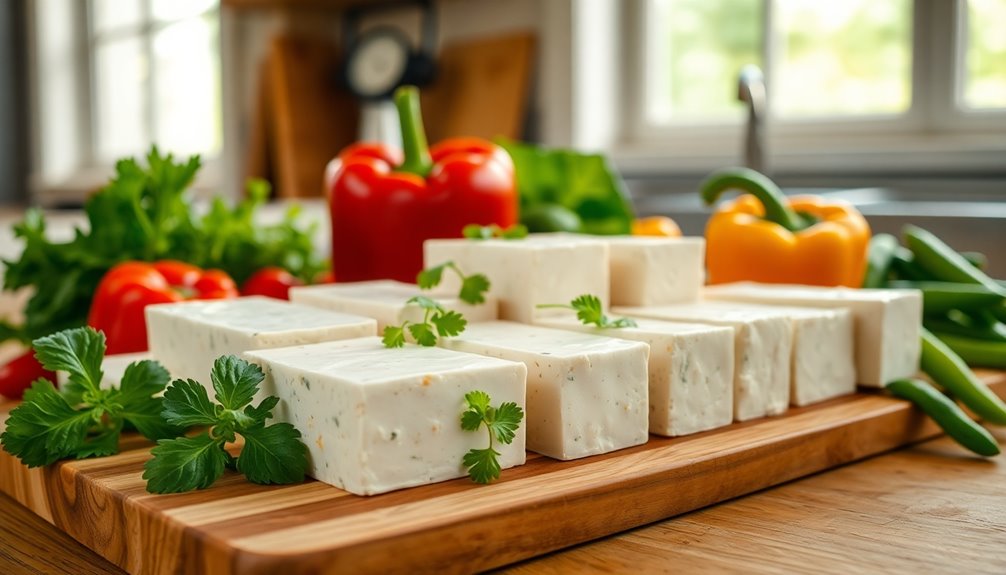
Yes, you can eat tofu as a vegan! This versatile, plant-based protein is not only free from animal products but also packed with essential nutrients. Tofu offers all nine amino acids, making it an excellent choice for your diet. Some myths suggest it might disrupt hormones, but moderate consumption actually supports hormonal health. As you explore tofu’s many uses in cooking and its cultural significance, you’ll uncover even more benefits for your vegan lifestyle.
What Is Tofu and Its Origins?
Tofu, often referred to as “bean curd,” is a versatile food made from soybeans. Its origins trace back over 2,000 years to ancient China, where it was first crafted by curdling soy milk.
Today, you’ll find various tofu varieties, including silken, firm, and extra-firm, each suited for different dishes. Silken tofu works great in smoothies or desserts, while firm tofu shines in stir-fries and grilling.
Tofu preparation is simple yet effective. You can marinate it, sauté it, or even bake it for added flavor. Incorporating tofu into your meals not only enhances taste but also supports a mindful diet that promotes overall well-being.
With its ability to absorb spices and sauces, tofu offers endless culinary possibilities. So, whether you’re a novice or a seasoned chef, incorporating tofu into your meals can elevate your cooking game.
Is Tofu Considered Vegan?
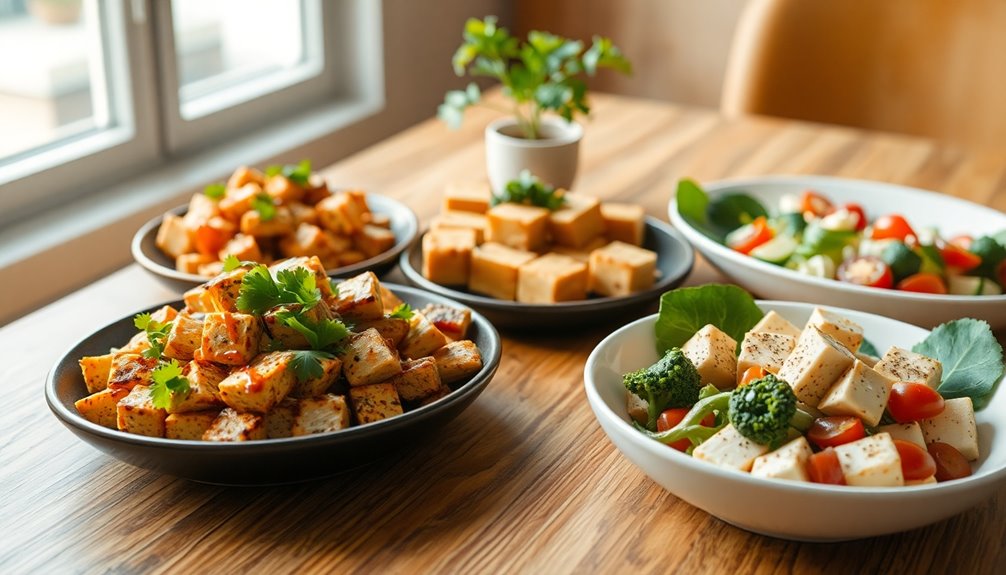
Is it any surprise that tofu is considered a staple in vegan diets? This versatile food is made from soybeans, making it an excellent source of vegan protein.
However, tofu misconceptions often arise, leading some to question its vegan status. The truth is, tofu is entirely plant-based and free from animal products, so you can enjoy it without worry.
Tofu is completely plant-based and free from animal products, making it a worry-free choice for vegans.
It’s important to note that some people mistakenly believe certain tofu brands might contain non-vegan additives, but most traditional tofu is safe for vegans. By embracing minimalism in eating, you can easily boost your protein intake while enjoying a delicious, meat-free option.
Nutritional Benefits of Tofu for Vegans

Packed with essential nutrients, tofu offers a wealth of benefits for vegans. It’s an excellent source of vegan protein, providing all nine essential amino acids your body needs. Incorporating tofu into your diet can help you meet your protein requirements without relying on animal products.
Additionally, tofu is rich in iron, calcium, and magnesium, which are vital for maintaining strong bones and overall health. The tofu benefits extend to heart health as well; it contains healthy fats that can support cardiovascular function. Plus, its versatility makes it easy to add to various dishes, from stir-fries to smoothies. By including tofu in your meals, you’re not just enhancing flavor but also boosting your nutritional intake considerably.
Moreover, a diet rich in whole foods can further complement the nutritional benefits you receive from tofu.
Debunking the Myth: Tofu and Hormones
You might’ve heard that tofu impacts hormone levels because of its phytoestrogen content.
However, scientific research suggests that these compounds don’t have the dramatic effects many believe.
Let’s clear up these misconceptions and explore what the studies really say. Additionally, embracing mindful consumption can help individuals make informed dietary choices, promoting overall well-being.
Tofu’s Phytoestrogen Content
Many people worry about tofu’s phytoestrogen content and its potential effects on hormones. However, understanding phytoestrogens can clear up common tofu misconceptions.
These compounds mimic estrogen but are much weaker, and your body processes them differently than actual hormones. Research shows that moderate tofu consumption doesn’t disrupt hormone balance; in fact, it might even support hormonal health.
You might’ve heard that phytoestrogens can lead to health issues, but studies indicate they can be beneficial, especially for menopausal symptoms.
Impact on Hormone Levels
While some people fear that tofu might disrupt hormone levels, research shows it can actually have a positive impact.
Tofu myths often suggest that consuming soy products like tofu leads to hormonal imbalances, but studies indicate otherwise. The phytoestrogens in tofu can mimic estrogen in the body, helping to support hormone balance rather than disrupt it.
For many, this can mean relief from symptoms associated with hormonal fluctuations. By incorporating tofu into your diet, you can enjoy its protein benefits without worrying about adverse effects on your hormones.
Scientific Research Findings
Research has consistently debunked the myth that tofu negatively impacts hormone levels, revealing instead its beneficial effects. Many tofu misconceptions suggest that consuming soy products can disrupt hormonal balance, but studies show that tofu may actually help regulate hormones, particularly in women.
The isoflavones in tofu act as phytoestrogens, potentially offering protective benefits against certain hormone-related cancers.
Additionally, when you consider tofu sustainability, it becomes clear that incorporating tofu into your diet not only supports your health but also contributes positively to the environment. By choosing tofu as a protein source, you’re making a sustainable choice that benefits both your body and the planet.
Can Tofu Help With Weight Management?
Tofu can be a valuable addition to your diet if you’re looking to manage your weight. It’s low in calories yet high in protein, making it a filling option that can help curb those pesky cravings.
When you include tofu in your meal planning, you’re opting for a versatile ingredient that can easily fit into various dishes, from stir-fries to salads.
Plus, practicing portion control with tofu can keep your meals balanced without sacrificing flavor. By replacing higher-calorie ingredients with tofu, you can create satisfying meals that support your weight management goals. Additionally, incorporating mindful consumption into your cooking practices can enhance your overall meal experience.
How Does Tofu Compare to Other Protein Sources?
When considering protein sources, tofu stands out among plant-based options. Its impressive tofu nutrition offers about 10 grams of protein per half-cup serving, making it a solid choice for vegans and vegetarians alike.
In a protein comparison, tofu competes favorably with legumes and grains, often providing a complete amino acid profile that many plant-based foods lack. Unlike some animal proteins, tofu is low in saturated fat and contains no cholesterol, which can be beneficial for heart health. Additionally, incorporating tofu into your diet may align with practices like grounding that promote overall well-being.
While you might find higher protein content in foods like tempeh or seitan, tofu remains versatile and easy to incorporate into various dishes. So, whether you’re stir-frying or grilling, tofu can be a delicious and nutritious addition to your meals.
The Different Types of Tofu Explained
There are several types of tofu available, each with its unique texture and culinary uses. Silken tofu is smooth and creamy, perfect for blending into smoothies or soups, while firm tofu holds its shape well, making it ideal for stir-fries and grilling.
Extra-firm tofu offers a dense texture, great for frying and baking. You might also encounter flavored tofu varieties, which add a delicious twist to your dishes.
When cooking, you can experiment with different methods like sautéing, steaming, or marinating to enhance the flavors. Incorporating mindful consumption practices when choosing tofu can lead to more sustainable meal options.
Each tofu type can transform your meals, whether you’re making a hearty stew or a light salad. Understanding these options helps you make the most of tofu in your vegan cuisine.
Is Tofu Bad for Your Health? Common Concerns
You might wonder if tofu is bad for your health, especially with concerns about hormones and potential health risks.
Allergies and sensitivities can also play a role in how your body reacts to this popular plant-based protein.
Let’s explore these common concerns to help you make informed choices. Additionally, understanding emotional eating habits can provide insight into how various foods, including tofu, may affect your overall well-being.
Hormones And Health Risks
Although tofu is a popular protein source in vegan diets, concerns about its potential hormonal effects and health risks often arise. Many people hold tofu misconceptions, worrying that its phytoestrogens can disrupt hormone balance.
However, research shows that moderate tofu consumption is generally safe for most individuals. In fact, these compounds may even offer protective benefits against certain health issues, including heart disease and cancer.
If you have specific hormone-related health conditions, it’s wise to consult a healthcare professional. Embracing tofu as part of a varied diet can contribute to your overall well-being.
Allergies And Sensitivities
While tofu is often praised for its nutritional benefits, some individuals may experience allergies or sensitivities that raise concerns about its safety. If you’re considering tofu as a protein source, be aware of the following:
- Tofu allergies: Some people may have allergic reactions to soy, resulting in symptoms like hives or digestive issues.
- Soy sensitivities: Even without a full allergy, you might experience discomfort or intolerance when consuming soy products.
- Alternative proteins: If tofu doesn’t suit you, explore other plant-based options like lentils, chickpeas, or quinoa.
- Dietary restrictions: Always consult with a healthcare provider to confirm your dietary choices align with your health needs.
Being informed helps you navigate your options safely and enjoy a balanced diet.
How to Cook Tofu: Tips and Techniques
Tofu is a versatile ingredient that can elevate countless dishes, making it a staple in many vegan kitchens. To maximize flavor, try marinating techniques with soy sauce, garlic, or ginger.
Tofu is a versatile staple in vegan cooking, easily enhanced with marinades like soy sauce, garlic, or ginger.
For grilling methods, pre-press the tofu to achieve those beautiful grill marks. If you prefer sautéing, cut it into cubes and toss with your favorite veggies—don’t forget some seasoning ideas like chili flakes or herbs.
Baking options can create a crispy texture; just coat with a bit of oil and bake until golden. For frying styles, use a hot pan with oil for a crispy exterior.
Always store tofu properly in water and refrigerate it to keep it fresh for longer. Additionally, embracing mindfulness practices can enhance your cooking experience and help you appreciate the flavors even more. Enjoy experimenting with different flavor pairings!
Tofu and Allergies: What You Need to Know
Have you ever wondered about the potential allergies associated with tofu? While many people enjoy tofu as a versatile protein source, it’s essential to recognize that tofu allergies can arise, particularly for those sensitive to soy.
If you’re concerned about soy allergies, here are a few key points to reflect on:
- Common Symptoms: Skin reactions, digestive issues, or respiratory problems may indicate an allergy.
- Diagnosis: Consult a healthcare professional for testing if you suspect an allergy.
- Alternatives: If you have soy allergies, look for tofu substitutes like tempeh made from other legumes.
- Ingredient Labels: Always check labels, as some products may contain hidden soy ingredients.
Additionally, cultivating a positive mindset can help you navigate dietary choices more confidently.
Stay informed and cautious to enjoy a safe plant-based diet!
Can You Eat Tofu Every Day?
How often can you enjoy tofu without worry? You can eat tofu every day, provided you balance it with other foods.
Tofu benefits include being a great source of protein, calcium, and iron, making it an excellent addition to your diet. However, moderation is key. Experts suggest a daily intake of 1-2 servings for most people. This allows you to reap the nutritional advantages without overdoing it.
Since tofu contains phytoestrogens, some may be concerned about excessive consumption, but research shows that moderate intake is generally safe.
Tofu in Asian Cuisine: Cultural Significance
Tofu’s rich history in Asian cuisine shapes its cultural significance today.
You’ll find that different regions have unique ways of incorporating tofu, reflecting local flavors and traditions.
Understanding these variations can deepen your appreciation for this versatile ingredient.
Tofu’s Historical Roots
Though often overlooked in Western cuisine, tofu has deep-rooted significance in Asian cultures, where it’s been a staple for over 2,000 years. Its historical significance is tied to the art of tofu cultivation, which showcases the ingenuity of ancient practices.
Here are some key points about tofu’s impact:
- Nutritional Value: Tofu is a rich source of protein, essential for many Asian diets.
- Culinary Versatility: It can be used in various dishes, from soups to stir-fries.
- Cultural Rituals: Tofu often features in traditional ceremonies and celebrations, symbolizing prosperity.
- Regional Pride: Different regions have unique tofu styles, each reflecting local customs.
Understanding these aspects highlights tofu’s importance beyond just a food item.
Regional Culinary Variations
Across Asia, tofu’s versatility shines through various regional dishes, each embodying local flavors and traditions.
In Japan, you might enjoy silken tofu in miso soup, while in China, stir-fried tofu with vegetables showcases bold spices.
Thai cuisine often features tofu in curries, highlighting fresh herbs and coconut milk.
You can also find delicious tofu-based dishes in Korea, where it’s marinated and grilled.
When you’re exploring these regional dishes, don’t forget there are tofu substitutions available if you’re looking for alternatives.
Whether it’s tempeh or seitan, these options can still bring a satisfying texture and flavor to your meals.
Embracing tofu in its many forms allows you to savor the rich culinary heritage of Asia.
Environmental Impact of Tofu Production
While many consider tofu a sustainable protein source, its environmental impact can vary greatly based on production methods. To make informed choices, you should keep these factors in mind:
- Soybean Sourcing: Look for tofu made from non-GMO soybeans grown using sustainable practices.
- Water Usage: Consider the water footprint; some production methods use considerably more water.
- Transportation: Tofu’s carbon footprint increases if it’s shipped long distances, so local options are preferable.
- Processing: Minimal processing generally means a lower environmental impact, so choose less-processed varieties.
Easy Tofu Recipes for Beginners
If you’re new to cooking with tofu, you’ll love how easy it’s to whip up delicious meals.
Simple stir-fry ideas and tasty tofu scramble variations can transform your weeknight dinners.
Let’s explore these beginner-friendly recipes that make tofu a breeze to enjoy!
Simple Stir-Fry Ideas
Tofu is a versatile ingredient that can elevate your stir-fry dishes, making them both delicious and satisfying.
If you’re looking for quick recipes, try these simple stir-fry variations:
- Classic Vegetable Stir-Fry: Sauté your favorite veggies like bell peppers and broccoli with cubed tofu in soy sauce.
- Spicy Szechuan Tofu: Toss tofu with garlic, ginger, and Szechuan sauce for a flavorful kick.
- Teriyaki Tofu Bowl: Stir-fry tofu and veggies, then drizzle with teriyaki sauce and serve over rice.
- Peanut Tofu Stir-Fry: Combine tofu with mixed vegetables and a creamy peanut sauce for a rich taste.
These quick recipes make tofu a go-to for your next meal, proving that healthy can be easy and delicious!
Tofu Scramble Variations
For a quick and nutritious meal, try whipping up a tofu scramble—it’s both easy and delicious.
Start by crumbling firm tofu and sautéing it with your favorite scramble spices, like turmeric and cumin, for a vibrant flavor.
Add vegetable mix-ins such as bell peppers, spinach, or mushrooms for added nutrition and texture variations.
Consider cooking techniques like pan-frying or baking to achieve your desired consistency.
For flavor enhancements, a splash of soy sauce or nutritional yeast can elevate the dish.
When it comes to serving suggestions, enjoy it on toast or with avocado.
Don’t hesitate to make ingredient swaps—replace tofu with chickpeas for a different protein.
This dish makes for a fantastic breakfast option any day!
How to Incorporate Tofu Into a Balanced Vegan Diet
While many people associate tofu with vegetarian or vegan diets, it can actually be a versatile addition to any balanced lifestyle.
To incorporate tofu effectively, try these tips:
- Explore Tofu Textures: Use silken tofu in smoothies and sauces, while firm or extra-firm tofu works well in stir-fries and grilling.
- Experiment with Flavor Pairings: Marinate your tofu in soy sauce, garlic, or spices to enhance its taste.
- Add It to Salads: Cube baked or sautéed tofu for a protein boost in your fresh salads.
- Substitute It in Recipes: Replace meat in your favorite dishes with tofu to create a plant-based version.
Conclusion
So, you thought tofu was off-limits for vegans? Ironically, it’s one of the best plant-based protein sources out there! Packed with nutrients, it not only supports your health but also fits beautifully into a balanced vegan diet. Embracing tofu means diving into a world of culinary creativity, from stir-fries to smoothies. So go ahead, give tofu a chance; you might find that the food you once questioned becomes your new best friend in the kitchen!