Running barefoot on a treadmill can be a great way to strengthen your foot muscles and improve your running form, but it also poses risks like blisters and increased soreness. You should start with short sessions, focus on proper technique, and keep an eye on foot health. Plus, hygiene matters—make sure the treadmill’s clean. If you want a deeper understanding of the benefits and precautions, stick around for more insights!
Benefits of Running Barefoot on a Treadmill
Running barefoot on a treadmill not only feels liberating but also offers several key benefits that can enhance your overall fitness.
By eliminating shoes, you strengthen your foot muscles and calves, which helps improve balance and stability. The lack of cushioning and support encourages a natural gait, promoting midfoot or forefoot landing that reduces the risk of overstriding.
As you run, the sensory feedback from the treadmill surface enhances your proprioception, allowing you to adjust your stride and cadence more effectively. Plus, running barefoot eliminates outdoor hazards, making it a safer option for your workouts.
Engaging in this practice can lead to increased foot strength and flexibility, contributing to better posture and alignment during physical activities. Additionally, incorporating this activity can also promote self-care and well-being, as it encourages a mindful approach to fitness and body awareness.
Risks of Running Barefoot on a Treadmill
Running barefoot on a treadmill can lead to increased injury risks, including blisters and calluses from friction. Without the cushioning and support of shoes, you might also experience muscle soreness or even stress fractures. Plus, the treadmill’s surface can heat up, causing skin damage and discomfort during your workout. Additionally, engaging in outdoor activities can provide a safer alternative for those looking to run barefoot while minimizing potential injury risks.
Increased Injury Risk
While the idea of running barefoot on a treadmill might seem appealing for a more natural experience, it greatly increases the risk of injuries.
Barefoot running exposes you to a higher chance of muscle soreness and overuse injuries like plantar fasciitis, especially if you don’t shift gradually. The lack of cushioning can lead to blisters and painful calluses as your feet experience increased friction against the treadmill belt.
Additionally, prolonged sessions can cause friction burns from the heated surface, compounding your discomfort. Without shoes, repetitive stress on your joints and muscles is more pronounced, raising the likelihood of stress fractures.
Skin Damage Concerns
When you choose to run barefoot on a treadmill, you expose your feet to a range of skin damage risks that can be quite uncomfortable.
The friction against the treadmill belt can lead to blisters and skin abrasions, especially during longer sessions. Without the cushioning of shoes, you might experience foot pain and stress injuries like plantar fasciitis if you don’t gradually adjust to barefoot running.
Additionally, the heat from the belt can cause discomfort and even burning sensations. Hygiene concerns also arise, as open wounds can invite bacterial and fungal infections from the treadmill surface.
Increased friction may result in stubbing your toes, leading to further injuries and pain. Always consider these risks before deciding to run without shoes.
Tips for Safe Barefoot Running
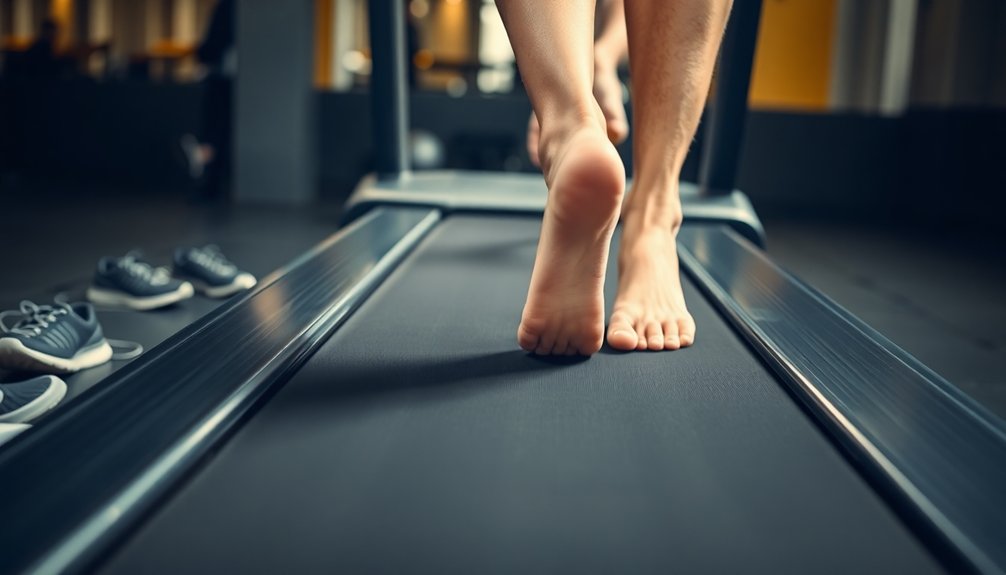
If you’re new to barefoot running, starting off gradually is key to avoiding injury and discomfort.
Begin with short sessions on the treadmill, just one to two minutes, to let your feet adjust. As you get comfortable, gradually increase the duration and intensity while monitoring for blisters or any discomfort.
Start with brief treadmill sessions of one to two minutes to help your feet adjust before gradually increasing your workout.
Focus on maintaining proper form by landing softly on the balls of your feet to minimize impact forces, which helps reduce injury risk.
Consider using a towel or mat on the treadmill belt to enhance comfort and reduce friction.
Don’t forget to warm up for 5-10 minutes before your barefoot run to prepare your joints and muscles for an effective workout. Incorporating proper form can significantly reduce the risk of injury during your runs.
Happy running!
The Importance of Gradual Transition
When you start barefoot running on a treadmill, it’s essential to ease into it.
Begin with short sessions and listen to your body; if something doesn’t feel right, don’t push through the pain.
This gradual approach not only enhances your comfort but also helps prevent injuries as your feet adjust. Additionally, incorporating healthy lifestyle choices like proper nutrition and regular exercise can significantly improve your overall running experience.
Start Slowly for Safety
Starting your journey into barefoot running requires a cautious approach to guarantee safety and comfort.
To guarantee a smooth adjustment, you should:
- Start slowly with very short sessions of one to two minutes, allowing your feet to adapt to the new experience.
- Increase workout duration and intensity by 1-2 minutes daily as your comfort and strength improve to avoid the risk of blisters.
- Monitor foot health closely for any signs of blisters or abrasions, adjusting your routine as needed.
- Focus on proper form, landing on the midfoot or forefoot, to minimize impact and reduce the risk of injury during the adjustment phase.
Listen to Your Body
As you begin to embrace barefoot running on a treadmill, it’s crucial to pay attention to how your body responds to this new experience.
Listen to your body during the change phase; any signs of pain or discomfort mean you should reduce intensity or consider wearing shoes again.
Start with short running sessions of one to two minutes, gradually increasing duration by just 1-2 minutes. This gradual approach helps minimize discomfort and allows your skin to toughen, reducing risks of injuries like stress fractures and plantar fasciitis.
Monitor your foot health closely to catch blisters or abrasions early.
Hygiene Considerations for Barefoot Running
While running barefoot on a treadmill can enhance your workout experience, it also raises important hygiene concerns that you shouldn’t overlook.
To stay safe, keep these tips in mind:
- Clean your feet: Always wash your feet before using the treadmill to reduce bacteria and fungi exposure.
- Monitor foot health: Watch for open wounds or abrasions that can lead to infections while running barefoot.
- Regularly clean the treadmill surface: Verify the machine is sanitized after each use to eliminate pathogens.
- Use a towel or mat: This can help reduce friction and protect your feet from blisters and calluses, maintaining hygiene during your workout.
Additionally, practicing healthy habits such as regular cleaning and monitoring can contribute to overall well-being and reduce stress during your fitness routine.
How to Choose the Right Treadmill
How do you find the perfect treadmill for barefoot running? Start by looking for models with good cushioning to minimize impact and keep your feet comfortable.
Look for treadmills with excellent cushioning to ensure comfort and reduce impact while barefoot running.
A flat, even belt surface is essential to support your natural running form and reduce the risk of injuries. Consider treadmills with adjustable incline settings; they can mimic outdoor conditions and engage different muscle groups effectively.
Safety features like emergency stop buttons and handrails enhance your security during workouts, especially when you’re barefoot.
Finally, evaluate the speed range and motor power—aim for at least 3.0 CHP to accommodate various workout intensities. With these factors in mind, you’ll be well on your way to a great barefoot running experience. Additionally, overcoming obstacles during your fitness journey is crucial for long-term success and personal growth.
Personal Experiences and Insights on Barefoot Running
Many runners find that shifting to barefoot running on a treadmill can be a game changer for their fitness routine. Here are some personal insights and experiences to reflect on:
- Benefits: Enhanced foot strength and improved balance by activating smaller muscles.
- Running Form: Encourages midfoot or forefoot landing, reducing overstriding for a more efficient gait.
- Gradually Adapt: Start with short sessions of one to two minutes to help your feet adjust and avoid injuries.
- Potential Risks: Be cautious of hygiene issues, as running barefoot increases contact with the treadmill surface, raising the risk of infections or skin abrasions.
Embracing barefoot running can transform your treadmill experience, but it’s crucial to be mindful of the potential risks involved. Additionally, this practice can promote self-sufficiency and responsibility, as it encourages runners to take ownership of their fitness journey and adapt to new challenges.
Conclusion
To sum up, running barefoot on a treadmill can offer benefits like improved foot strength and a more natural running gait, but it also comes with risks. A study found that 78% of barefoot runners reported fewer injuries compared to those in traditional shoes. If you choose to run barefoot, take it slow and listen to your body. With the right precautions and a gradual shift, you might just enjoy a new, invigorating workout experience.