
Meditation can transform your busy life, taking just 10 minutes a day to improve mental clarity and emotional balance. It helps reduce stress, enhances decision-making, and fosters resilience. Creating a peaceful meditation space and practicing simple techniques, like mindful breathing or visualization, can make a big difference. Even on tight schedules, you can incorporate mindfulness into daily tasks. Discover how to make meditation a consistent habit and track your progress to reap long-term benefits.
Why Meditation Matters for Busy People
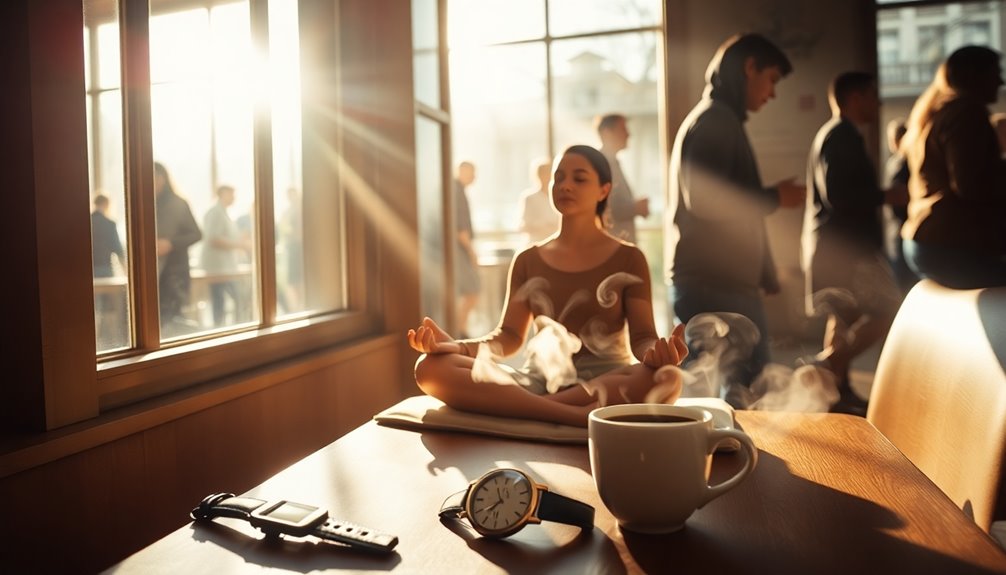
In our fast-paced world, stress often feels like an unwelcome companion. For busy people like you, meditation can be a powerful tool for stress relief and enhancing mental health.
By practicing mindfulness, you become more self-aware, which fosters personal growth and emotional balance. It helps you carve out that essential work-life balance, allowing you to navigate daily challenges with ease.
Practicing mindfulness enhances self-awareness, nurtures personal growth, and fosters emotional balance for a harmonious work-life experience.
The mindfulness benefits extend beyond just relaxation; they also improve clarity enhancement in decision-making and problem-solving. When you take a few moments to meditate, you’re not just pausing to breathe; you’re actively investing in your mental well-being. Additionally, regular mindfulness practices can lead to improved emotional regulation, allowing you to better manage anxiety and stress.
Embracing meditation can transform your hectic life into a more centered and fulfilling experience.
How Just 10 Minutes Can Change Your Day

Taking just 10 minutes for meditation can transform your day in ways you mightn’t expect.
You’ll boost your mental clarity, enhance your emotional resilience, and increase your focused productivity.
With this small investment of time, you can tackle your busy schedule with renewed energy and focus. Additionally, incorporating mindfulness practices into your routine can help manage feelings and reduce anxiety.
Boost Mental Clarity
Although your schedule may be packed, dedicating just 10 minutes to meditation can greatly enhance your mental clarity.
Start with mindful breathing; focus on your breath, inhaling deeply and exhaling slowly. This simple practice calms your mind and sets the stage for clarity exercises.
Try visualizing a clear blue sky, letting go of distractions and worries that cloud your thoughts. This focused attention sharpens your mental acuity, making it easier to tackle your tasks.
Incorporate short sessions throughout your day—whether during a break or in the morning—to maintain that clarity.
Enhance Emotional Resilience
Mental clarity isn’t just about clear thinking; it also plays an essential role in emotional resilience.
When you spend just 10 minutes meditating, you cultivate emotional awareness, helping you navigate daily challenges with ease. This brief pause allows you to:
- Identify your feelings: Acknowledge what you’re experiencing without judgment.
- Cultivate a positive mindset: Shift your focus from negativity to gratitude and hope.
- Strengthen your responses: Build resilience by training your mind to respond thoughtfully rather than react impulsively.
Increase Focused Productivity
When you invest just 10 minutes in meditation, you can dramatically enhance your focused productivity throughout the day.
By practicing focused breathing, you train your mind to stay present, which minimizes distractions and boosts concentration. Start by finding a quiet space, closing your eyes, and taking deep, intentional breaths. This simple productivity technique helps clear mental clutter, allowing you to tackle tasks with renewed energy and clarity.
As you incorporate this practice into your daily routine, you’ll notice improved efficiency in your work. Your mind will feel sharper, and you’ll be better equipped to manage challenges.
Setting the Scene: Creating Your Meditation Space

Creating a peaceful meditation space can transform your practice from a simple routine into a sanctuary for the mind.
Transform your meditation practice into a serene sanctuary for the mind by creating a peaceful space.
To cultivate the perfect meditation ambiance, focus on these calming essentials:
- Soft lighting: Use candles or dimmable lamps to create a warm glow that soothes your senses.
- Comfortable seating: Choose a cushion, chair, or mat that offers support while allowing you to relax fully.
- Nature elements: Incorporate plants, crystals, or calming scents like lavender to enhance your connection with tranquility. Engaging in mindfulness practices can further deepen your meditation experience and help you appreciate each moment fully.
Simple Techniques: How to Meditate in 10 Minutes
Even if you’re short on time, dedicating just 10 minutes to meditation can provide significant benefits for your mind and body.
Start by finding a comfortable spot where you won’t be disturbed. Close your eyes, take a deep breath, and focus on your breathing techniques. Inhale deeply through your nose, hold for a moment, then exhale slowly through your mouth. Repeat this for a few minutes.
Next, try visualization exercises. Picture a peaceful scene, like a serene beach or a quiet forest. Imagine the sounds and sensations associated with that place.
If your mind wanders, gently bring it back to your breath or your visualization. With just 10 minutes, you can cultivate calmness and clarity in your busy life. Incorporating mindful breathing into your routine can help anchor you in the present moment.
Incorporating Mindfulness Into Daily Activities
Here’s how to incorporate it seamlessly:
- Mindful walking: Feel each step as your foot touches the ground, notice the rhythm of your breath, and observe your surroundings with curiosity.
- Mindful eating: Savor each bite, focusing on the flavors and textures, while appreciating the nourishment you receive.
- Mindful breathing: Take a few moments throughout your day to pause, inhale deeply, and exhale slowly, grounding yourself in the present.
These practices transform everyday moments into opportunities for meditation, allowing you to cultivate peace amid your busy life. Additionally, engaging in simple activities like mindful breathing and walking enhances your appreciation of the present moment.
Overcoming Common Obstacles to Meditation
Although many people want to meditate, they often face common obstacles that can make it feel intimidating. Time constraints and busy schedules may lead you to think you don’t have enough time to practice.
Mental distractions can pull your focus away, while unrealistic expectations might make you feel like you should achieve instant enlightenment. The fear of failure or self-judgment can creep in, especially if you struggle to quiet your mind.
A perfectionist mindset often leads to a lack of motivation, as you might worry about doing it “right.” Remember, meditation doesn’t have to be perfect; it just needs to happen. Embracing vulnerability in daily life can enhance your meditation practice by allowing you to acknowledge your feelings without judgment.
Start small, be kind to yourself, and let go of those high expectations. You can make meditation work for you.
The Science Behind Meditation and Stress Reduction
When you take a moment to meditate, you’re not just sitting quietly; you’re actively engaging in a practice that can greatly reduce stress.
Neuroscience insights reveal how meditation impacts your brain, calming your stress responses and promoting emotional well-being. Here’s what happens when you meditate:
- Your body releases tension, like steam escaping a kettle.
- Your mind shifts from chaos to clarity, like clouds parting for sunlight.
- You cultivate a sense of peace, akin to the stillness of a tranquil lake.
These changes can lead to lower cortisol levels, improved focus, and enhanced resilience against daily stressors. Additionally, mindfulness during meditation encourages effortless action, allowing you to navigate through life’s challenges with greater ease and presence.
Tracking Your Progress: How to Stay Motivated
Tracking your progress in meditation is essential for maintaining motivation and seeing the benefits of your practice. Start by keeping a meditation journal where you note the date, duration, and how you felt afterward. This progress tracking helps you visualize your growth and reinforces your commitment.
Set small, achievable goals, like meditating for five minutes each day. Celebrate these milestones to boost your motivation. You might also consider integrating motivation strategies, such as joining a meditation group or sharing your experiences with friends. Additionally, incorporating mindful habits into your routine can enhance your focus and emotional resilience, supporting your meditation journey.
Finding the Right Resources: Apps and Guided Meditations
When you’re looking to enhance your meditation practice, the right resources can make all the difference.
Explore top meditation apps that offer a variety of features and guided meditations tailored to your needs.
Customizing your practice with these tools can help you stay focused and engaged, even on your busiest days. Incorporating mindful breathing techniques from zazen can further deepen your meditation experience.
Top Meditation Apps
If you’re looking to incorporate meditation into your busy lifestyle, the right app can make all the difference.
With so many options available, you can easily find one that fits your needs and preferred meditation styles. Here are three top meditation apps to evaluate:
- Headspace: Offers a variety of mindfulness techniques, from short breathing exercises to longer sessions.
- Calm: Features guided meditations that cater to different meditation styles and skill levels, perfect for beginners and experts alike.
- Insight Timer: A vast library of free resources, allowing you to explore diverse mindfulness techniques with community support.
These apps can seamlessly weave meditation into your daily routine, helping you find peace amid your busy life.
Guided Meditation Benefits
While you might feel overwhelmed by your busy schedule, guided meditation can offer a practical solution for finding inner calm.
Using apps and resources, you can explore various techniques like guided imagery and breath awareness. A body scan can help you connect with your physical self, while mantra repetition can ground your thoughts.
Visualization techniques allow you to create serene mental spaces, and sound meditation with nature sounds can enhance relaxation. You might also enjoy mindful walking, integrating movement into your practice.
Incorporating a gratitude practice or loving kindness meditation can further enrich your experience, cultivating positivity.
With these resources, you can easily fit meditation into your day, transforming a few minutes into a meaningful routine.
Customizing Your Practice
Finding the right resources can make all the difference in customizing your meditation practice. With so many options available, you’ll want to choose tools that fit your lifestyle and preferences.
Consider using apps and guided meditations that offer personalized techniques and adaptable routines. Here are some resources to explore:
- Meditation apps with customizable timers and reminders, perfect for your busy schedule.
- Guided meditations focusing on specific themes, like stress relief or sleep enhancement, to meet your needs.
- Community forums where you can share experiences and discover new insights from fellow meditators.
Making Meditation a Habit: Tips for Consistency
Establishing a consistent meditation practice can transform your busy life, but it requires dedication and intention. To make meditation a habit, start by setting a specific time each day. Morning or evening works best for many, but find what suits you.
Use daily reminders, like alarms or sticky notes, to prompt you. Keep your sessions short at first—just five minutes can make a difference. Gradually increase the duration as you become more comfortable.
Track your progress in a journal; this visual representation reinforces your commitment and supports habit formation. Finally, be patient with yourself. Consistency builds over time, so celebrate small victories, and don’t get discouraged by setbacks. Remember to embrace relaxation and let go of expectations during your practice to enhance your overall experience.
Conclusion
In just ten minutes a day, you can transform your chaotic schedule into a haven of calm. By embracing meditation, you’re not just carving out time for yourself—you’re investing in your well-being. Remember, even the busiest bees need a moment to pause and gather strength. As you weave mindfulness into your life, you’ll find that those fleeting moments of peace can ripple out, enhancing every aspect of your day. So, take that leap; your mind will thank you!