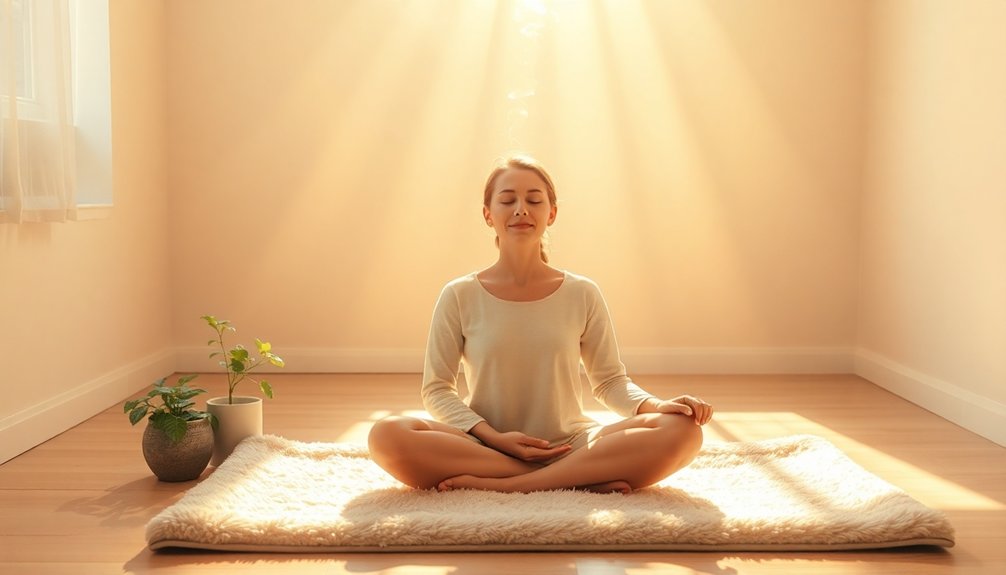
To not try too hard during meditation, embrace relaxation and let go of expectations. Use the 6Rs process to manage distractions and tension, smiling to encourage a lighter mindset. It’s natural to feel restlessness; recognize it without judgment and return to your breath. Keep it enjoyable, and remember that doubts and fears are just thoughts. Integrate short practices into your routine for consistency, and connect with others for support. You’ll discover more tips to enhance your meditation journey ahead!
Embracing Relaxation in Meditation
Emphasizing the importance of savoring the moment helps you develop patience and bravery in facing distractions. By consciously releasing tension in your body and mind, you facilitate a quicker return to focus. Remember, exerting yourself too hard can hinder your progress; letting go of expectations makes your practice more enjoyable. Cultivating a relaxed mindset enhances your ability to observe distractions without attachment, leading to deeper insight and clarity. Embrace relaxation, and watch your meditation transform.
Additionally, recognizing that negative thoughts can dominate your daily mindset if focused on too long is essential to fostering a more peaceful meditation experience.
The 6Rs Process for Managing Distractions
Distractions can easily derail your meditation practice, but the 6Rs process offers a structured approach to manage them effectively.
First, recognize distractions as they arise, allowing you to maintain focus. Next, release these distractions by letting go of unwholesome thoughts or any physical tension you might feel. This step is essential for clearing your mind and returning to your meditation object.
After releasing, you’re ready to return, enhancing your overall focus and depth. Remember to smile; it’s a simple technique that eases tension and promotes a positive mindset. Incorporating mindfulness practices can further enhance your ability to stay present during meditation.
Finally, make sure your practice of loving-kindness is enjoyable, not forced. By embracing the 6Rs, you’ll navigate distractions with grace, deepening your meditation experience.
Addressing Tension and Restlessness
As you meditate, you might notice tension or restlessness creeping in, which is completely normal. Instead of fighting these feelings, try welcoming them and observing how they shift. Remember that practicing mindfulness techniques can help you manage these sensations more effectively.
Welcoming Tension in Practice
Embracing tension during meditation can transform your practice into a more insightful experience. Instead of resisting discomfort, try welcoming tension in your body, like tight shoulders or clenched teeth. This acknowledgment signals a need for relaxation and spaciousness.
The 6Rs process—recognizing and releasing tension—can help you manage discomfort effectively, allowing your focus to sharpen. By reducing excessive energy that often leads to restlessness, you open yourself to a more observant and relaxed state.
Embracing the natural unfolding of tension and restlessness, rather than viewing them as failures, fosters greater insight and clarity. Ultimately, welcoming tension can alleviate stress, enhancing your overall meditation experience and promoting a deeper connection to the present moment.
Managing Restlessness Effectively
While it’s natural to feel restless during meditation, managing this restlessness effectively can greatly enhance your practice. Instead of trying too hard to eliminate discomfort, embrace these strategies:
- Welcome Tension: Accept the sensation of restlessness rather than resisting it, allowing stress to melt away.
- Use the 6Rs: Recognize and release distractions to help refocus your mind and ease tension.
- Observe Without Judgment: View restlessness as just another thought, helping you detach from the sensation and lessen its intensity.
- Return to Your Breath: Ground yourself by focusing on your breath, redirecting excess energy back into your meditation practice.
Relaxing the Mind Naturally
When you find your mind racing or your body tense during meditation, it’s vital to recognize that relaxation doesn’t come from force but from acceptance. Instead of resisting tension, welcome it.
By observing your restlessness without judgment, you can let it go, allowing it to dissipate naturally. Use the 6Rs process—recognizing and releasing distractions—to manage feelings of tension effectively.
Notice if you’re clenching your teeth or tightening your shoulders; these are signs to shift toward a more spacious approach. Reducing excessive energy and focus can help you observe restlessness more peacefully.
Embrace the moment, and rather than forcing stillness, invite clarity and insight by simply accepting what is. A relaxed mind is fundamental for deepening your meditation practice.
The Role of Smiling in Your Practice

Smiling during meditation can greatly enhance your experience by promoting relaxation and positive emotions.
Even a gentle smile can trigger wholesome thoughts and help you return to your focus more easily. Additionally, incorporating practicing gratitude into your meditation can further elevate your mood and deepen your mindfulness.
Benefits of Smiling
A simple smile can transform your meditation practice in profound ways. Smiling not only eases tension but also promotes a relaxed state of mind, enhancing your focus.
Here are some benefits of incorporating smiling into your practice:
- Triggers Wholesome Thoughts: Smiling encourages positive thinking, paving the way for a more fruitful meditation session.
- Creates a Positive Feedback Loop: The act of smiling reinforces calmness, helping you return to your meditation object with ease.
- Fosters a Light-Hearted Attitude: A smile lightens your experience, reducing self-imposed pressure and making meditation more enjoyable.
- Cultivates Loving-Kindness: Regular smiling meditation strengthens emotional resilience and overall well-being, deepening your connection with yourself and others.
Embrace the power of smiling to elevate your practice.
Cultivating Positive Visualization
How can you enhance your meditation practice through positive visualization? By cultivating positive visualization, you can shift your inner dialogue and create a more relaxed state of mind.
Picture gentle, loving animals or serene landscapes to expand your range of positive imagery. This not only reinforces feelings of loving-kindness but also eases tension, allowing you to focus better during meditation.
Smiling while visualizing can trigger wholesome thoughts and promote a positive mindset, becoming an automatic response to stress or discomfort. Even if the feelings you experience fluctuate, simply maintaining awareness of them deepens your meditation experience.
Engaging in this process helps alleviate distractions, ensuring your practice remains enjoyable and fulfilling.
Smiling and Relaxation Connection
The simple act of smiling can greatly enhance your meditation practice by promoting relaxation and reducing tension.
When you incorporate smiling into your sessions, you create a more enjoyable experience. Here’s how smiling can impact your practice:
- Triggers Wholesome Thoughts: Smiling helps you cultivate positive emotions, making it easier to focus.
- Enhances Positive Imagery: Visualize kind animals while smiling to deepen feelings of joy and connection.
- Reinforces a Positive Mindset: Regular smiling strengthens your ability to return to focus amidst distractions.
- Cultivates Loving-Kindness: Smiling fosters a sense of connection to yourself and others, enhancing the quality of your meditation.
Maintaining Enjoyment and Light-heartedness
Although meditation can sometimes feel serious, maintaining enjoyment and light-heartedness is key to a fulfilling practice. When you embrace a playful approach, it helps your mind to let go of expectations and allows the process to unfold naturally.
Instead of pressuring yourself to achieve specific outcomes, focus on creating a relaxed experience. Laughter and smiles can enhance tranquility, fostering a positive mindset that’s essential for effective meditation.
Remember that every session can feel different; this recognition brings a sense of freedom, encouraging you to engage without burdens. By cultivating joy and lightness in your practice, you not only enhance your experience but also open the door to deeper insights along your meditation journey. Additionally, recognizing the insignificance of others’ judgments can further liberate your meditation practice, allowing for a more authentic and enjoyable experience.
Managing Expectations in Meditation
What if you could approach meditation without the weight of expectations? By letting go of specific feelings or states you think you should achieve, you open yourself up to a more genuine experience.
Here are four strategies to help manage your expectations:
- Drop Expectations: Each session will feel different, so don’t seek immediate results.
- View Benefits as Side Effects: Appreciate the positive outcomes without fixating on them.
- Stay Present: Accept whatever arises; tension comes from aiming for a particular outcome.
- Recognize Small Growth: Acknowledge subtle changes in your practice to build confidence. Additionally, self-compassion is crucial for mental well-being, allowing you to approach your practice without harsh self-judgment.
Overcoming Doubts and Fears
Doubts and fears often creep in during meditation, especially for those just starting out. You might worry about whether you’re meditating “correctly” or feel pressured to achieve specific states.
Remember, overcoming doubts and fears begins with recognizing them as just thoughts. Instead of trying to empty the mind entirely, focus on your breath and accept whatever arises.
Overcoming doubts starts with recognizing them as thoughts; focus on your breath and embrace whatever arises.
Embrace the variability in your practice; each session will be different, and that’s perfectly normal. Viewing the benefits of meditation as side effects rather than goals can relieve pressure.
Acknowledge any resistance you feel, and practice consistently to build your confidence. Incorporating mindfulness and present moment awareness into your meditation can enhance your experience and reduce stress. With time, you’ll find that these doubts and fears become less intimidating, allowing your meditation journey to unfold naturally.
Integrating Short Meditations Into Your Routine
As you grow more comfortable with your meditation practice and start to overcome doubts and fears, integrating short meditations into your daily routine can make a significant difference.
These brief sessions, lasting just 1 to 5 minutes, can easily fit into your life. Here’s how to start taking time for meditation:
- Pair with Daily Activities: Meditate during morning coffee or while waiting for transport.
- Set Reminders: Create a structured routine by scheduling specific meditation times.
- Practice Mindfulness: Focus on your breath or body sensations throughout the day.
- Build Confidence: Regular short meditations ease your shift into longer sessions. Additionally, incorporating mindfulness practices can enhance mental health and facilitate positive interpersonal relationships.
Seeking Guidance for a Better Experience
While diving into meditation can feel intimidating, seeking guidance from experienced practitioners can greatly enhance your journey. Connecting with teachers or seasoned meditators offers valuable insights and structured support, making it easier to navigate challenges.
Consider using meditation apps or online resources for guided sessions that help you feel more at ease without the pressure of specific outcomes. Joining a meditation group fosters community, allowing you to share experiences and tips that enrich your practice.
Engaging in guided meditations shifts your focus from pursuing results to simply embracing the process, promoting relaxation and acceptance. Additionally, learning from Buddhist teachings reassures you that meditation is a personal journey without strict standards for “success.” Embracing mindfulness practices can significantly enhance your meditation experience by promoting present-moment awareness and reducing stress.
Conclusion
As you sit for your next meditation, remember that it’s not about perfection; it’s about presence. Coincidentally, when you let go of trying too hard, you might find that peace sneaks up on you, like a gentle breeze on a warm day. Embrace the unexpected moments of joy and clarity that arise. With each breath, you’re not just meditating; you’re dancing with life itself. So, lighten up, and let your practice unfold naturally.