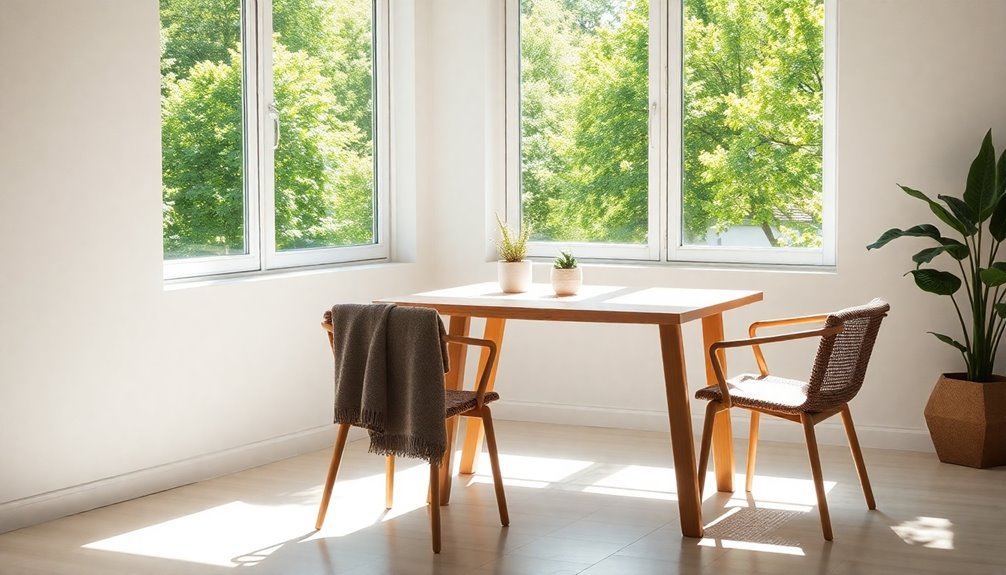
Simple living furniture transforms your space by promoting clarity and calm, helping you focus better. With multi-functional designs and natural materials, it creates an inviting atmosphere that reduces clutter and distractions. By choosing minimalist styles and soothing colors, you foster a sense of peace, enhancing your mental well-being. This thoughtful arrangement allows for distinct zones tailored to work, relaxation, and creativity. Discover how these choices can reshape your mindset and elevate your living experience.
What Is Simple Living Furniture?
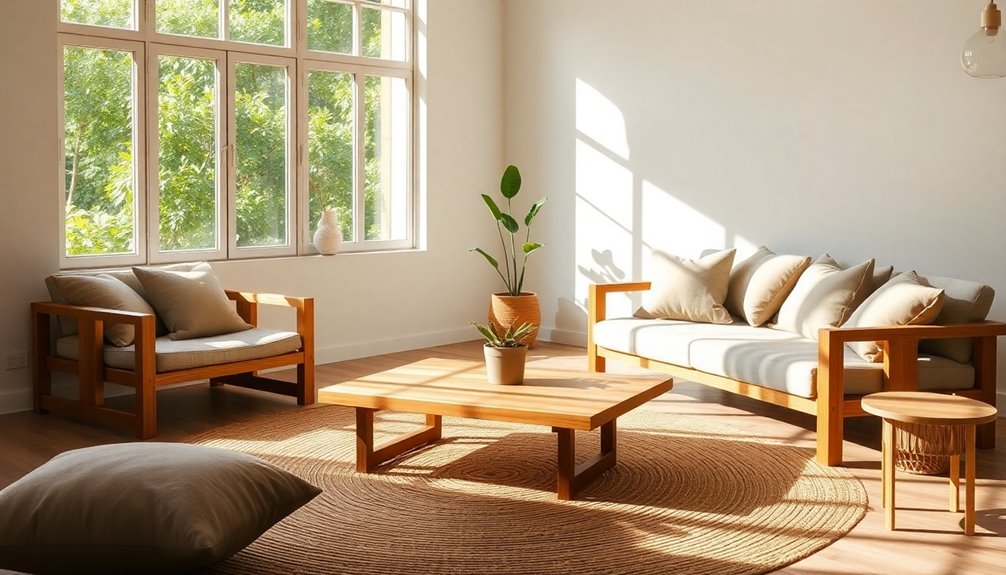
Simple living furniture embodies a philosophy that prioritizes functionality and minimalism. When you focus on furniture selection, you’re not just choosing pieces; you’re embracing a lifestyle that promotes clarity and peace.
The minimalism benefits are numerous, as they encourage you to declutter both your space and your mind. By opting for versatile, multi-functional items, you create a home that’s both practical and aesthetically pleasing.
Embrace minimalism to declutter your space and mind, creating a practical yet beautiful home with versatile, multi-functional furniture.
Think of sleek lines, neutral colors, and natural materials that enhance your living space without overwhelming it. This approach not only saves you money but also helps you appreciate what you truly need.
With simple living furniture, you cultivate an environment that supports your well-being and reflects your values. Additionally, regular decluttering sessions foster feelings of control and accomplishment, enhancing both your space and mental clarity.
The Impact of Your Environment on Mental Health
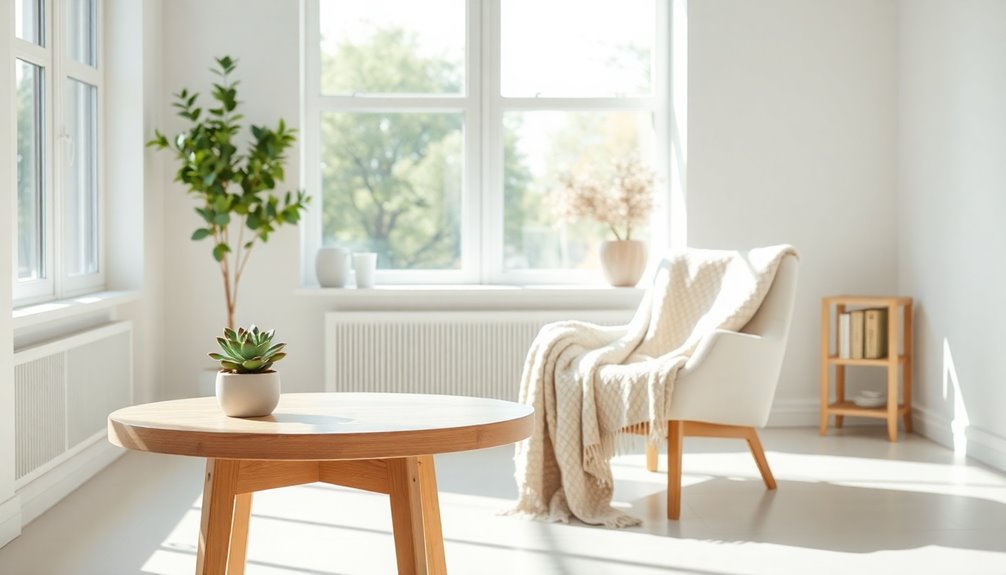
Your environment plays an essential role in your mental health, affecting everything from your focus to your clarity of thought. Clutter can overwhelm your mind, making it hard to concentrate, while a connection to nature can enhance your well-being. Embracing mindfulness practices can further elevate your mental state by promoting present-moment awareness and reducing stress.
Clutter’s Effect on Focus
When clutter accumulates in your space, it can greatly disrupt your focus and mental clarity. You might find that clutter consequences extend beyond just visual chaos; they create focus distractions that pull your attention away from tasks.
A messy environment can evoke feelings of stress and overwhelm, making it hard to concentrate on what truly matters. Each item out of place serves as a reminder of unfinished tasks, further clouding your mind.
To regain control, consider simplifying your surroundings. By decluttering, you clear not only your physical space but also your mental landscape, enabling sharper focus and improved productivity.
A clean, organized environment invites clarity, allowing you to think more clearly and work more effectively.
Nature and Mental Clarity
Clutter can cloud your mind, but a connection to nature offers a revitalizing antidote. Engaging with green spaces enhances your mental clarity and emotional well-being.
Nature therapy can reduce stress and improve focus, allowing you to think more clearly. Here are four ways to incorporate nature into your life:
- Spend time outdoors: Regular walks in parks can refresh your mind.
- Bring plants indoors: Houseplants create a calming atmosphere and improve air quality.
- Create a nature corner: Designate a space in your home with natural elements for relaxation.
- Use natural light: Let sunlight in; it’s proven to boost mood and productivity.
How Minimalist Designs Enhance Focus and Clarity
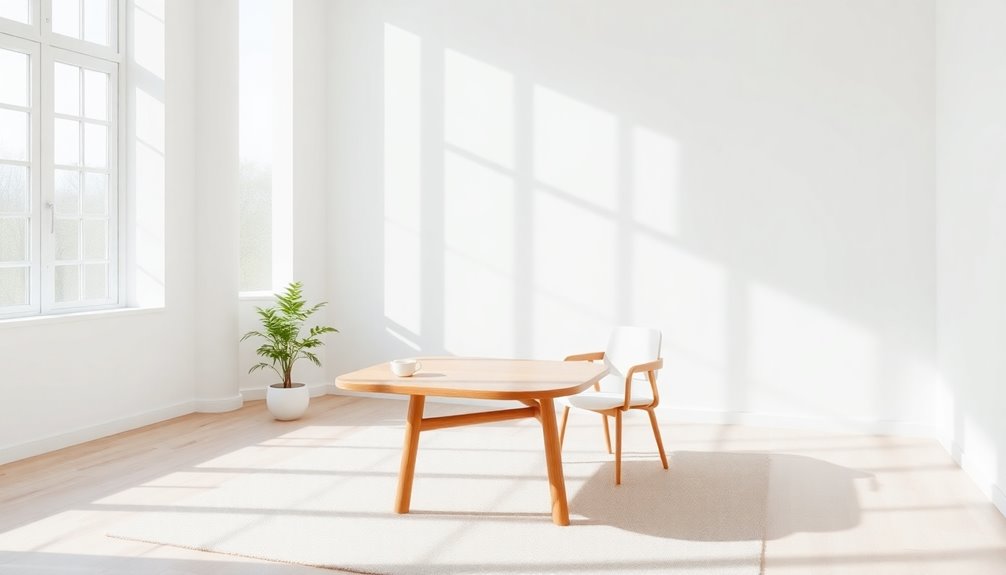
Minimalist designs foster focus and clarity by eliminating distractions from your surroundings.
When you embrace a minimalist aesthetic, you create a focused environment that supports your mindfulness practice. With fewer items vying for your attention, your mind can settle into a state of calm and concentration.
Embracing minimalism fosters a focused environment, allowing your mind to achieve calm and concentration.
This simplicity encourages you to engage more deeply with tasks at hand, enhancing your productivity. You’ll find that a clean, uncluttered space not only reduces stress but also invites creativity.
By surrounding yourself with essential, well-chosen pieces, you’ll feel more grounded and present.
Ultimately, adopting minimalist designs allows you to cultivate a serene atmosphere where clarity thrives, enabling you to navigate your day with intention and purpose. Additionally, this approach aligns with the principles of mindful purchasing, ensuring that your environment reflects your true needs and values.
Choosing Natural Materials for Well-Being
Why should you consider choosing natural materials for your living space? Opting for natural materials not only enhances your home’s aesthetic but also supports your well-being.
Embracing sustainable craftsmanship and biophilic design fosters a deeper connection with nature, positively influencing your mental state. Additionally, engaging with nature cultivates peace and enhances your overall well-being.
Here are four reasons to make the switch:
- Natural Fibers: They’re breathable and add organic textures, improving indoor air quality.
- Eco-Friendly Finishes: These minimize harmful chemicals, promoting a healthier environment.
- Sustainable Sourcing: Choosing responsibly sourced materials reduces environmental impact.
- Wood Selection: Select wood with care, as it brings warmth and character to any space.
The Role of Color in Creating a Calming Space
Color plays an essential role in shaping the atmosphere of your space, influencing your mood and relaxation levels. By choosing the right hues, you can create a calming environment that promotes well-being. Let’s explore how different colors affect you and how to select shades that foster tranquility. Additionally, embracing intentional living can further enhance your ability to create a serene and meaningful space.
Psychological Effects of Color
When you walk into a room, the hues that surround you can greatly influence your mood and sense of well-being. This is where color psychology plays an essential role, as different colors evoke specific emotional associations.
Understanding these can help you create a calming space.
Here are four colors to contemplate for a serene environment:
- Blue: Known for its calming effect, it promotes tranquility and reduces stress.
- Green: Represents nature, fostering balance and rejuvenation.
- Soft Neutrals: Colors like beige or soft gray create a peaceful backdrop.
- Lavender: A gentle hue that encourages relaxation and reduces anxiety.
Choosing the Right Hues
How can you select the perfect hues to create a calming atmosphere in your home? Start by exploring color psychology; certain colors evoke specific emotions.
For calming palettes, consider cool shades like soft blues or greens, which promote tranquility. Warm tones, such as gentle yellows, can add warmth without overwhelming the senses.
Use accent colors sparingly to maintain balance, ensuring they don’t disrupt the serene vibe. Pay attention to hue variations and color saturation; lighter hues reflect more light, enhancing space perception.
Finally, think about how different colors interact within your environment. A well-chosen color scheme can transform your space, creating a peaceful retreat where you can unwind and recharge.
Essential Furniture Pieces for Simple Living
Embracing simple living doesn’t mean sacrificing comfort or style; it’s about choosing essential furniture pieces that enhance your space without clutter.
By focusing on functional aesthetics and intentional design, you can create an inviting atmosphere that reflects your lifestyle.
Here are four must-have furniture pieces for simple living:
- Multi-functional sofa: A comfortable place to sit that can also double as a bed or storage.
- Minimalist dining table: A sleek design that invites gatherings without overwhelming your space.
- Simple shelving units: Perfect for displaying decor and keeping items organized.
- Compact desk: A dedicated workspace that fits seamlessly into your home without taking up too much room.
These pieces help you maintain a serene and functional environment.
Tips for Decluttering Your Space Effectively
While clutter can quickly accumulate, effective decluttering transforms your space into a peaceful haven.
Start by implementing decluttering strategies like the “one in, one out” rule. Each time you bring something new into your home, let go of something else.
Next, tackle one area at a time—don’t overwhelm yourself by trying to do it all at once. Use organization techniques like baskets or bins to group similar items, making them easier to find and access.
Set a timer for 15 minutes each day to focus your efforts; small, consistent actions lead to big results. Regular decluttering encourages mindfulness and prevents future clutter, ensuring that your space remains serene.
Finally, remember to regularly assess your belongings, ensuring you keep only what serves you. Embrace simplicity, and create a serene environment you love.
How to Arrange Furniture for Optimal Flow?
When arranging your furniture, think about how to maximize space and enhance natural light. You want to create pathways that allow for easy movement and make the most of the sunlight streaming in. A well-thought-out layout can transform your space into a more inviting and functional area, promoting mindfulness and self-reflection that cultivates presence and appreciation for each moment.
Maximize Space Utilization
Arranging furniture effectively can transform your space, making it feel larger and more inviting. To maximize space utilization, consider these strategies:
- Use multifunctional designs: Choose furniture that serves multiple purposes, like a sofa bed or a coffee table with storage.
- Implement space-saving techniques: Opt for wall-mounted shelves instead of bulky bookcases to free up floor space.
- Create zones: Define areas for different activities, like reading or socializing, to enhance flow and usability.
- Keep pathways clear: Guarantee furniture placement allows for easy movement, avoiding cluttered areas and promoting a more open feel.
Enhance Natural Light
Maximizing space utilization naturally leads to reflections on light and flow within your home.
To enhance natural light, arrange your furniture thoughtfully. Place larger pieces away from windows to maximize sunlight exposure. Consider using mirrors to reflect light deeper into the room, creating an airy feel.
Keep pathways clear to allow light to travel freely and improve overall flow. Lighter colors for walls and furnishings can amplify the natural light benefits, making spaces feel more open and inviting.
Opt for multifunctional furniture, like a light-colored ottoman, which can double as a seat or table while keeping the area uncluttered.
Incorporating Multi-Functional Furniture for Flexibility
Incorporating multi-functional furniture can greatly enhance your living space, especially if you seek flexibility in a compact environment.
By choosing adaptable designs, you can create efficient space-saving solutions that meet your needs. Here are four ideas to get you started:
- Sofa Bed: Transform your living room into a guest room effortlessly.
- Storage Ottomans: Use them for seating and store items inside for a clutter-free space.
- Folding Tables: Perfect for dining or work, they can be tucked away when not in use.
- Bookshelf Room Divider: Define areas in an open space while providing storage.
These options not only maximize functionality but also elevate your home’s aesthetic. Incorporating such designs can help you prioritize meaningful connections and enhance your overall well-being.
Embrace the versatility!
Creating Zones: Work, Relaxation, and Creativity
While you might love the idea of an open living space, creating distinct zones for work, relaxation, and creativity can greatly enhance your daily experience.
By focusing on workspace aesthetics, you can cultivate an environment that boosts productivity. Functional layouts help separate these areas, ensuring that each zone serves its purpose.
Designate relaxation zones with comfortable seating and calming colors to promote unwinding. Meanwhile, carve out creative corners filled with inspiring decor and sensory spaces to spark innovation.
Mindful organization keeps clutter at bay, allowing each area to shine. Through intentional design, you can harmonize ambient influences, making your home a sanctuary that nurtures both your mind and spirit. Embracing voluntary simplicity can lead to lower stress and greater well-being.
Embrace these zones for a more balanced life.
Embracing Sustainability in Your Furniture Choices
Creating distinct zones in your living space not only enhances functionality but also opens the door to more mindful choices, especially when it comes to furniture.
Embracing sustainability means prioritizing pieces that reflect your values. Here are four ways to make eco-conscious furniture choices:
- Choose sustainable materials: Look for items made from reclaimed wood or bamboo.
- Opt for eco-friendly designs: Seek out furniture that incorporates organic shapes and minimal waste.
- Support ethical sourcing: Purchase from brands committed to responsible manufacturing practices.
- Invest in durable craftsmanship: Prioritize well-made pieces that will stand the test of time, reducing the need for replacements. Additionally, cleanliness and organization can significantly boost overall happiness and focus in your living environment.
How Does Simple Living Furniture Transform Your Mindset?
When you embrace simple living furniture, you not only streamline your space but also shift your mindset toward mindfulness and intentionality.
This approach encourages mindful consumption, allowing you to carefully select pieces that resonate with your values and lifestyle. You begin to prioritize quality over quantity, fostering a deeper emotional connection with your surroundings.
As you surround yourself with thoughtfully chosen items, clutter fades, making room for clarity and focus. The simplicity of your environment can help reduce stress and distractions, promoting a more peaceful state of mind.
Ultimately, simple living furniture transforms not just your space but also how you think and feel, leading to a more purposeful and fulfilling life.
Conclusion
So, you thought clutter was your friend, huh? The irony is that embracing simple living furniture can clear your mind while filling your space with peace. By choosing minimalist designs and natural materials, you’re not just decorating—you’re transforming your mindset. Who knew that less truly could be more? As you create zones for work and relaxation, you’ll find that the simplicity around you sparks clarity and creativity within you. Embrace the power of simplicity; your mind will thank you!