
When stress hits, quick techniques can save the day. Try deep breathing for immediate calm, or use the 5-4-3-2-1 grounding method to engage your senses. A quick walk boosts your mood, while desk stretches release tension and improve comfort. Create a stress-relief playlist with your favorite tunes or spend a few moments in nature to recharge. Plus, staying hydrated sharpens your focus and energy levels. There’s plenty more to discover to keep stress at bay.
Understanding Stress: What You Need to Know
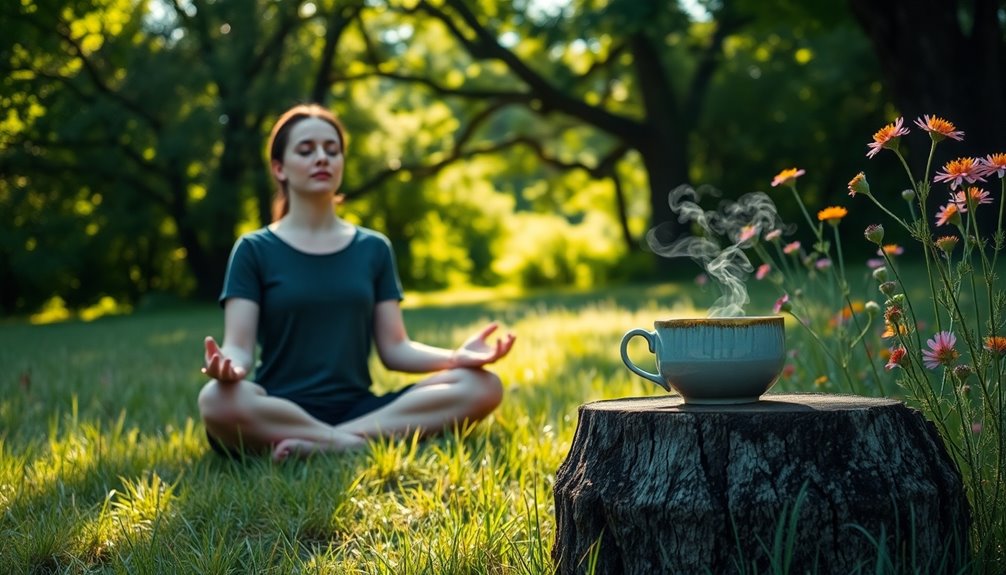
When you’re feeling overwhelmed, it’s essential to understand what stress really is. Stress is your body’s response to challenges or demands, often triggered by situations like deadlines, conflicts, or changes.
Identifying your stress triggers is the first step in managing your reactions. Once you know what causes your stress, you can develop effective coping mechanisms. These include time management, setting boundaries, and engaging in physical activity. Incorporating mindfulness practices into your routine can further enhance your ability to cope with stress and anxiety.
Finding healthy ways to cope can help you regain control and reduce feelings of anxiety. Remember, it’s okay to seek support from friends or professionals.
The Power of Deep Breathing: A Quick Technique
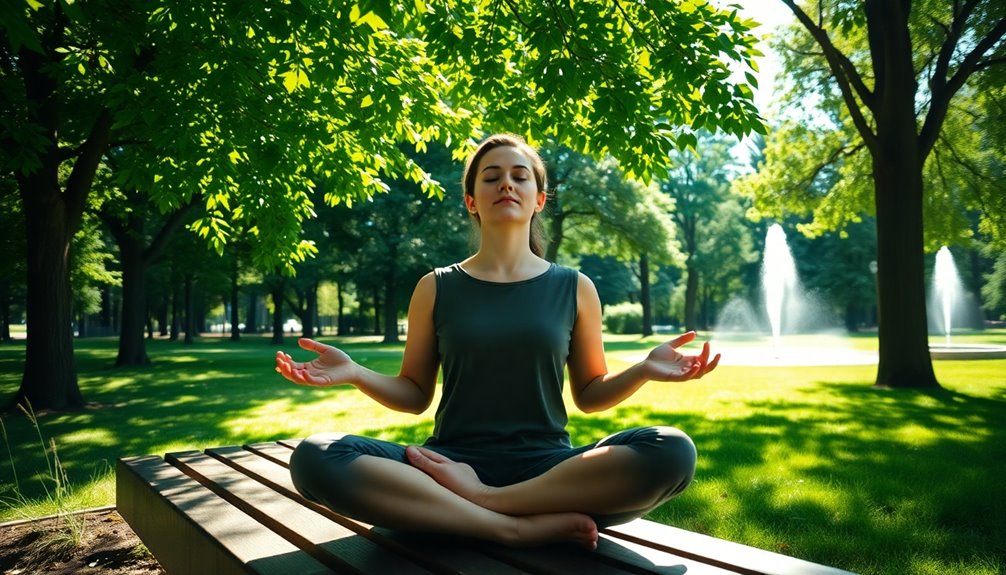
Deep breathing is one of the simplest and most effective techniques you can use to quickly reduce stress. By focusing on your breath, you cultivate breath awareness, which helps calm your mind and body.
Here’s how to practice it:
- Find a quiet space and sit comfortably.
- Inhale deeply through your nose for a count of four.
- Hold your breath for a count of four.
- Exhale slowly through your mouth for a count of six.
Repeat this cycle several times. You’ll notice how your tension melts away and clarity returns. Additionally, embracing a relaxed mindset during this practice allows you to observe distractions without attachment.
Grounding Yourself: The 5-4-3-2-1 Method Explained

When stress hits, the 5-4-3-2-1 method can help you ground yourself.
By identifying your surroundings and engaging your senses, you can shift your focus away from anxiety and back to the present moment.
Let’s explore how this simple technique can bring you back to a calmer state. Additionally, practicing mindfulness can significantly enhance the effectiveness of the 5-4-3-2-1 method by promoting emotional wellbeing and helping you stay present in the moment.
Identify Your Surroundings
Grounding techniques can be a powerful way to bring your focus back to the present moment, especially during times of stress.
By identifying your surroundings, you enhance your environmental awareness and engage in sensory observation.
Try this simple exercise to center yourself:
- Look for 5 things you can see around you.
- Notice 4 things you can feel (like the ground beneath your feet).
- Listen for 3 sounds in your environment.
- Identify 2 scents that you can smell.
This method helps you reconnect with your immediate surroundings, allowing you to let go of overwhelming thoughts.
Engage Your Senses
The 5-4-3-2-1 method is a quick and effective way to engage your senses and pull yourself out of a stressful moment.
Start by identifying five things you can see around you; really focus on the details. Next, name four things you can touch; feel the textures beneath your fingers.
Then, listen for three sounds; they could be soft or loud, but pay attention. After that, identify two scents; this is where scent exploration comes in—take a deep breath and enjoy the aromas.
Finally, taste something, whether it’s a sip of water or a piece of gum.
This sensory meditation helps ground you in the present, allowing stress to melt away as you connect with your environment.
Mindfulness in a Minute: Simple Practices to Try
Here are some simple practices to try:
- Mindful Breathing: Inhale deeply for four counts, hold for four, then exhale slowly for four. Repeat.
- Five Senses Check: Identify one thing you can see, hear, smell, touch, and taste.
- Gratitude Pause: Think of one thing you’re grateful for right now.
- Body Scan: Close your eyes and mentally check in with each part of your body, relaxing any tension.
These quick techniques can help ground you, bringing clarity and calmness throughout your busy day. Additionally, engaging in mindfulness techniques can significantly enhance your emotional resilience and overall ability to manage stress effectively.
Quick Physical Activities: Move to Reduce Stress
Take a quick break and get moving to shake off stress! Simple physical activities can work wonders for your mind and body.
Start with a few quick walks around your office or home; even five minutes can boost your mood. If you’re stuck at your desk, try some desk stretches to release tension in your neck and shoulders.
Don’t underestimate the power of body shakes—shake out your arms and legs to release pent-up energy. For a more calming approach, give chair yoga a shot; gentle poses can enhance your flexibility and focus. Incorporating moments of stillness in daily life can further enhance your overall well-being and mental clarity.
These quick physical activities can make a significant difference in how you feel, so don’t hesitate to incorporate them into your day!
Visualizing Calm: Guided Imagery for Instant Relaxation
When stress starts to overwhelm you, visualizing a peaceful scene can provide instant relief. Guided imagery is a powerful tool that allows you to tap into your imagination for relaxation.
By practicing mental visualization, you can transport yourself to a serene environment, reducing tension and enhancing your mood.
- Picture a calm beach with gentle waves lapping at your feet.
- Imagine a lush forest filled with the sounds of chirping birds.
- Visualize a cozy cabin by a crackling fireplace, enveloped in warmth.
- Think of a clear night sky, twinkling stars, and a peaceful silence.
Taking just a few minutes to engage in guided imagery can help you find your calm and restore your focus in stressful moments. Additionally, incorporating mindfulness practices into your daily routine can further enhance your ability to manage stress effectively.
Aromatherapy on the Go: Essential Oils for Stress Relief
Aromatherapy offers a quick and effective way to alleviate stress, especially when you’re on the go. Essential oil blends like lavender, bergamot, and chamomile can work wonders in calming your mind.
Just a few drops on your wrists or a quick inhale from a rollerball can provide immediate relief. You can also use a portable diffuser to enjoy these stress relief techniques wherever you are.
If you’re at work or traveling, consider carrying a small vial of your favorite blend to use during stressful moments. With just a few deep breaths, you’ll find that aromatherapy is an accessible and powerful tool to help you unwind, making your day a little brighter and more manageable. Additionally, incorporating mindfulness practices can enhance the effectiveness of these techniques by increasing your awareness of stress triggers.
Gratitude Journaling: A Five-Minute Daily Habit
Although life can get hectic, dedicating just five minutes each day to gratitude journaling can greatly shift your mindset. This simple practice not only enhances your mood but also helps you focus on the positives in your life.
Here are some journaling benefits you can enjoy with daily gratitude:
- Improved mental clarity: Writing helps you process your thoughts more effectively.
- Increased resilience: Acknowledging what you appreciate can boost your ability to handle stress.
- Enhanced relationships: Reflecting on positive interactions fosters empathy and connection.
- Better sleep: Ending your day with gratitude can calm your mind before bedtime.
Additionally, this practice can lead to a deeper connection with God as you recognize and appreciate the blessings in your life.
Laughter as Medicine: Finding Humor in Everyday Life
Laughter’s one of the best stress relievers you can find, and it’s right at your fingertips.
By spotting humor in everyday situations, you can boost your mood and improve your health.
Let’s explore some simple laughter exercises that can bring more joy into your life. Additionally, embracing small joys can significantly enhance your emotional well-being, making laughter even more impactful in your daily routine.
Benefits Of Laughter
Laughter serves as a powerful antidote to stress, offering a simple yet effective way to lighten your mood and enhance overall well-being.
Embracing laughter can lead to numerous laughter benefits, making humor therapy a valuable tool in your daily life. Here’s how laughter can help you:
- Boosts your immune system, making you healthier.
- Reduces pain by releasing endorphins, your body’s natural feel-good chemicals.
- Lowers stress levels, helping you feel more relaxed and at ease.
- Strengthens social connections, fostering deeper relationships with others.
Incorporating laughter into your routine can transform your perspective and make life’s challenges more manageable.
Finding Humor Daily
How can you find humor in your everyday life? Start by looking for the little things that make you smile. Whether it’s a funny meme, a silly moment with a friend, or even a pet doing something goofy, these moments are everywhere. Embrace them!
Daily laughter has incredible humor benefits; it can lift your mood and reduce stress. Challenge yourself to share a joke or a funny story at least once a day. Notice how laughter creates connections, making tough days feel lighter.
Keep a humor journal to jot down amusing experiences or observations. By actively seeking humor, you’ll cultivate a positive outlook and discover joy in the mundane, turning stress into laughter.
Laughter Exercises To Try
Incorporating laughter exercises into your daily routine can greatly boost your mood and reduce stress.
Try these fun techniques to bring joy into your life:
- Laughter Yoga: Join a local class or follow online videos to engage in playful laughter while combining yoga breathing techniques.
- Humor Therapy: Watch a funny movie or stand-up comedy that makes you laugh out loud.
- Laughing with Friends: Share jokes or funny stories with friends; their laughter’s contagious!
- Daily Laughter Break: Set a timer for a few minutes, and just laugh—let go and enjoy the silliness!
These laughter exercises will help you embrace humor and experience the benefits of laughter therapy, making stress a thing of the past.
Music Therapy: Creating a Playlist for Stress Relief
Music can be a powerful tool for stress relief, and creating a playlist tailored to your needs is a quick way to tap into its benefits.
Start by exploring various music genres—classical, jazz, ambient, or even upbeat pop. Think about what resonates with you and lifts your mood.
When you curate your playlist, aim for a mix that shifts from calming tunes to more energizing tracks. This balance can help you unwind and then re-energize.
Don’t forget to include familiar favorites that evoke positive memories. Set aside a few minutes to craft your playlist, and keep it handy for those stressful moments. Regularly engaging in mindfulness techniques can enhance your overall stress relief experience.
You’ll find that a well-curated playlist can make all the difference in your day.
Stretching at Your Desk: Quick Moves to Release Tension
When you’re stuck at your desk for hours, tension can build up in your neck, shoulders, and wrists.
Luckily, a few quick stretches can help you feel more relaxed and comfortable.
Let’s explore some simple moves to release that stress and boost your productivity.
Neck Stretches For Relief
Neck stretches can provide quick relief from the tension that builds up during long hours at your desk.
When you’re feeling that tightness in your neck, take a moment to try these simple stretches for effective stress relief:
- Gently tilt your head to one side, holding for 15 seconds, then switch sides.
- Rotate your head slowly in a circular motion, five times in each direction.
- Bring your chin to your chest, holding for 15 seconds to stretch the back of your neck.
- Look up towards the ceiling, holding for 15 seconds to open up the front of your neck.
Incorporating these stretches throughout your day can combat neck tension and enhance your overall well-being.
Give them a try!
Shoulder Rolls To Loosen
Shoulder rolls are a quick and effective way to loosen up tight muscles and relieve stress while sitting at your desk. They improve shoulder mobility and help release tension built up from hours of sitting.
To get started, sit up straight and take a deep breath. As you exhale, roll your shoulders forward in a circular motion for about 10 repetitions. Then, reverse the direction and roll them backward for another 10.
You’ll feel the tension release as you do this simple exercise. Incorporating shoulder rolls into your daily routine can enhance your overall comfort and keep you focused.
Wrist Flexes For Comfort
Although your wrists often bear the brunt of long hours spent typing, a few simple wrist flexes can provide much-needed relief. Incorporating these quick wrist stretches into your day can help alleviate tension and boost your comfort.
Here are some effective comfort techniques you can try right at your desk:
- Extend one arm in front, palm up, and gently pull back on your fingers with the opposite hand.
- Rotate your wrists in circles, both clockwise and counterclockwise.
- Make fists and then spread your fingers wide, repeating several times.
- Hold your hands together in front of your chest, pushing against each other for a few seconds.
Try these wrist flexes whenever you feel tension building, and enjoy a more comfortable workday!
Connecting With Nature: a Five-Minute Outdoor Reset
When you step outside, even for just five minutes, you can instantly feel a shift in your mood and perspective. Engaging in nature immersion helps ground you, allowing stress to melt away.
Take a deep breath and focus on the sounds around you—the rustling leaves, chirping birds, or gentle breeze. This practice of outdoor mindfulness not only calms your mind but also enhances your connection to the environment.
Notice the colors and textures of the plants or the warmth of the sun on your skin. By dedicating just a few minutes to this experience, you’ll return feeling refreshed and more centered.
The Importance of Hydration: Refreshing Your Mind and Body
Staying hydrated is essential for maintaining both your mental clarity and physical energy. When you drink enough water, you help your body function effectively, which boosts your mood and reduces stress.
Hydration is key to mental clarity and physical energy, enhancing mood and reducing stress.
The hydration benefits extend beyond just quenching thirst; it sharpens your focus and keeps fatigue at bay. Here are some quick tips to enhance your hydration:
- Carry a reusable water bottle to sip throughout the day.
- Infuse your water with fruits or herbs for added flavor.
- Set reminders on your phone to drink water regularly.
- Enjoy hydrating foods, like cucumbers and watermelon.
Conclusion
In just five minutes, you can transform your stress levels with these quick techniques. Did you know that practicing mindfulness for even a short time can reduce stress by up to 30%? By incorporating deep breathing, grounding methods, or a quick stretch into your day, you can reclaim your calm and boost your productivity. Remember, taking a few moments for yourself isn’t just a luxury—it’s essential for a healthier, happier you. So go ahead and give these stress busters a try!