
Achieving a “mind like water” means cultivating emotional fluidity and mental adaptability in your busy life. By recognizing stress sources and implementing techniques like mindfulness, deep breathing, and outdoor immersion, you can foster inner calm. Building healthy habits such as gratitude journaling, time blocking, and setting boundaries also enhances your well-being. As you embrace these practices, you’ll find clarity amid chaos. There’s more to explore about how to navigate challenges and nurture resilience effectively.
Understanding the Concept of “Mind Like Water”
In a world overflowing with chaos, achieving a “mind like water” can feel like a distant dream. You can cultivate this state by embracing mindfulness principles that promote emotional fluidity.
When faced with stress, your response can shift, allowing for mental adaptability and resilience building. By practicing tranquility techniques, you’ll find it easier to navigate life’s ups and downs, maintaining inner harmony even during turbulence.
Clarity cultivation becomes essential; it helps you stay focused amid distractions. As you learn to let go of rigid thoughts, you’ll experience a lighter, more flexible mindset. Additionally, incorporating mindfulness practices can significantly enhance your emotional well-being, further supporting your journey towards balance.
Why Mental Balance Matters in a Hectic World
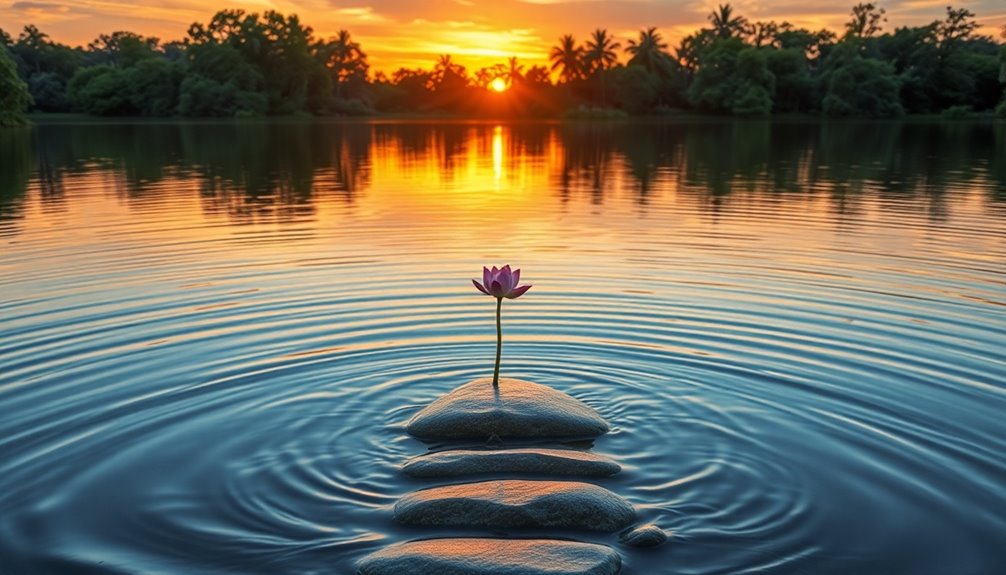
While life’s demands can pull you in every direction, maintaining mental balance is essential for your well-being.
When you cultivate mental clarity and emotional resilience, you enhance your stress management skills and develop effective coping strategies. This balance allows for cognitive flexibility, helping you adapt to life’s challenges.
By prioritizing self-care practices and making intentional lifestyle choices, you can foster a positive mindset that empowers you to face daily hurdles. Engaging in mindfulness practices can further enhance your emotional regulation and resilience.
Establishing healthy boundaries guarantees you allocate time for what truly matters, promoting better time management.
Ultimately, achieving mental balance not only improves your overall happiness but also equips you with the tools you need to thrive in a hectic world.
Stay centered, and let life flow around you.
Identifying Your Personal Sources of Stress

How well do you really know what stresses you out? Identifying your stress triggers is the first step toward managing them. Take time for personal reflections; think about situations, people, or environmental factors that elevate your stress levels.
Build emotional awareness by recognizing your feelings in response to these triggers. Consider how lifestyle changes, like improving your time management or establishing a routine, can reduce stress. Additionally, mastering time management skills can significantly alleviate feelings of burden.
Also, evaluate your coping mechanisms—are they healthy or harmful? Don’t underestimate the power of strong support systems; talking to friends or family can provide clarity and relief.
Practical Techniques for Cultivating Calmness
To cultivate calmness in your busy life, you can turn to practical techniques that promote relaxation.
Mindfulness meditation, deep breathing, and immersing yourself in nature can all help you find your center. Regular mindfulness practices can significantly enhance your emotional well-being and foster a greater sense of inner peace.
Let’s explore how these methods can transform your everyday experience.
Mindfulness Meditation Practices
Engage your senses through mindful eating, savoring each bite, or using guided imagery to transport yourself to a peaceful place. Set clear intentions for your practice, whether it’s emotional regulation or compassion cultivation.
Incorporate loving-kindness meditation to foster connection and positivity toward yourself and others. Visualization techniques can help you imagine desired outcomes, while a gratitude practice keeps you grounded in the present.
Each of these methods enhances your ability to remain calm amidst chaos, allowing you to respond with clarity and compassion. Embrace these practices, and watch your inner peace flourish.
Deep Breathing Techniques
- Diaphragmatic breathing: Focus on your belly rising and falling with each breath, engaging the diaphragm fully.
- Box breathing: Inhale for a count of four, hold for four, exhale for four, and pause for four, creating a rhythmic pattern.
- Breath counting: Count your breaths up to ten, then start over, helping clear your mind.
- Breath visualization: Imagine inhaling calm and exhaling stress, fostering a sense of energy release.
Incorporating these techniques allows you to enjoy calming breath and find balance amidst the chaos.
Nature Immersion Strategies
As you step outside and immerse yourself in nature, you’ll quickly notice how it can transform your mood and promote calmness.
Engage in nature therapy through simple activities like nature walks or park exploration. Focus on outdoor mindfulness; pay attention to the sounds around you and the colors of the leaves.
Try forest bathing, allowing the sights and smells to enhance your sensory connection. Wildlife observation can deepen your appreciation for the environment, while river meditation offers a soothing backdrop for reflection.
Don’t overlook gardening benefits; nurturing plants can ground you in the present moment.
Mindfulness Practices to Enhance Your Mental Flexibility
To enhance your mental flexibility, you can adopt mindfulness practices that fit seamlessly into your daily life.
Breathing techniques can bring clarity, while mindful movement helps you stay present in your body.
Additionally, journaling offers a space for self-reflection and deeper understanding of your thoughts. Embracing stillness in daily life fosters mental clarity and allows for deeper insights into your inner nature.
Breathing Techniques for Clarity
While juggling daily responsibilities, finding mental clarity can feel elusive. Breathing techniques can help you regain focus and calmness. Try incorporating these practices into your routine:
- Breath awareness: Pay attention to your breath, noticing its natural rhythm.
- Diaphragmatic breathing: Breathe deeply into your diaphragm, allowing your belly to expand.
- Controlled exhalation: Exhale slowly, releasing tension and stress.
- Breath counting: Count your breaths to anchor your mind and enhance concentration.
Using visualization techniques alongside mindful pauses can further enhance your practice.
Engage in breath synchronization with rhythmic inhalation to create harmony in your thoughts.
With these techniques, you’ll cultivate mental flexibility and clarity, making life’s demands feel more manageable.
Mindful Movement Practices
Incorporating mindful movement practices into your daily routine can greatly enhance your mental flexibility. Try mindful walking, focusing on each step to ground yourself in the present.
A regular yoga practice can deepen your body awareness and promote relaxation. Explore tai chi for its fluid, meditative movements that cultivate balance and calm.
Dance meditation allows you to express emotions freely while connecting with your body. Qigong flow combines breath and movement, enhancing your energy and focus.
Movement therapy can be transformative, helping you release tension and stress. Ultimately, engage in conscious stretching to improve flexibility and mindfulness.
Each of these practices invites you to be present, fostering a more adaptable mind in your busy life.
Journaling for Self-Reflection
Journaling can serve as a powerful tool for self-reflection, especially when you’re seeking to enhance your mental flexibility. By engaging in reflective writing, you can better understand your thoughts and feelings, leading to personal growth.
Here are some effective journaling prompts to get you started:
- What lesson did today teach me?
- How did I handle a challenging situation?
- What am I grateful for right now?
- What’s one thing I can improve tomorrow?
Each entry helps clarify your emotions and encourages a mindset shift.
As you regularly practice journaling, you’ll find it becomes easier to adapt to life’s challenges, fostering a calm and balanced mind. Embrace this simple yet impactful practice to nurture your mental flexibility.
The Role of Breathwork in Achieving Inner Peace
Breathwork offers a powerful pathway to inner peace that many often overlook. By cultivating breath awareness, you tap into calming techniques that promote stress relief.
Focused breathing helps in emotional regulation and enhances your ability to respond to challenges calmly. Practicing breath synchronization allows you to align your energy flow with each inhale and exhale, creating a profound relaxation response.
Incorporate breath visualization to picture tranquility as you engage in mindful inhalation, letting go of tension with every exhale. This simple yet effective practice can transform your mental state, grounding you in the present and fostering a sense of balance.
With each breath, you reconnect with your inner self, paving the way for deeper peace in a chaotic world. Additionally, integrating mindfulness techniques can further enhance your emotional resilience and overall well-being.
Daily Habits for Sustaining a Balanced Mindset
Finding inner peace through breathwork sets a strong foundation for cultivating a balanced mindset.
Finding inner peace through breathwork lays the groundwork for nurturing a harmonious and balanced mindset.
To sustain this balance, incorporate these daily habits into your routine:
- Gratitude journaling: Spend a few minutes each day reflecting on what you appreciate.
- Digital detox: Unplug from screens regularly to enhance emotional regulation and reduce stress.
- Time blocking: Organize your day into focused intervals to boost productivity and minimize overwhelm.
- Positive affirmations: Reinforce self-worth and resilience by speaking kindly to yourself.
These practices, combined with self-care rituals and routine adjustments, foster stress management and create a supportive environment.
Incorporating daily gratitude practices can further enhance your overall well-being and perspective on life.
Remember, social support is essential—connect with others to share experiences and insights.
Embrace these habits to maintain your balanced mindset amidst life’s chaos.
How to Set Boundaries and Prioritize Your Well-Being?
While steering through a fast-paced life, setting boundaries becomes essential for prioritizing your well-being. Start by identifying your personal limits and what drains your energy.
Use effective communication skills to express these boundaries clearly to others. When you practice boundary setting, you empower yourself to focus on self-care strategies that enhance your emotional intelligence and foster stress reduction. Establishing healthy boundaries can also safeguard your personal energy and emotional well-being.
Incorporate time management techniques to allocate your energy wisely, ensuring you have space for activities that rejuvenate you. Remember, prioritizing your well-being isn’t selfish; it’s necessary.
Strategies for Navigating Life’s Unexpected Challenges
Life often throws unexpected challenges your way, even when you’ve set clear boundaries and prioritized self-care. To navigate these moments effectively, focus on strategies that enhance your resilience:
- Crisis management: Assess the situation quickly and calmly.
- Adaptive thinking: Shift your perspective to find new solutions.
- Emotional regulation: Recognize stress triggers and manage your reactions.
- Support systems: Lean on friends or family for guidance.
Utilizing problem-solving skills can help you devise practical solutions, while coping mechanisms like mindfulness can keep you grounded. Practicing self-compassion can significantly enhance your emotional resilience during these tough times.
Flexibility training enhances your ability to adapt, and strong time management guarantees you’re prepared for anything.
Embracing Change: Developing Resilience for a Balanced Life
Change can be intimidating, yet embracing it is essential for cultivating resilience and achieving a balanced life. By practicing change acceptance, you build adaptability skills that prepare you for life shifts.
Emotional agility helps you navigate challenges with a positive mindset, turning obstacles into opportunities for personal growth. Incorporate stress management techniques and flexibility training into your routine to enhance your coping strategies. When you face change with resilience building, you discover that each adjustment strengthens your ability to thrive.
Additionally, seeking support from trusted friends or family can transform obstacles into opportunities for growth.
Conclusion
As you embrace the journey toward a “mind like water,” you’re not just seeking balance—you’re unveiling a powerful way to navigate life’s chaos. Imagine facing unexpected challenges with a calm center, effortlessly adapting to whatever comes your way. You hold the key to transforming stress into strength. So, are you ready to discover the hidden depths of resilience within you? The path to a balanced mind awaits, and it starts with a single, courageous step.