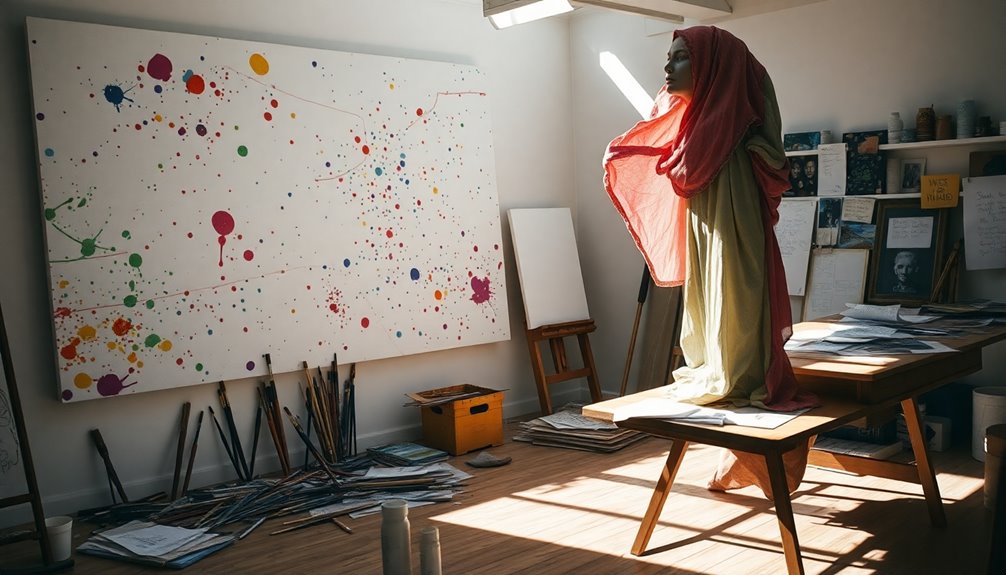
Finding balance between mess and method is key to boosting your creativity. Embrace the chaos; messy play sparks innovative ideas and joyful experimentation. But don’t forget structure—setting boundaries and mindful discipline can sharpen your focus. Your workspace and organized ideas are pivotal too; they provide a canvas for creativity. Explore the beauty of imperfection and the growth that comes from risky pursuits. There’s much more to discover about how to harness this balance for your creative journey.
Embracing the Chaos: Why Messiness Matters in Creativity
Embracing the chaos of creativity can feel intimidating, but it’s essential for genuine innovation. When you immerse yourself in creative chaos, you discover messy inspiration that fuels your imagination.
Those unpredictable outcomes often lead to joyful experimentation, where freedom exploration sparks spontaneous creation. You’ll find that chaotic beauty thrives in unstructured play, allowing ideas to flow freely.
This liberated thinking can result in innovative disruption, pushing boundaries you didn’t know existed. By welcoming the messiness, you reveal a space where creativity flourishes.
Don’t shy away from the disorder; instead, lean into it. Let go of the need for perfection and allow yourself to explore the wild side of creativity, where the most exciting ideas often emerge from the unexpected. Embracing mindful consumption encourages intentional choices that can lead to more meaningful creative experiences.
The Role of Structure: Finding Your Creative Framework

To release your creative potential, you need a framework that supports your ideas without stifling them. Embracing flexible guidelines helps you find the sweet spot between freedom and discipline. Additionally, cultivating resilience allows you to navigate the inevitable challenges of the creative process more effectively.
Embracing Flexible Guidelines
While creativity often thrives in chaos, having a structured framework can actually enhance your imaginative process.
Embracing flexible guidelines allows you to explore your creativity within defined parameters, fostering spontaneous innovation.
Here’s how you can benefit from adaptable frameworks:
- Creative constraints spark innovative solutions.
- Playful experimentation leads to unexpected discoveries.
- Dynamic guidelines encourage fluidity within structure.
- Mindful exploration nurtures creative resilience.
- Structured improvisation balances freedom and focus.
Balancing Freedom and Discipline
Although creativity flourishes in freedom, it often needs the anchor of discipline to thrive. You can embrace freedom exploration while establishing creative boundaries that nurture disciplined creativity.
This balance allows for chaotic inspiration to transform into structured improvisation, giving your ideas a solid framework. Spontaneous creation can coexist with organized chaos, leading to flexible artistry that feels both liberating and focused.
By practicing mindful spontaneity, you’ll discover how to channel your creativity effectively. Aim for balanced expression, where your instincts are guided by a loose structure.
Structuring Creative Sessions
Finding the right structure for your creative sessions can amplify the balance between freedom and discipline. By establishing a framework, you can nurture creativity while allowing for spontaneous inspiration.
Consider these techniques to enhance your sessions:
- Rhythm building: Set time limits to maintain momentum.
- Brainstorming techniques: Use prompts to spark idea generation.
- Collaborative sessions: Engage with others for diverse perspectives.
- Playful exploration: Encourage experimentation without fear of failure.
- Structured improvisation: Combine flexibility with guidelines for focused distractions.
With these strategies, you can cultivate a creative flow that balances playful exploration and disciplined focus, ultimately leading to innovative outcomes and richer experiences.
Balancing Spontaneity and Discipline in Your Process

Striking the right balance between spontaneity and discipline can elevate your creative process. Embrace spontaneous exploration while maintaining a foundation of disciplined creation.
This blend creates a rich creative tension, allowing for structured spontaneity that fuels your imagination. Inspirational chaos can lead to breakthroughs, but it’s essential to practice mindful improvisation to channel those ideas effectively.
Playful discipline keeps your momentum going, ensuring you stay focused without stifling your creativity. Aim for focused freedom, where organized spontaneity guides your endeavors.
This approach fosters adaptive creativity, helping you pivot when needed while still pursuing your vision. Ultimately, finding this balance empowers you to innovate and express yourself authentically in your work, cultivating self-compassion that enhances resilience and satisfaction in your creative journey.
How to Cultivate an Open Mind for Creative Inspiration
To cultivate an open mind for creative inspiration, focus on these key practices:
- Nurture creative curiosity: Ask questions and seek out new experiences.
- Engage in open exploration: Visit unfamiliar places or try different activities.
- Use diverse influences: Draw inspiration from various cultures, art forms, and disciplines.
- Practice playful experimentation: Don’t shy away from artistic risks and let your imagination roam.
- Incorporate reflective observation: Take time to ponder your thoughts and feelings about your creative process.
- Embrace mindfulness in creativity: Practicing mindful living can enhance your ability to appreciate and engage with the creative process.
Setting Boundaries: The Importance of Time and Space
To foster your creativity, you need to set clear boundaries around your work time and space.
Defining specific hours for your creative projects helps you stay focused and productive.
Additionally, establishing a dedicated workspace allows you to separate your creative pursuits from everyday distractions. Incorporating mindfulness practices into your routine can further enhance your focus and creativity.
Defining Creative Work Hours
While creativity often thrives in spontaneity, defining your work hours is essential for maintaining a productive balance. By establishing specific times for your creative endeavors, you can enhance time management and guarantee you’re working during your energy peaks.
Here are some effective strategies:
- Set clear boundaries for your work hours.
- Incorporate creative rituals to signal the start of your sessions.
- Use goal setting to focus your efforts.
- Identify daily habits that boost your productivity.
- Explore inspiration sources during breaks to recharge.
These practices help you cultivate a work-life balance, making your creative time more intentional.
Establishing Physical Workspace Boundaries
Creating a dedicated physical workspace is crucial for separating your creative time from daily distractions. Your workspace aesthetics play an important role in enhancing focus and inspiration.
Consider clutter management to keep your environment organized, allowing creativity to flow freely. Establish distinct productivity zones—like a reading nook or a crafting area—tailored to your personal preferences.
Make sure your workspace ergonomics support comfort, reducing strain during long hours of creation. Pay attention to environmental influences, using natural light or calming colors to boost your mood.
Finally, surround yourself with your favorite creative tools and inspiration sources to spark new ideas. By setting these boundaries, you’ll create a more effective space that nurtures your artistic endeavors.
Techniques for Organizing Ideas Without Stifling Creativity
Organizing ideas doesn’t have to stifle your creativity; in fact, it can enhance it. By using effective techniques, you can balance structure with inspiration.
Organizing your ideas can boost creativity, striking a perfect balance between structure and inspiration.
Here are some methods to evaluate:
- Mind Mapping to visualize connections
- Visual Mapping for a broader perspective
- Brainstorming Techniques that encourage free thought
- Digital Tools for quick access and organization
- Idea Journaling to capture spontaneous sketches and thoughts
These strategies foster idea generation while promoting iterative thinking. Additionally, incorporating mindfulness practices can help maintain focus and clarity during the creative process.
Try concept clustering to group related ideas and use creative prompts to spark new directions.
Embrace spontaneity in your sketches, allowing them to inform your organized thoughts.
Ultimately, a structured approach can elevate your creative process.
The Benefits of Routine in Creative Work
Establishing a routine can notably enhance your focus and clarity in creative work.
By structuring your day, you’ll not only boost your productivity but also create space for structured exploration of your ideas.
Embracing a consistent schedule can help you tap into your creativity more effectively. Additionally, incorporating mindful habits can further improve your emotional resilience and decision-making abilities, enhancing your creative output.
Enhanced Focus and Clarity
While you mightn’t realize it, incorporating a routine can greatly enhance your focus and clarity in creative work.
Establishing a consistent framework allows you to practice effective focus techniques and engage in clarity exercises. Here are some strategies to contemplate:
- Mindfulness practices to center your thoughts
- Distraction management to minimize interruptions
- Mental decluttering to clear your mind
- Intention setting to define your goals
- Visualization strategies to enhance creativity
Boosted Productivity Levels
When you embrace a routine in your creative work, you’ll likely notice a significant boost in your productivity levels. Establishing a consistent schedule helps you manage time effectively and minimize creative distractions.
Use productivity hacks like task prioritization to focus on what truly matters each day. Incorporating energy management techniques guarantees you tackle high-priority tasks when your energy peaks.
With clear focus strategies, you can enhance mental clarity, making it easier to immerse yourself in your projects. Additionally, explore motivation techniques that resonate with you, tapping into various inspiration sources.
Structured Creative Exploration
A consistent routine doesn’t just boost productivity; it also opens the door to structured creative exploration. By establishing a framework, you can embrace both artistic freedom and playful experimentation.
This balance allows for creative spontaneity within defined limits, leading to innovative boundaries that spark new ideas.
- Enhance dynamic workflows
- Employ exploration techniques
- Foster structured improvisation
- Navigate imaginative constraints
- Encourage purposeful creativity
With organized chaos, you can find the right blend of discipline and flexibility. This approach allows for structured exploration while keeping your creative juices flowing, helping you discover new paths in your work.
Ultimately, a routine can be the launchpad for your most imaginative endeavors, guiding you toward richer creative experiences.
Learning From Failure: Turning Mistakes Into Masterpieces
Mistakes often feel like setbacks, but they can actually be stepping stones to greatness. Engaging in mistake analysis helps you uncover valuable lessons, fostering creative resilience.
Embrace learning loops where you iterate on your work, using failure reflection to identify what went wrong. By incorporating feedback, you refine your approach, enhancing your adaptability skills.
Risk taking becomes less intimidating when you view setbacks as opportunities for innovative pivoting. Each error contributes to your artistic growth, guiding you through the iterative process of development.
As you cultivate this mindset, you’ll discover that every misstep can lead to unexpected breakthroughs. Embrace your mistakes; they’re essential for your evolution as a creator. Building resilience through this process can transform your approach to challenges and enhance your creative output.
The Art of Play: How Fun Fuels Creativity
Here’s how to cultivate that playful spirit:
- Engage in whimsical brainstorming sessions.
- Immerse yourself in playful experimentation for new ideas.
- Foster creative spontaneity with lighthearted innovation.
- Collaborate with others for joyful exploration.
- Celebrate serendipitous creation as a gift.
Moreover, embracing everyday joys can significantly enhance your creative process and inspire fresh ideas.
Mindfulness and Presence: Staying Grounded in the Creative Process
Creativity often thrives when you’re fully present, allowing ideas to flow without distractions. Engaging in mindful breathing helps you center your thoughts, paving the way for creative visualization.
Use sensory awareness to connect deeply with your environment, enhancing your inspiration. Grounding techniques, like intentional pauses, can anchor you in the moment, promoting flow states.
Incorporate presence practice into your routine, taking time for reflective journaling and gratitude exercises to cultivate appreciation for your creative journey. Additionally, embracing mindfulness practices can enhance your innovative thinking and reduce distractions, further fueling creativity.
Nature immersion can also renew your spirit, sparking fresh ideas. By staying grounded, you create a fertile space for creativity to flourish, ensuring your mind remains clear and focused on the art of expression.
Collaborating With Others: Harnessing Collective Messiness
While working with others can sometimes feel chaotic, it often leads to unexpected breakthroughs that spark innovation. Embracing this messiness allows you to tap into creative synergy and collective improvisation, enhancing your projects.
Collaboration may seem chaotic, yet it often ignites unexpected breakthroughs and innovative ideas through creative synergy.
Here are some key strategies to harness the power of collaboration:
- Foster emotional intelligence to build trust within the group.
- Utilize diverse perspectives during collaborative brainstorming sessions.
- Establish feedback loops to refine ideas and enhance group dynamics.
- Encourage shared inspiration through open dialogue.
- Implement teamwork strategies that embrace flexibility and adaptability.
How to Create a Flexible Workspace That Inspires
A flexible workspace can markedly enhance your team’s creativity and productivity, especially when it’s designed to adapt to various needs and activities.
Start by considering workspace aesthetics; incorporate flexible furniture that can be rearranged for collaboration or solo projects. Add personal mementos and inspirational quotes to foster a sense of belonging.
Utilize nature influences, like plants, to boost mood and creativity. Pay attention to color psychology; choose hues that energize or calm based on the task at hand.
Don’t underestimate the soundscapes impact; soft music or nature sounds can enhance focus.
Finally, prioritize digital organization to reduce visual clutter, allowing creative tools to shine in a streamlined environment. A well-thought-out space can truly inspire innovation.
Reassessing Your Creative Goals: When to Adjust Your Method?
How often do you pause to evaluate your creative goals? Regular creative reassessment can keep you aligned with your vision.
It’s essential to check in and ask yourself if your current methods serve your objectives. Here are some signs it might be time to adjust:
- You’re feeling uninspired or stuck.
- Your goals have shifted or evolved.
- Feedback suggests a need for change.
- You’re not seeing the progress you expected.
- Your method feels misaligned with your values.
Engaging in method evaluation and progress reflection helps you stay on track.
Regularly reflecting on your methods and progress ensures you remain aligned with your creative vision.
By reassessing your goals, you can guarantee your creative journey remains fulfilling and productive.
Celebrating the Journey: Embracing Imperfection in Your Work
Embracing imperfection in your work can transform how you view your creative journey, allowing you to appreciate the process rather than fixate solely on the end result.
By welcoming creative imperfections, you open yourself up to joyful experimentation and playful exploration. This mindset fosters authentic expression, encouraging you to take unconventional approaches that might feel risky but lead to personal growth.
Through process reflection, you’ll discover the beauty in messy authenticity and the unexpected discoveries that arise from it. Each misstep becomes a stepping stone, enriching your creative path.
Conclusion
In the dance between chaos and order, remember that “art is never finished, only abandoned.” Embracing messiness fuels your creativity, while structure gives it direction. By allowing spontaneity to coexist with discipline, you’ll discover unique insights and inspiration. Celebrate your imperfections and adapt your methods as needed. With an open mind and a flexible workspace, you’ll not only enhance your creative process but also enjoy the journey of self-discovery along the way.