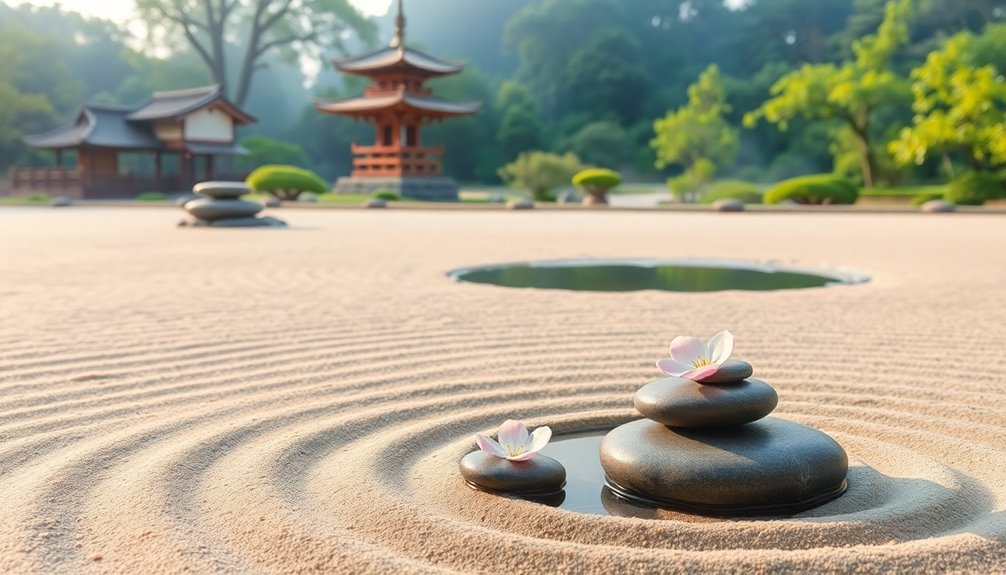
Zen and the Art of Happiness teaches you that true happiness comes from within, not your surroundings. By embracing mindfulness, you can savor everyday moments and find joy in simplicity. Letting go of clutter—both physical and mental—helps create clarity and peace. Cultivating gratitude and compassion enhances your relationships, deepening connections with others. As you adopt these principles, you’ll start transforming your daily life. Discover even more ways to enrich your journey as you explore further.
The Essence of Zen: What It Means for Happiness

Zen teaches us that happiness isn’t found in external circumstances but within ourselves. Embracing zen philosophy allows you to explore the deep happiness connection between inner tranquility and daily balance.
By practicing mindfulness, you can uncover the many mindfulness benefits that come from living in the present moment. Mindful living encourages you to cultivate emotional awareness, helping you recognize and accept your feelings without judgment.
Acceptance practices enable you to let go of resistance, fostering a sense of peace. As you integrate these principles into your life, you’ll find that happiness arises naturally from within. Additionally, adopting mindful simplicity can further enhance your overall well-being and life satisfaction.
How Mindfulness Enhances Everyday Joy

Mindfulness isn’t just a practice; it’s a gateway to experiencing everyday joy. By embracing mindful breathing, you can anchor yourself in the present moment, enhancing your capacity for joyful awareness. This simple shift transforms daily routines into opportunities for happiness. Here’s how you can cultivate this mindset:
- Focus on your breath: Allow each inhale and exhale to ground you.
- Notice your surroundings: Engage your senses to appreciate the beauty in ordinary moments.
- Practice gratitude: Acknowledge the small joys that often go unnoticed.
- Embrace imperfection: Let go of unrealistic expectations and appreciate the here and now.
Incorporating mindfulness techniques can elevate your everyday experiences, bringing a deeper sense of joy into your life.
Embracing Simplicity: Decluttering Your Mind and Space

When you simplify your environment, you create space for clarity and peace of mind.
Embracing mindful minimalism helps you focus on what truly matters, allowing you to declutter both your physical space and your mental landscape.
Start by identifying items that no longer serve you; let go of the excess. This process fosters a decluttered mindset, making it easier to prioritize your thoughts and intentions.
Each item you remove is a step towards greater mental clarity, reducing distractions and stress.
As you cultivate simplicity in your surroundings, you’ll find it translates to a simpler, more fulfilling life. This practice not only enhances your well-being but also promotes mental clarity essential for personal growth and deeper connections.
The Power of Living in the Present Moment
Living in the present moment can transform your life in ways you never imagined. By embracing mindfulness practices**, you quiet the noise around you and focus on what truly matters. Letting go of regrets frees you to fully experience each moment, opening the door to genuine happiness. Incorporating mindful practices into your daily routine enhances your awareness and joy in every experience.
Embracing Mindfulness Practices
Although many people rush through their days consumed by distractions, embracing mindfulness practices allows you to anchor yourself in the present moment. By integrating simple techniques into your routine, you can cultivate awareness and appreciation for life’s little joys.
Consider incorporating:
- Mindful eating: Savor each bite and engage your senses.
- Digital detox: Unplug regularly to reconnect with yourself.
- Nature walks: Immerse yourself in the sights and sounds around you.
- Breath awareness: Focus on your breath to ground yourself.
Practicing gratitude journaling, creative expression, and mindful listening fosters self-compassion and intentional movement.
Letting Go of Regrets
Embracing mindfulness opens the door to a powerful realization: holding onto regrets can weigh you down and cloud your present.
To achieve regret release, you need to practice past acceptance. Start your healing journey by engaging in forgiveness practice, both for yourself and others. This fosters emotional freedom and allows for self-compassion.
As you shift your focus from the past to the future, you’ll cultivate a positive mindset that supports personal growth. Mindful reflection helps you understand your experiences without being trapped by them.
Cultivating Gratitude: Finding Joy in the Ordinary
Cultivating gratitude starts with embracing daily mindfulness practices that help you notice the small joys around you. By recognizing these moments, you can transform the mundane into something meaningful. Studies show that gratitude practices can significantly enhance mental well-being, leading to a deeper sense of happiness. Let’s explore how appreciating the ordinary can lead to a deeper sense of happiness.
Embracing Daily Mindfulness Practices
How often do you take a moment to appreciate the simple things in life? Embracing daily mindfulness practices can transform your perspective and cultivate gratitude.
Here are some ways to integrate mindfulness into your routine:
- Mindful eating: Savor each bite, focusing on flavors and textures.
- Daily journaling: Reflect on your day and jot down things you’re grateful for.
- Nature walks: Immerse yourself in the sights and sounds around you.
- Intentional breathing: Take a few moments to breathe deeply and center yourself.
Recognizing Small Joys Daily
While daily life often rushes by, taking a moment to recognize small joys can greatly enhance your sense of gratitude. Engage in daily mindfulness by practicing awareness techniques that highlight joyful moments, like a warm cup of coffee or a friendly smile.
Incorporate happiness rituals into your routine, such as gratitude journaling, where you note simple pleasures that brighten your day. You might also try joy meditation to center your thoughts on the present, fostering a deeper sense of contentment.
Transforming Mundane Into Meaningful
Even when life feels routine, you can discover meaning in the ordinary by shifting your perspective. Embrace small moments that can transform your day.
Here are some practices to cultivate gratitude and find joy:
- Mindful eating: Savor each bite, noticing flavors and textures.
- Joyful movement: Engage in activities that make your body feel alive.
- Intentional breathing: Take deep breaths to ground yourself in the present.
- Nature immersion: Spend time outdoors, allowing nature to rejuvenate your spirit.
Incorporating these elements into your daily life fosters sensory awareness and community connection.
Reflective journaling can also help you track your experiences.
Meditation Techniques to Reduce Stress and Increase Happiness
When you immerse yourself in meditation techniques, you’ll discover powerful tools that can greatly reduce stress and boost your happiness.
Guided imagery allows you to visualize serene landscapes, while breathing techniques ground you in the present moment.
Enhance your body awareness through movement meditation, feeling each part of your body release tension.
Try mantra repetition to focus your mind, or engage in sound meditation to connect with calming vibrations.
Nature immersion can rejuvenate your spirit, and loving kindness practice fosters compassion for yourself and others.
Incorporate visualization exercises and mindful eating to cultivate gratitude. Additionally, practicing mindfulness techniques can help transform anxiety into manageable experiences.
Each technique offers a unique path to inner peace, helping you navigate daily challenges with ease and joy.
The Role of Compassion in Personal Fulfillment
Compassion plays an essential role in your journey toward personal fulfillment. By cultivating inner peace, it allows you to connect more deeply with others, enhancing your relationships through empathy. Practicing altruism not only boosts your well-being but also enriches your life with meaning and purpose. Additionally, expressing appreciation to others can strengthen relationships and deepen feelings of gratitude within your community.
Compassion Cultivates Inner Peace
As you nurture compassion within yourself, you’ll find it becomes a powerful tool for fostering inner peace. By cultivating emotional intelligence and embracing self-compassion, you deepen your understanding of suffering and develop patience.
Here are some effective practices to enhance your journey:
- Compassion meditation: Quiet your mind and focus on sending kindness to yourself and others.
- Kindness practices: Engage in small acts of kindness daily to foster a caring mindset.
- Compassionate listening: Truly hear others, nurturing empathy and creating deeper connections.
- Forgiving oneself: Release self-judgment to allow room for growth and healing.
These practices lead to compassionate action, enriching your life and bringing about profound inner tranquility.
Empathy Enhances Relationships
Nurturing compassion not only fosters inner peace but also paves the way for deeper connections with others.
When you practice emotional intelligence through active listening, you create a safe space for vulnerability sharing. This openness allows for perspective taking, strengthening relational dynamics.
Pay attention to nonverbal cues; they often communicate more than words. By offering supportive feedback, you enhance trust building and help resolve conflicts more effectively.
Simple kindness expressions can transform interactions, making them more meaningful.
As you embrace empathy, you’ll notice how these skills deepen your relationships, leading to personal fulfillment.
Ultimately, compassion enriches your life and the lives of those around you, creating a ripple effect of connection and understanding.
Altruism Boosts Well-Being
When you engage in altruistic acts, you not only uplift others but also enhance your own sense of well-being. Selfless giving creates a happiness cycle that boosts your emotional well-being while fostering social connections.
Participating in community service offers transformative experiences that enrich your life and those around you.
Here are some ways altruism impacts your well-being:
- Increases shared joy: Helping others brings you satisfaction.
- Strengthens social connections: Builds bonds with like-minded individuals.
- Provides volunteer opportunities: Engage in meaningful activities.
- Creates a positive impact: Your actions ripple through the community.
How to Create a Zen-Inspired Daily Routine
Creating a Zen-inspired daily routine can transform your life, bringing calmness and clarity to even the busiest days.
Start with morning mindfulness, dedicating a few moments to breathing exercises that ground you. Embrace Zen rituals like slow eating during breakfast, savoring each bite.
Begin your day with morning mindfulness, grounding yourself through breathing exercises and savoring each bite during a slow, intentional breakfast.
Incorporate nature walks to reconnect with the world around you, and practice mindful commuting, focusing on your surroundings rather than distractions.
At day’s end, engage in evening reflection through intentional journaling, allowing thoughts to flow freely.
Consider a tech detox in the evening, creating a peaceful environment. Mindfulness and self-compassion can help manage overwhelming noise and promote calm.
By embracing minimalist living, you reduce clutter and chaos, fostering tranquility.
These practices not only enhance your well-being but also cultivate a deeper sense of peace in your daily life.
Transforming Challenges Into Opportunities for Growth
Challenges can feel overwhelming, but they often disguise invaluable opportunities for growth. Embracing these moments can lead to resilience building and mindset transformation.
By shifting your perspective, you can see obstacles as chances to develop.
Here are some strategies for transforming challenges:
- Challenge Acceptance: Acknowledge the situation without resistance.
- Perspective Shifting: View setbacks as learning experiences.
- Adaptability Training: Cultivate flexibility in your responses.
- Strength Recognition: Identify your abilities as you navigate obstacles.
Additionally, acknowledging emotions related to past experiences can support your journey toward resilience.
Letting Go: The Key to Reducing Anxiety
Embracing challenges often leads to personal growth, but it can also stir up anxiety when we cling too tightly to outcomes.
Letting go is essential for fear reduction and emotional release. By practicing acceptance, you learn to surrender control over what you can’t change. This acceptance practice becomes a powerful tool for anxiety management.
Incorporate mindfulness techniques into your daily routine, allowing yourself to breathe and center your thoughts. Freeing expectations can create space for stress relief and foster inner peace. Mindfulness practices can reduce anxiety and enhance emotional well-being, helping you navigate life’s ups and downs more smoothly.
When you let go of rigid outcomes, you open yourself to new possibilities. Remember, it’s in surrendering control that you find clarity and calm, enabling you to navigate life’s ups and downs with grace.
The Impact of Nature on Your Zen Journey
As you step outside and immerse yourself in nature, you’ll likely discover a profound connection that enhances your Zen journey. Nature’s tranquility offers a space for outdoor mindfulness, allowing you to reflect on seasonal changes and their impact on your life.
By engaging with serene landscapes, you foster an environmental connection that nurtures your spirit. Consider these practices:
- Embrace wilderness therapy to heal and rejuvenate.
- Engage in nature immersion to enhance your ecological awareness.
- Cultivate botanical gratitude by appreciating the flora around you.
- Tune into natural rhythms to promote inner peace.
These experiences deepen your understanding of life’s cycles and enrich your Zen journey, guiding you toward a more harmonious existence.
Finding Balance: Work, Life, and Inner Peace
How can you find balance in a world that constantly demands your attention? Start by implementing balance strategies that promote work harmony and life integration.
Set mindful boundaries to protect your time and prioritize stress management techniques. Allocate your time wisely, ensuring you carve out moments for self-care practices that recharge your emotional resilience.
Embrace peaceful shifts between work and personal life, allowing your energy alignment to flourish. Remember, it’s not just about juggling tasks but creating a rhythm that nurtures your well-being.
By focusing on these principles, you’ll cultivate an environment where inner peace thrives, helping you navigate life’s challenges with grace and clarity.
Balance isn’t a destination; it’s a continuous journey toward harmony.
How to Incorporate Zen Principles Into Relationships
Incorporating Zen principles into your relationships can transform how you connect with others.
By practicing mindful communication, embracing impermanence, and cultivating compassionate understanding, you’ll foster deeper bonds.
Let’s explore how these approaches can enhance your interactions and create lasting harmony.
Mindful Communication Practices
What if the way you communicate could transform your relationships? By incorporating Zen principles into your conversations, you can foster deeper connections.
Start with these mindful practices:
- Active listening: Truly focus on the speaker, setting aside distractions.
- Mindful pauses: Allow silence to create space for reflection and emotional awareness.
- Empathetic responses: Acknowledge feelings and validate experiences with authentic expression.
- Curiosity questions: Encourage open dialogue that promotes understanding and conflict resolution.
Using these techniques, you’ll enhance your nonverbal cues and provide supportive feedback.
Intentional speaking will help you articulate your thoughts clearly, while emotional awareness allows you to navigate sensitive topics with care.
Embracing Impermanence Together
While relationships often thrive on stability, embracing impermanence can deepen your connections and enhance your emotional resilience. By accepting change and recognizing that loss is part of life, you create a space for growth.
Celebrate transformations together, whether they’re joyous or challenging, and find beauty in each shared experience. This mindset nurtures resilience, allowing you both to adapt and learn from life’s ebb and flow.
Mindful connections become stronger when you acknowledge the fleeting nature of moments, fostering a deeper appreciation for what you have. Embrace the journey of collective growth, and remember that every change is an opportunity to strengthen your bond.
In this way, you honor both the present and the inevitable shifts that come with it.
Cultivating Compassionate Understanding
To cultivate compassionate understanding in your relationships, you must first embrace the Zen principle of being present. This awareness allows you to foster deeper connections.
Here are some ways to integrate these principles:
- Mindful Listening: Focus entirely on the speaker, minimizing distractions.
- Empathetic Engagement: Try to see situations from others’ perspectives, enhancing emotional intelligence.
- Kindness Practices: Small acts of kindness can transform interactions and nurture relationships.
- Compassionate Dialogue: Encourage open conversation, promoting relational mindfulness and understanding diversity.
Practical Exercises for Cultivating a Zen Mindset
Cultivating a Zen mindset can transform your daily life, bringing clarity and peace. Start by practicing mindful breathing; take a few moments each day to focus solely on your breath. Inhale deeply, hold for a moment, then exhale slowly. This simple exercise calms your mind and anchors you in the present.
Next, try zen journaling. Dedicate a few minutes each evening to write down your thoughts and feelings without judgment. Let your pen flow freely, capturing whatever comes to mind. This practice helps you process emotions and gain insights.
Incorporate these exercises into your routine, and you’ll find that your perspective shifts, allowing you to navigate life with greater ease and serenity.
Embrace the journey, and enjoy the transformation.
Conclusion
Incorporating Zen principles into your daily life can truly transform your happiness. Remember, “happiness is not something ready-made; it comes from your own actions.” By embracing mindfulness, simplicity, and gratitude, you can cultivate a deeper sense of joy in the ordinary. As you find balance and connect with nature, you’ll discover that each moment holds the potential for peace and fulfillment. Start your Zen journey today, and watch how it enriches your life in unexpected ways.