
Humanity’s journey has seen incredible milestones in culture, technology, and social justice. However, major challenges like climate change and economic inequality threaten our progress. As you engage with emerging technologies and societal shifts, you’ll find that innovative solutions can pave the way forward. It’s essential to embrace community efforts and grassroots movements to shape a resilient future. There’s much more to explore about the paths we’re carving for tomorrow.
The Lessons of Our Past: Key Milestones in Human Progress
**
Throughout history, as humanity faced challenges, we’ve made remarkable strides that shaped our world today. You can see this in cultural milestones that reflect our collective journey.
Historical perspectives reveal how technological advancements have transformed societies, driving educational progress and fostering human resilience. Each era offers philosophical reflections that challenge our ethical considerations, urging us to evolve.
Technological advancements shape societies, driving education and resilience while prompting ethical reflections that inspire our evolution.
You’ll notice how societal evolution isn’t just about innovation; it’s also about learning from past mistakes and triumphs. As you explore these key milestones, consider how they connect us, reminding you that every challenge faced has led to growth.
The recognition of environmental awareness illustrates our evolving relationship with nature and the urgency of sustainable practices.
Embracing these lessons can inspire you to contribute positively to the future, ensuring that progress continues for generations to come.
Current Challenges We Face: Climate Change and Inequality
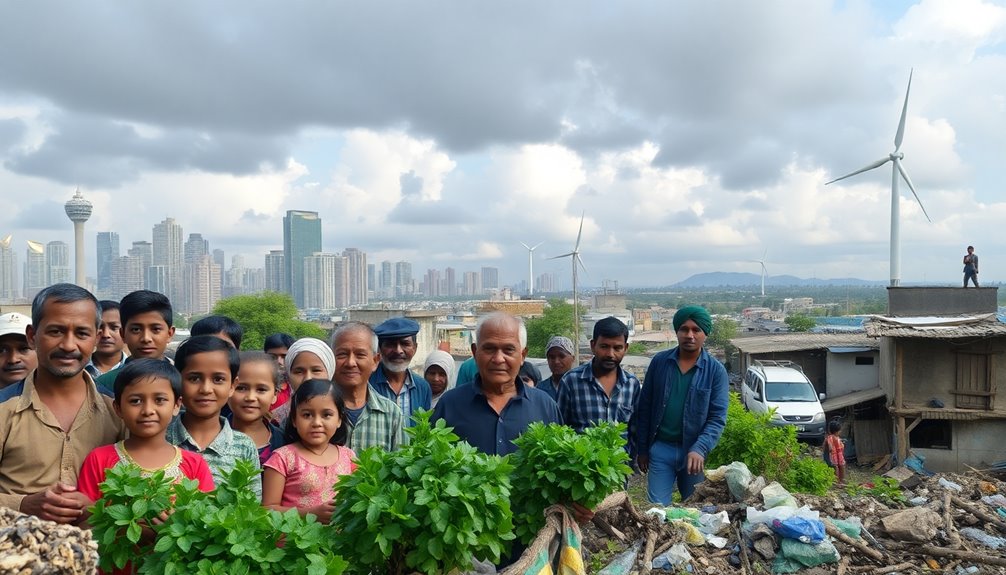
As you look around, you can’t ignore the pressing impacts of climate change and how they disproportionately affect vulnerable communities. Economic disparities are widening, making it harder for many to access resources and opportunities. It’s essential to address these issues for a fairer, more sustainable future. Building supportive communities can significantly enhance resilience during these challenges, fostering collective action and emotional strength among individuals facing adversity.
Climate Crisis Impact Today
While many people focus on technological advancements, the climate crisis remains an urgent challenge that directly impacts our lives today.
You can see its effects in various areas, including:
- Urban Resilience Planning: Cities are adapting through sustainable infrastructure to withstand extreme weather events.
- Renewable Energy Advancements: Shifting to clean energy sources helps reduce our carbon footprint and combat climate change.
- Ecological Restoration Projects: These initiatives revive ecosystems, promoting biodiversity conservation efforts and supporting climate justice initiatives.
Economic Disparities Widening Globally
Economic disparities are widening globally, exacerbated by the intersecting challenges of climate change and inequality. You see, global wealth is concentrated in the hands of a few, stifling economic mobility for many.
Income inequality persists, making poverty reduction efforts less effective. Without financial literacy, individuals struggle to navigate economic systems, facing access barriers that hinder opportunity.
Social entrepreneurship offers a potential solution, promoting wealth redistribution and fostering economic justice. Yet, without robust labor rights, workers remain vulnerable to exploitation.
To bridge this gap, we must advocate for policies that empower individuals and communities, ensuring everyone has a fair shot at economic success.
Together, we can challenge the status quo and push for a more equitable future.
Social Justice and Equity
The widening economic disparities aren’t just numbers on a page; they reflect deeper issues of social justice and equity that we face today.
To confront these challenges, you can engage in:
- Grassroots Activism: Join local movements that push for policy reform and equitable access to resources.
- Equity Education: Educate yourself and others about privilege awareness and intersectional justice to foster informed discussions.
- Community Building: Collaborate with diverse groups to strengthen allyship strategies and drive systemic change.
The Role of Technology: Innovations Shaping Our Future

As you consider the role of technology in shaping our future, think about how AI and automation are transforming industries and daily life.
Innovations in sustainable tech are also emerging, offering solutions to pressing challenges like climate change.
Embracing these advancements could redefine our world for the better. Additionally, prioritizing self-care practices can enhance our ability to adapt to rapid technological changes.
AI and Automation Impact
While you navigate the complexities of modern life, AI and automation are reshaping industries and redefining job landscapes at an unprecedented pace.
As you embrace these innovations, consider their implications:
- Automation Workforce: Many jobs are being replaced, raising concerns about technological unemployment and the digital divide.
- AI Ethics: Algorithmic bias and data privacy issues challenge us to think critically about how we govern these technologies.
- Human Augmentation: Machine learning is enhancing human capabilities, but it also prompts discussions about innovation governance and its societal impact.
In smart cities, these advancements promise efficiency but require careful consideration of ethics to guarantee equitable access and opportunities for all.
You must stay informed to navigate this rapidly evolving landscape effectively.
Sustainable Tech Solutions Emerging
Emerging technologies are paving the way for sustainable solutions that address pressing environmental challenges. You’ll find that renewable energy sources like solar and wind are vital for reducing our carbon footprint.
The circular economy promotes waste reduction by reusing materials, while green innovation drives advancements in sustainable agriculture. By utilizing eco-friendly materials, you can support climate resilience and biodiversity preservation.
Clean transportation options, such as electric vehicles, minimize pollution and enhance air quality. Embracing ethical consumption helps you make informed choices that benefit the planet.
Together, these advancements not only create a sustainable future but also empower you to contribute actively to the health of our environment. The time for action is now—let technology guide your journey toward a better tomorrow.
Societal Changes: Evolving Cultures and Values
Societal changes reflect the dynamic nature of human values and cultures, shaping our identities and interactions. As you navigate this evolving landscape, you’ll notice significant shifts:
- Cultural Evolution: Globalization effects blend traditions, leading to new forms of artistic expression and identity transformation.
- Value Shifts: Generational perspectives challenge old social norms and belief systems, fostering greater acceptance and inclusivity.
- Communication Changes: The rise of digital platforms alters how you connect, influencing both personal relationships and societal dialogues.
These adaptations illustrate how tradition can evolve while still honoring the past. Embracing these changes helps you understand the intricate tapestry of modern life, where your beliefs and interactions continuously reshape your cultural experience. Practicing gratitude during these transitions can enhance emotional resilience and foster deeper connections.
Envisioning Tomorrow: Potential Pathways for Humanity
As you look ahead, envisioning the potential pathways for humanity brings both excitement and uncertainty.
Futuristic societies may emerge, driven by educational transformation and innovative technologies. However, these advancements come with ethical dilemmas, urging you to think critically about their implications.
Collaborative governance can foster global cooperation, enabling communities to tackle challenges like climate change through planetary stewardship.
Cultural resilience will play an essential role in preserving identity amid rapid change.
With visionary leadership, you can inspire adaptive strategies that promote holistic well-being. Additionally, fostering self-compassion can enhance emotional resilience, equipping individuals to navigate the complexities of the future.
By embracing these pathways, humanity can navigate the complexities of tomorrow, ensuring a brighter future for all.
Your active engagement in these discussions will be important as we shape the world to come.
Taking Action: How Can We Prepare for the Future?
To shape a promising future, it’s important to take proactive steps today. Here are three key strategies you can implement:
To create a brighter tomorrow, we must take decisive action now through community engagement, education, and policy advocacy.
- Community Engagement: Join or initiate grassroots movements that foster local involvement and collaboration. These efforts can lead to significant change when communities unite.
- Educational Initiatives: Advocate for interdisciplinary approaches in education that equip individuals with critical thinking and problem-solving skills. This prepares future generations for unforeseen challenges and enhances collaborative decision-making processes.
- Policy Advocacy: Support policies that promote resilience building and proactive strategies. Engage with local leaders to make sure that your voice contributes to shaping a sustainable future.
Conclusion
As you stand at the crossroads of history, remember that the threads of our past weave the fabric of our future. The challenges we face today are the storms we must weather, shaping our resolve like iron forged in fire. Embrace the innovations and evolving values around you, for they’re the compass guiding us forward. Together, let’s cultivate a garden of possibilities, nurturing hope and action, so humanity can blossom into a brighter tomorrow.