
To fall asleep in just five minutes, focus on your body’s natural rhythms. Start with quick relaxation techniques like mindfulness meditation or progressive muscle relaxation to calm your mind. Use breathing exercises, like the 4-7-8 method, to ease anxiety. Visualization techniques, such as imagining serene landscapes, can also help create mental tranquility. Finally, guarantee your environment is cool, dark, and quiet to set the stage for restful sleep. Discover more effective methods to enhance your sleep.
The Science of Sleep: Understanding Your Body’s Rhythm

Your body operates on circadian rhythms, which govern your sleep-wake cycle and influence when you feel alert or drowsy. These rhythms are affected by external factors like light exposure and temperature.
Your circadian rhythms dictate your sleep-wake cycle, impacting your alertness and drowsiness, influenced by light and temperature.
By recognizing your own sleep cycles, you can determine the best time to wind down for bed. Aim to go to sleep and wake up at the same time daily to reinforce your body’s natural clock.
This consistency helps improve the quality of your sleep, making it easier for you to fall asleep quickly. Embrace the science behind sleep, and you’ll find it easier to rest well. Additionally, incorporating mindfulness practices into your bedtime routine can further enhance your ability to relax and prepare for sleep.
Quick Relaxation Techniques to Calm Your Mind
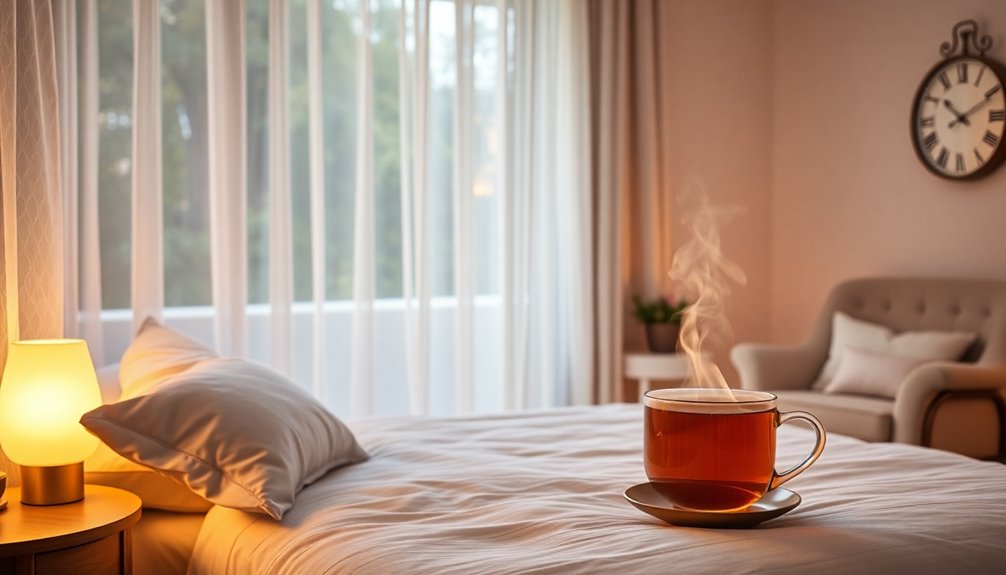
To quickly calm your mind before sleep, try incorporating simple relaxation techniques into your bedtime routine.
Mindfulness meditation can be a powerful tool; just find a quiet space, close your eyes, and focus on your breath. Allow thoughts to drift away as you concentrate on the present moment. Embracing relaxation and letting go of expectations can enhance your ability to fall asleep peacefully.
Another effective method is progressive muscle relaxation. Begin by tensing and then relaxing each muscle group, starting from your toes and moving up to your head. This helps release physical tension and signals your body it’s time to unwind.
Breathing Exercises: A Simple Path to Sleep
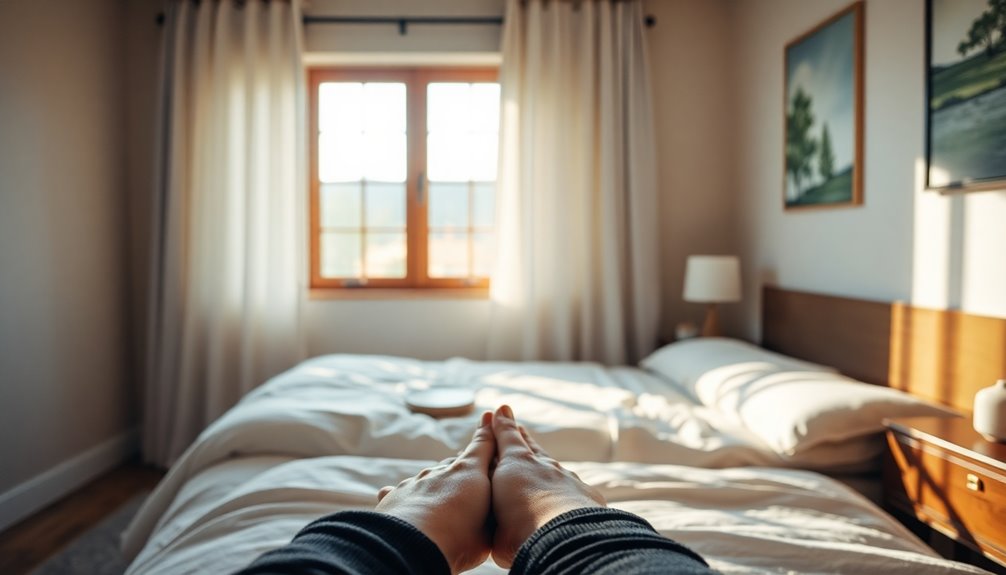
Breathing exercises can be a game-changer for those struggling to fall asleep. One effective method is diaphragmatic breathing, which helps calm your mind and relax your body.
To try this, sit or lie down comfortably, place one hand on your chest and the other on your abdomen, and take a deep breath through your nose, allowing your abdomen to rise.
Sit or lie down comfortably, place one hand on your chest and the other on your abdomen, and take a deep breath through your nose.
You can also use the 4 7 8 technique: inhale for four seconds, hold your breath for seven seconds, and exhale for eight seconds.
Repeat this cycle a few times. These techniques not only promote relaxation but also reduce anxiety, making it easier for you to drift off into a restful sleep. Incorporating mindfulness practices into your bedtime routine can further enhance your ability to unwind and prepare for sleep.
Give them a try tonight!
The Power of Visualization for Instant Relaxation
While many people underestimate its effectiveness, visualization can be a powerful tool for achieving instant relaxation and preparing your mind for sleep. By using guided imagery, you create a vivid mental escape from daily stressors.
Picture a serene landscape—perhaps a quiet beach or a lush forest. Engage all your senses: feel the warm sun, hear the gentle waves, or smell the fresh pine. This immersive experience can shift your focus away from anxiety, helping you to unwind. Additionally, incorporating mindfulness practices can further enhance your relaxation and improve your overall sleep quality.
To maximize its benefits, practice visualization consistently before bedtime. As you explore your peaceful scene, let go of tension and allow your body to relax. This simple yet effective technique can make falling asleep quicker and easier, enhancing your overall sleep quality.
Creating a Sleep-Inducing Environment: Tips and Tricks
After you’ve harnessed the power of visualization to unwind, the next step is to create an environment that promotes restful sleep.
Start by adjusting your sleeping temperature; experts recommend keeping it between 60 to 67 degrees Fahrenheit for ideal comfort. This cool environment helps signal your body that it’s time to rest.
Next, focus on light control. Use blackout curtains to eliminate unwanted light and consider a sleep mask if necessary. Dimming lights an hour before bed can also help your body prepare for sleep.
Finally, minimize noise with earplugs or a white noise machine, ensuring your space is quiet and calming. By fine-tuning these elements, you’ll set the stage for a peaceful night’s sleep. Additionally, embracing mindful breathing can further enhance relaxation, helping to ease your mind at the end of the day.
Conclusion
In just five minutes, you can transform into a sleep superhero, soaring through the clouds of dreams! By mastering quick relaxation techniques, breathing exercises, and the art of visualization, you’ll leave insomnia in the dust. Picture your perfect sleep sanctuary, and you’ll be drifting off faster than a shooting star! So, next time you find yourself counting sheep, remember these science-based tricks and watch as sleep wraps around you like a cozy, warm blanket. Sweet dreams await!