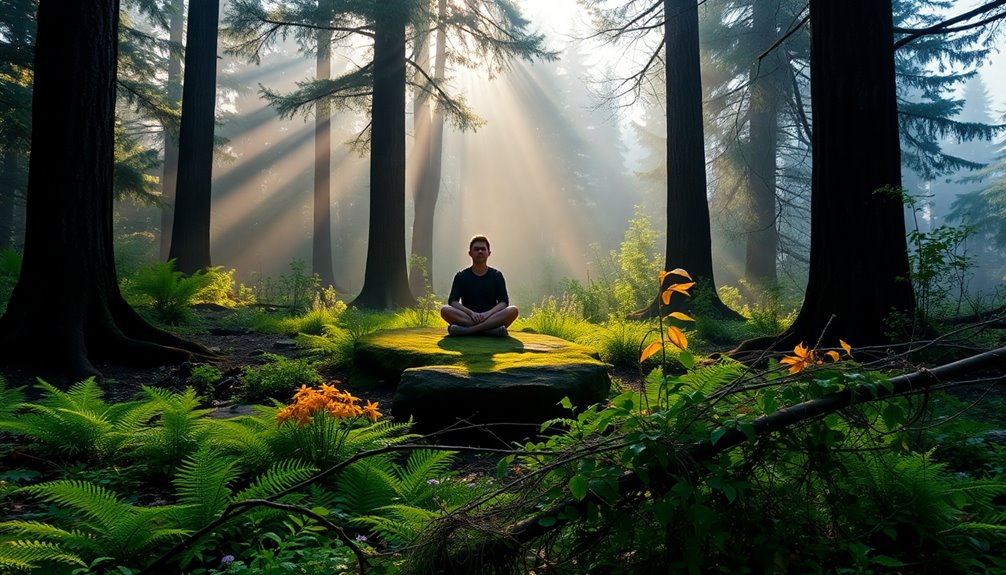
You might be making some common mindfulness mistakes that increase your stress. Overthinking your practice can complicate it unnecessarily, while comparing yourself to others sets unrealistic expectations. Skipping self-compassion can lead to harsh judgments that hinder progress. Ignoring your environment, especially if it’s cluttered or noisy, affects your ability to focus. Finally, rushing your mindfulness journey can lead to frustration. Discovering how to avoid these pitfalls can enhance your practice and well-being.
Overthinking Your Mindfulness Practice: Why Simplicity Matters

While it’s easy to get caught up in the details of mindfulness practice, overthinking can actually hinder your progress. Instead of complicating things with intricate mindfulness techniques, focus on simplicity.
Embrace basic practices like deep breathing or mindful walking, which can quickly ground you in the present moment. When you practice balance, you’ll find that less is often more.
Allow yourself to let go of the pressure to perfect every aspect of your routine. Remember, mindfulness is about being present and aware, not about achieving some ideal. Embracing the power of doing nothing can also enhance your overall well-being and promote a healthier mindset.
Comparing Yourself to Others: The Trap of Mindfulness Expectations

Simplicity in your mindfulness practice is key, but it’s easy to get sidetracked by the achievements of others. Mindful comparisons can creep in, making you feel like you’re falling short.
You might scroll through social media and see someone effortlessly meditating for hours or sharing their deep insights, and suddenly, expectation pressure weighs you down. Instead of focusing on your unique journey, you start measuring your progress against theirs, which can lead to unnecessary stress and self-doubt. Embracing your authentic self allows you to prioritize personal growth over societal expectations, ultimately reducing the pressure to conform.
Skipping Self-Compassion: How Harsh Judgments Keep You Stressed

When you skip self-compassion in your mindfulness practice, you open the door to harsh self-judgments that can heighten your stress levels. You might find yourself caught in a cycle of negative thoughts, making it difficult to cultivate self-judgment awareness.
Instead of being kind to yourself, you might criticize your efforts or dwell on perceived failures. This can create an overwhelming sense of inadequacy, further increasing your stress.
Adopting a compassionate mindset allows you to approach your thoughts and feelings with understanding rather than judgment. By acknowledging your struggles without harsh criticism, you can reduce stress and improve your overall well-being. Practicing self-kindness is essential for nurturing resilience and fostering a more supportive internal dialogue.
Ignoring Your Environment: The Importance of Setting in Mindfulness
How often do you consider your surroundings during mindfulness practice? Ignoring your environment can keep you from fully engaging in the moment.
Developing environmental awareness is essential for effective mindfulness. If you’re in a cluttered or noisy space, you might find it harder to concentrate and relax.
Instead, create mindful surroundings that promote tranquility and focus. Choose a spot with natural light, calming colors, or soothing sounds. These elements can enhance your practice, making it more rewarding.
Pay attention to how your environment influences your thoughts and feelings. By acknowledging your surroundings, you can cultivate a deeper sense of peace and presence.
Incorporating personal sanctuary elements into your space can significantly improve your mindfulness experience. Don’t underestimate the power of a supportive setting in your mindfulness journey; it truly makes a difference.
Rushing the Process: Why Mindfulness Takes Time and Patience
While mindfulness can seem straightforward, rushing the process can hinder your progress. It’s essential to embrace mindful pacing and allow yourself the time to truly cultivate patience.
Here are four key reasons why you shouldn’t rush:
- Learning Curve: Mindfulness is a skill that develops over time; rushing can lead to frustration.
- Deeper Understanding: Taking your time helps you grasp the concepts more fully, enhancing your practice.
- Sustainable Practice: A rushed approach often leads to burnout, making it hard to maintain mindfulness in the long run.
- Enhanced Benefits: With patience, you’ll notice more profound changes in your mental well-being and stress levels. Additionally, embracing effortless action allows you to align with life’s natural flow, making mindfulness more integrated into your daily life.
Conclusion
In your quest for mindfulness, don’t let these common mistakes keep you tangled in stress. Remember, simplicity is key, and comparing yourself to others is a surefire way to create unnecessary chaos. Embrace self-compassion, tune into your surroundings, and give yourself the grace of time. Mindfulness isn’t a race; it’s more like a peaceful stroll through a beautiful garden. So take a deep breath, relax, and let your journey unfold at its own pace.