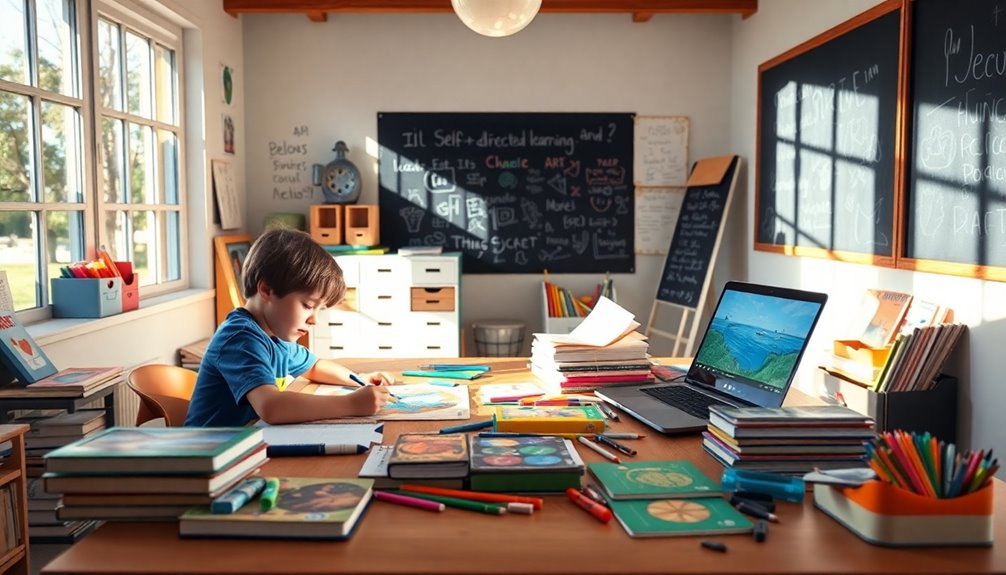
Unschooling is all about taking control of your learning journey. It encourages you to explore your interests and learn through real-life experiences. You’ll thrive in sensory-rich environments that spark curiosity and creativity. Set achievable goals to guide your path, while embracing flexibility in your learning. Engage with your community and collaborate with others to enhance your social skills. This approach can transform your educational experience, and there’s so much more to discover about unschooling.
What Is Unschooling and How Does It Work?

Unschooling is an educational philosophy that empowers you to take control of your own learning journey. Instead of following a traditional curriculum, you engage in child-led exploration and interest-driven learning.
This approach allows you to pursue topics that genuinely excite you, fostering a deep connection with the material. You’ll find yourself learning through real-life experiences, hands-on projects, and meaningful conversations rather than rigid textbooks.
By following your interests, you develop critical thinking and problem-solving skills essential for personal growth. You’re not just absorbing information; you’re actively seeking knowledge that resonates with you.
This freedom encourages creativity and self-motivation, making learning a natural and enjoyable part of your everyday life. Embrace unschooling, and watch your passions flourish! Additionally, the emphasis on experiential education enhances your understanding of real-world applications, making learning even more relevant and engaging.
The Core Principles of Self-Directed Learning

When you explore self-directed learning, you’ll discover the power of autonomy in your educational journey.
Recognizing the importance of intrinsic motivation can spark your curiosity and drive.
Plus, creating personalized learning pathways guarantees that your experiences align with your unique interests and goals. Additionally, incorporating mindfulness practices can enhance your overall well-being and focus, further enriching your learning experience.
Autonomy In Learning
Autonomy in learning is essential for fostering a love of knowledge, as it empowers you to take charge of your educational journey.
When you embrace learner autonomy, you make self-directed choices that align with your interests and goals. This freedom not only enhances your engagement but also encourages deeper understanding.
By taking the initiative to explore topics that excite you, you develop critical thinking skills and a sense of responsibility for your learning. Remember, it’s about trusting yourself to navigate your path.
As you cultivate this autonomy, you’ll discover that learning becomes a more meaningful and enjoyable experience.
Intrinsic Motivation Importance
At the heart of self-directed learning lies intrinsic motivation, a powerful driving force that fuels your desire to explore and grow.
When you’re genuinely interested in a subject, you’ll naturally invest time and effort without needing external rewards. This internal drive is essential; it helps you persist through challenges and setbacks.
By cultivating your curiosity, you create a rich learning environment where you feel empowered to ask questions and seek answers. Intrinsic motivation pushes you to explore deeper, leading to a more meaningful and enjoyable learning experience.
Embrace your passions, and you’ll find that self-directed learning becomes not just a method, but a fulfilling journey that inspires lifelong growth and discovery.
Personalized Learning Pathways
Creating personalized learning pathways is essential for fostering effective self-directed learning. By tailoring your education to fit your unique interests and learning styles, you empower yourself to take control of your educational journey.
Start by identifying your passions and goals, then design an adaptive curriculum that reflects them. This approach not only keeps you engaged but also encourages deeper understanding and retention of knowledge.
Utilize various resources—books, online courses, and community experiences—to create a diverse learning environment. Regularly assess your progress and adjust your pathway as needed, ensuring that your learning remains relevant and stimulating.
Embracing personalized learning allows you to cultivate skills and knowledge that resonate with you, ultimately making your educational experience more meaningful and fulfilling.
Creating a Learning Environment That Inspires Curiosity

When you foster a learning environment that sparks curiosity, you open the door to endless exploration and discovery.
Create sensory-rich environments filled with diverse materials and experiences that invite questions and exploration. Encourage curiosity-driven projects by allowing your learners to pursue their interests.
Foster exploration by creating vibrant, sensory-rich spaces that ignite curiosity and inspire learners to follow their passions.
Set up spaces where they can touch, see, hear, and even smell different resources. This hands-on approach not only stimulates their senses but also fuels their desire to learn.
Provide tools and opportunities for them to experiment and create, whether it’s art supplies, science kits, or nature exploration gear. Additionally, fostering supportive relationships within a learning community can enhance curiosity and provide diverse insights that enrich the learning experience.
Choosing Resources and Materials for Unschooling
Choosing the right resources and materials for unschooling can greatly enhance your child’s learning experience, as these tools should align with their interests and passions.
Start by considering your child’s unique preferences; this makes resource selection much easier. Look for books, online courses, documentaries, and hands-on activities that capture their imagination.
Encourage them to explore various subjects, and don’t hesitate to visit local libraries or community centers for additional material sourcing. Engage in discussions about what they want to learn, allowing them to guide their education.
Remember, the goal is to foster curiosity and independence, so choose resources that inspire creativity and critical thinking. Providing access to diverse materials can greatly enrich their learning journey.
Encouraging Exploration and Real-World Learning Experiences
To foster a love for learning, you can create hands-on opportunities that spark curiosity. Encourage your child to tackle real-world problems, turning everyday situations into valuable lessons. Engaging in community activities can also enhance their understanding and provide emotional support through shared experiences.
Hands-On Learning Opportunities
While traditional education often confines learning to textbooks and classrooms, hands-on learning opportunities invite you to explore the world in engaging and meaningful ways.
Embracing experiential learning helps you develop practical skills that last a lifetime. Here are some ways to engage in hands-on experiences:
- Volunteer for community projects to learn teamwork and leadership.
- Start a small business to understand entrepreneurship and financial literacy.
- Participate in workshops or classes that focus on arts, crafts, or trades.
- Explore nature through hiking, gardening, or wildlife observation.
These activities not only enrich your knowledge but also foster curiosity and creativity.
Real-World Problem Solving
Hands-on learning opens the door to real-world problem solving, where you can tackle challenges that matter. By engaging in projects that have real-life applications, you’ll develop critical thinking skills essential for maneuvering complex situations.
Whether it’s organizing a community event or creating a sustainable garden, these experiences push you to analyze problems and devise effective solutions. You’ll learn to ask questions, research options, and apply your knowledge creatively.
Embrace opportunities that encourage exploration, like internships or volunteer work, as they deepen your understanding of real-world dynamics. As you confront genuine challenges, you’ll not only enhance your ability to think critically but also build confidence in your capacity to make a difference.
This is where true learning happens.
How to Set Goals and Track Progress in Unschooling?
How can you effectively set goals and track progress in unschooling? Start by embracing flexibility. Here are some strategies to guide you:
- Define clear, achievable goals: Focus on what you want to learn or accomplish.
- Create a learning journal: Document your experiences, insights, and reflections regularly.
- Use visual aids: Charts or graphs can help illustrate your progress over time.
- Celebrate milestones: Acknowledge your achievements, no matter how small, to boost motivation.
- Incorporate mindfulness practices: Regularly engaging in mindfulness practices can enhance your overall well-being and focus during the learning process.
Balancing Structure and Freedom in Learning
Finding the right balance between structure and freedom in learning can be a game changer for unschoolers. You’ll want to embrace structured flexibility, allowing you to set boundaries while still encouraging creativity.
Establish a routine that includes time for exploration, but don’t be afraid to adjust it based on interests and passions. Guided freedom is key; let your curiosity steer the learning process, but provide resources and support to keep you on track. Engaging in mindfulness and self-reflection can enhance your ability to appreciate each moment of the learning journey.
This way, you can enjoy the liberating aspects of unschooling while still gaining the benefits of a well-rounded education. Remember, it’s about creating an environment where you feel free to learn, yet have enough structure to make meaningful progress.
Socialization and Community in Unschooling
What role does socialization play in the unschooling experience? It’s essential for building connections and fostering learning opportunities. By engaging with your community, you can create a rich environment for your child that promotes social networks and peer interactions.
Here are some ways to enhance their social experience:
- Participate in local resources like libraries and museums.
- Join support groups that align with your unschooling values.
- Encourage cooperative learning through group activities.
- Share experiences with other families to inspire collaboration.
Through these avenues, you’ll find that family involvement and community engagement are crucial. They not only create a strong support system but also enrich your child’s life with diverse perspectives and meaningful connections. Additionally, quality time spent with peers can significantly enhance their social skills and emotional development.
Tips for Transitioning From Traditional Education to Unschooling
Changing from traditional education to unschooling can feel overwhelming, but with the right approach, you can make the shift smoother for your family.
Start by exploring your children’s unique learning styles; this will help you tailor their experiences to fit their needs. Embrace curriculum flexibility, allowing them to pursue interests that ignite their passion.
Gradually introduce unschooling principles by integrating hands-on activities and real-world experiences into daily life. Encourage curiosity and self-directed learning by providing resources that align with their interests.
Connect with other unschooling families for support and inspiration. Remember, it’s a journey, and your family will adapt over time, finding a rhythm that works for everyone. This process of adaptation will cultivate a passion for learning and encourage your children to thrive in their educational pursuits.
Trust the process and enjoy the freedom of learning outside the traditional classroom.
Conclusion
In the vibrant tapestry of unschooling, you weave curiosity and creativity into your learning journey. Embrace the freedom to explore, knowing that every question you ask is a step toward understanding. By balancing structure with spontaneity, you’ll cultivate a rich environment for growth. Remember, learning isn’t a race; it’s an adventure where each moment shapes your path. Immerse yourself in this exciting world of self-directed learning, and watch your passion for knowledge flourish like a wildflower in spring.