
Getting in shape for running usually takes a few weeks to a few months. It depends on your current fitness level and how consistently you train. You should start by setting achievable goals and following a structured plan. Regular workouts and tracking your progress are essential for improvement. As you embrace the challenges, remember that hydration and motivation play key roles too. You’ll discover more strategies to enhance your running journey ahead.
Understanding Your Motivation for Running
Understanding your motivation for running is essential to shaping your experience and commitment. Your reasons, whether they’re participating in local races, losing weight, or improving overall fitness, set the foundation for your fitness goals.
Reflect on what drives you; deeper motivations like enhancing family roles or achieving personal milestones can strengthen your connection to running. Writing down your ‘why’ and keeping it visible can reinforce your commitment levels, reminding you why you started.
This clarity enhances accountability, giving you a clear path to track your progress. By understanding your motivations, you create a fulfilling running journey that aligns with your aspirations, ensuring you stay engaged and inspired throughout your training. Additionally, seeking guidance from individuals who have achieved similar goals can provide valuable insights and bolster your determination.
Setting Achievable Goals
Setting achievable goals is essential for your running journey, as it keeps you motivated and on track. Focus on setting realistic, actionable goals, like walking or running for 30-40 minutes, 3-5 times a week.
Break your goals down into monthly targets, tracking total minutes or days to guarantee progress. Establish weekly and 90-day goals to foster long-term commitment.
Remember, it’s important to start with expectations that align with your current fitness level; overly ambitious goals can lead to frustration or injury. Define your personal ‘why’ for running to reinforce your motivation.
Finally, prioritize gradual increases in distance and intensity to create a sustainable running routine while minimizing risks. Additionally, setting clear goals using the SMART framework can enhance your focus and maintain your commitment to your running regimen.
Importance of Consistency and Habit Tracking
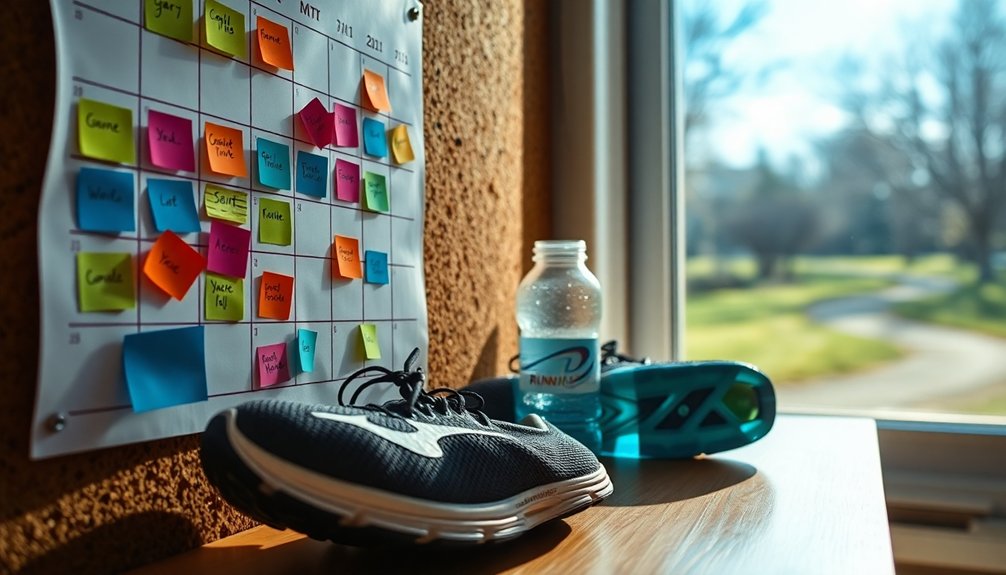
Consistency is key when it comes to getting in running shape, as regular practice leads to noticeable improvements within just a few weeks. By committing to a consistent running schedule, you’re setting yourself up for progress.
Habit tracking can play an essential role in this journey; by monitoring your running frequency and duration, you’ll reinforce your commitment and transform running into a staple of your routine.
Consider using a monthly habit tracker that includes not just your runs but also complementary habits like hydration. This holistic approach enhances overall fitness and keeps you accountable. Additionally, implementing goal setting and achievement can further enhance your running journey by providing clear targets to strive for.
Scheduling Your Workouts
To successfully schedule your workouts, treat them like non-negotiable appointments in your calendar. This approach strengthens your commitment and increases consistency, making it easier to stick to your running routine.
Aim for at least 30 minutes of movement daily, even on non-running days, to maintain overall fitness. Here are some tips to enhance your scheduling:
- Identify specific times in your day for short workouts.
- Use a monthly habit tracker to replace “try” with “start.”
- Plan your workouts around other commitments for better adherence.
- Set reminders to keep your running schedule on track.
- Be flexible and adjust your plan as needed to stay consistent. Additionally, prioritization and goal setting can help you focus on your fitness milestones and enhance your motivation.
Finding Accountability and Support

Sticking to your running schedule can be much easier with the right support system. Finding an accountability partner or joining local running clubs can greatly boost your consistency and motivation.
Whether it’s friends, family, or fellow runners, having a community around you fosters commitment and encourages regular participation. Sharing your running journey on social media or with a trusted friend can provide the encouragement you need to stay on track.
You might also consider listening to running-related podcasts for extra inspiration. Additionally, structured programs like the Run After 40 Club not only enhance your skills but also create camaraderie, ensuring you have the support you need to reach your running goals effectively. Friendships can significantly reduce feelings of loneliness and provide the emotional support necessary to maintain your running routine.
Preparing With the Right Gear
Getting the right gear is essential for your running journey.
Investing in quality shoes, comfortable athletic apparel, and suitable clothing for weather conditions can make all the difference in your performance and enjoyment. Additionally, regular movement not only enhances your running experience but also improves overall health and mood.
Let’s explore what you need to set yourself up for success on the track or trail.
Essential Running Shoes
Choosing the right running shoes is essential for anyone looking to get into shape. High-quality running shoes provide the support you need, reducing injury risk while enhancing comfort during your runs.
To find the perfect pair, consider the following:
- Match shoes to your foot type (high arches, flat feet)
- Get a professional gait analysis at a specialty store
- Replace shoes every 300 to 500 miles to maintain performance
- Look for breathability and moisture-wicking properties
- Prioritize cushioning for added comfort
Comfortable Athletic Apparel
When you’re gearing up for a run, the right athletic apparel can make all the difference in your comfort and performance.
Opt for comfortable athletic apparel made from moisture-wicking fabrics that keep you dry and reduce chafing. Look for breathable materials that enhance airflow and help regulate your body temperature.
Properly fitted running shoes are essential for support and cushioning, boosting your efficiency while minimizing injury risk.
Layering your clothing allows you to adapt to changing temperatures, ensuring you stay comfortable throughout your run.
Investing in high-quality athletic gear designed specifically for running can elevate your performance, as these pieces often feature reflective materials for visibility and ergonomic designs that promote better movement.
Gear for Weather Conditions
To enhance your running experience, dressing for the weather is essential. The right gear for weather conditions can keep you comfortable and safe.
In warm weather, lightweight, moisture-wicking fabrics are a must, while layering helps in the cold. For those rainy runs, opt for water-resistant shoes and a waterproof jacket.
During winter, thermal gloves and hats are important to retain body heat. Don’t forget to stay hydrated; using a hydration pack is crucial during hot runs.
If you’re running in low-light situations, reflective gear is non-negotiable for safety.
Here’s a quick checklist of essential gear:
- Lightweight, moisture-wicking tops
- Waterproof jacket
- Thermal gloves and hat
- Hydration pack
- Reflective accessories
Starting With a Run/Walk Plan
Starting a run/walk plan is a smart way to ease into running while building your endurance.
You’ll want to establish a routine, gradually increase your distance, and keep track of your progress to make necessary adjustments. Additionally, incorporating small rewards for each achieved milestone can help sustain your motivation throughout the process.
Consistency is essential, so let’s explore how to set up your run/walk schedule effectively.
Establishing Your Run/Walk Routine
As you begin your journey into running, establishing a run/walk routine can provide a manageable way to build your endurance.
Start with a 4-week program where you alternate between walking and jogging. Here’s how to structure your routine:
- Walk for 4 minutes, then jog for 2 minutes, repeating five times.
- Aim to run/walk three times a week for consistency.
- Incorporate dynamic warm-ups before your sessions to prevent injuries.
- Include static stretching after running to improve flexibility.
By week four, your goal is to comfortably complete a 30-minute jog, marking significant progress in your fitness level.
Stick to this routine, and you’ll notice improvements in your endurance and overall health!
Gradual Distance Increase Strategy
While building your running endurance, a gradual distance increase strategy is essential for long-term success.
Starting with a run/walk plan, you can alternate between walking and jogging, which helps boost your running ability without overwhelming your body. For beginners, start with a 4-minute walking and 1-minute jogging ratio for 30 minutes.
Over 4 weeks, aim to increase your jogging intervals while decreasing walking time, eventually achieving a continuous 30-minute jog. Consistency is key—try to have three run/walk sessions per week.
This gradual approach minimizes the risk of injury and keeps you motivated, as you’ll likely notice improvements in your running ability within 4 to 6 weeks.
Stay committed, and your hard work will pay off.
Tracking Progress and Adjustments
To effectively track your progress and make necessary adjustments in your run/walk plan, focus on consistent monitoring of your sessions. This approach helps you gradually build endurance and reach your running shape goals.
Here are some tips to enhance your tracking:
- Log your run/walk intervals and total session time.
- Note how you feel during each session to adjust intensity.
- Set weekly targets for distance or duration.
- Use a fitness app or journal to visualize progress.
- Celebrate small milestones to stay motivated.
With a structured 4-week plan, you can adjust your intervals based on comfort levels, ensuring a gradual build-up that minimizes injury risk while optimizing performance.
Stay committed, and you’ll see improvements in no time!
Embracing the Challenges
Embracing the challenges of running is essential for your journey, since the initial discomfort tends to fade within 2 to 6 weeks as your body adjusts. Accepting that you may feel sore at first is part of the process, and these experiences foster personal growth and improved physical fitness.
With consistent effort, you’ll notice running gets easier, and your endurance will greatly improve by the three-month mark. Maintaining a positive mindset and good posture is vital; it not only prevents injuries but also enhances your overall running experience. Recognizing that every negative situation can yield positive outcomes will help you stay motivated during tough times.
Staying Hydrated and Motivated
Staying hydrated is essential for your running success, as it directly impacts your performance and recovery.
When you’re properly hydrated, you’ll notice improvements in your training progress and overall endurance.
Here are some effective hydration strategies to keep you motivated:
- Drink water consistently throughout the day.
- Use electrolyte drinks for longer runs to maintain energy levels.
- Monitor your fluid intake before, during, and after runs.
- Set hydration reminders on your phone to refresh your focus.
- Keep motivational quotes visible to inspire your training.
Additionally, maintaining a distraction-free environment can further enhance your focus and commitment to your running routine.
Conclusion
Getting in running shape takes time, patience, and dedication. Embrace the journey, celebrate small victories, and stay committed to your goals. As you build endurance, strengthen your body, and cultivate a lasting habit, remember that every step counts. Whether you’re hitting the pavement, tracking progress, or finding support, keep pushing forward. You’re not just transforming your fitness; you’re discovering a new version of yourself. So lace up those shoes, and let the adventure begin!