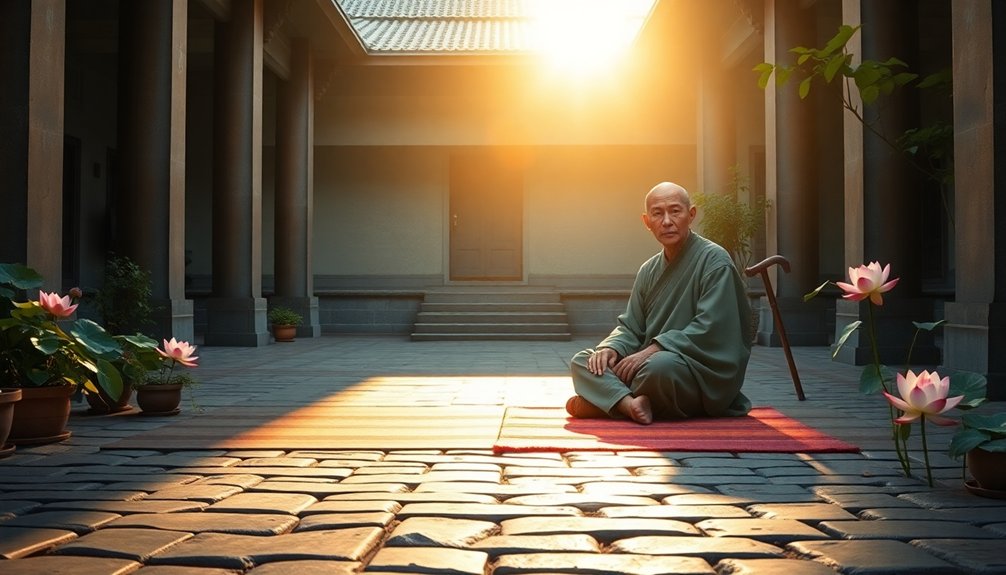
When a monk becomes disabled, their journey shifts toward resilience and spiritual growth. They often adapt their practices, focusing more on meditation and inner reflection. Community support plays an essential role, offering physical and emotional assistance that fosters belonging. Disabled monks may take on teaching or counseling roles, redefining their purpose within the monastery. As they confront stigma and embody compassion, their stories inspire others, showing how adversity can lead to profound wisdom. There’s so much more to uncover about this transformative journey.
The Impact of Disability on Monastic Life
While disability can present challenges within monastic life, it often leads to unique opportunities for growth and contribution. A Buddhist monk, facing physical limitations, might shift his focus from strenuous activities to deepening his meditative practices. This inner reflection not only enriches his spiritual journey but also allows him to share wisdom and compassion with others. Rather than being sidelined, a disabled monk would often take on roles like teaching or counseling, enriching the community with his insights. The philosophy of impermanence underscores this journey, highlighting how adversity can foster resilience. Embracing a positive mindset can help navigate the emotional challenges that come with such a transition.
Community Support for Disabled Monks
In monastic communities, you’ll find that support for disabled monks goes beyond compassion. They receive physical assistance and live in modified spaces designed for accessibility, allowing everyone to engage in daily life. This environment not only nurtures their spiritual practices but also opens doors for new roles that highlight their unique contributions. Moreover, the emphasis on emotional support fosters resilience, promoting well-being and a sense of belonging within the community.
Physical Assistance Provided
Monastic communities actively support disabled monks by providing essential physical assistance with daily tasks, ensuring they can fully engage in their spiritual lives.
This community support is crucial; it allows monks to adapt their monastic routines to better fit their needs. Tasks that may have been simple for them before are now handled with care by fellow monks, promoting a sense of belonging and purpose.
As physical activities become more challenging, monks often shift their focus toward inner reflection and spiritual growth, which enriches their contributions.
Additionally, disabled monks may find new avenues to share their wisdom, such as teaching and counseling, further integrating their experiences into the community.
This holistic support fosters resilience and deepens their spiritual journey.
Modified Living Spaces
To guarantee that all monks can thrive in their spiritual practices, communities often modify living spaces for enhanced accessibility. These modified living spaces feature ramps, wider doorways, and specialized accommodations to help disabled monks navigate their environment comfortably.
Community support plays a vital role here, as fellow monks not only assist with daily tasks but also foster a nurturing atmosphere. They adapt routines to make sure everyone can engage fully in spiritual practices, regardless of physical limitations.
In addition, the community encourages disabled monks to contribute through roles like teaching and counseling, promoting inclusivity and allowing them to share their wisdom. This holistic approach guarantees that every monk feels valued and supported in their journey.
New Roles Emerged
Communities are continually evolving to support disabled monks, leading to the emergence of new roles that reflect their unique strengths.
In these inclusive environments, disabled monks often find themselves taking on alternative roles, such as teaching or counseling, where they can share their wisdom and experiences. This shift allows them to provide spiritual guidance that resonates with others, enhancing the community’s overall growth.
With modifications to living spaces and routines, disabled monks can fully engage in their spiritual practices, focusing on inner reflection and development.
The supportive atmosphere encourages personal growth and resilience, proving that limitations can transform into opportunities for deeper connections within the monastic community.
Ultimately, it’s a reflection of the strength found in embracing diversity.
Roles and Responsibilities Within the Monastery
While life in a monastery often involves specific physical roles, disabled monks still play essential parts in their communities through tailored responsibilities. You’ll find that accommodations are made to guarantee these monks can contribute meaningfully, even if their duties shift from physical tasks to areas like teaching and counseling. This allows them to share their wisdom and provide support to fellow monks. Community support is vital; it often includes assistance with daily tasks and modifications to living spaces for better accessibility. The focus for disabled monks may shift to inner reflection and spiritual practices, deepening their connection to the monastic philosophy that emphasizes acceptance of all conditions and prioritizes spiritual well-being for everyone, regardless of disability. Moreover, the practice of active listening skills can be particularly beneficial, fostering deeper connections and understanding within the community.
Spiritual Growth and Adaptation in the Face of Disability
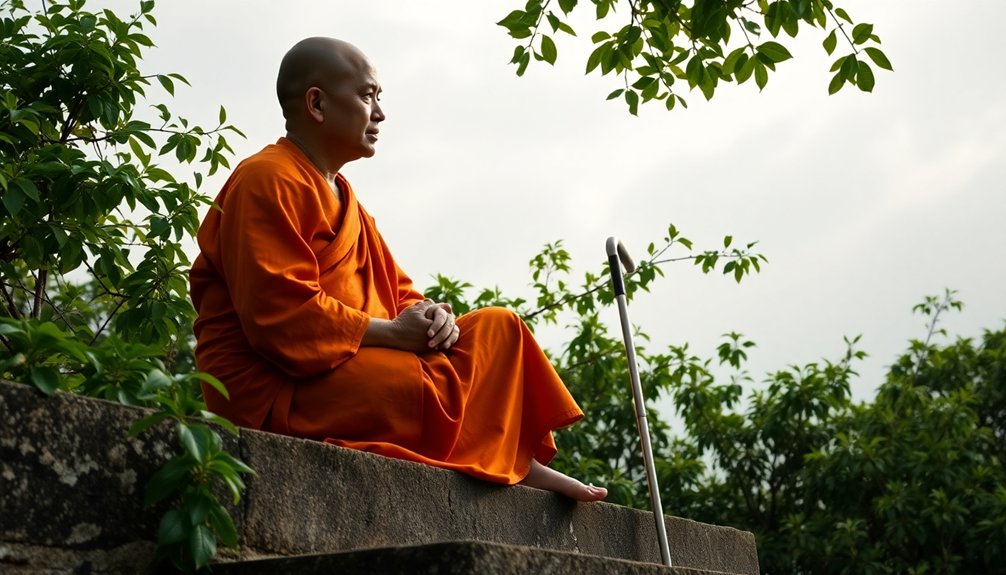
As disabled monks adapt their practices, they often find that shifting focus from physical tasks to inner reflection opens new avenues for spiritual growth. Meditative practices become central, allowing them to achieve enlightenment despite physical limitations.
This adaptation isn’t done in isolation; community support plays a crucial role in fostering an environment where they can thrive spiritually. Monastic communities emphasize acceptance of each individual’s journey, viewing challenges as opportunities for deeper wisdom and compassion. The concept of emotional support encourages disabled monks to embrace their conditions, integrating them into their spiritual path. By offering alternative roles that align with their abilities, these communities guarantee that every monk contributes meaningfully, reinforcing the bonds that nurture their shared spiritual growth and adaptation.
Perspectives on Disability in Different Buddhist Traditions
Buddhism’s perspectives on disability vary considerably across its different traditions, reflecting a complex interplay of cultural beliefs and doctrinal interpretations.
In Theravada Buddhism, the criteria for ordination would depend heavily on physical capability, disqualifying monks with disabilities like blindness or deafness. Years ago, this strict view limited opportunities for many.
In contrast, Mahayana and Vajrayana traditions show a shift toward inclusivity, with some sects beginning to ordain monks with disabilities. This change emerges amid growing dialogues about revising ordination criteria and increasing advocacy for disabled individuals within Buddhist communities.
Mahayana and Vajrayana traditions are fostering inclusivity by ordaining monks with disabilities, reflecting evolving dialogues on compassion and accessibility.
Ultimately, many are recognizing that the core teachings of Buddhism on compassion should extend to all, challenging historical stigmas and fostering a more inclusive environment for monks in varying circumstances. Engaging in enjoyable activities and supporting each other can enhance resilience and promote a positive community for those facing disabilities.
Overcoming Stigma: The Journey of Venerable Seonggwan
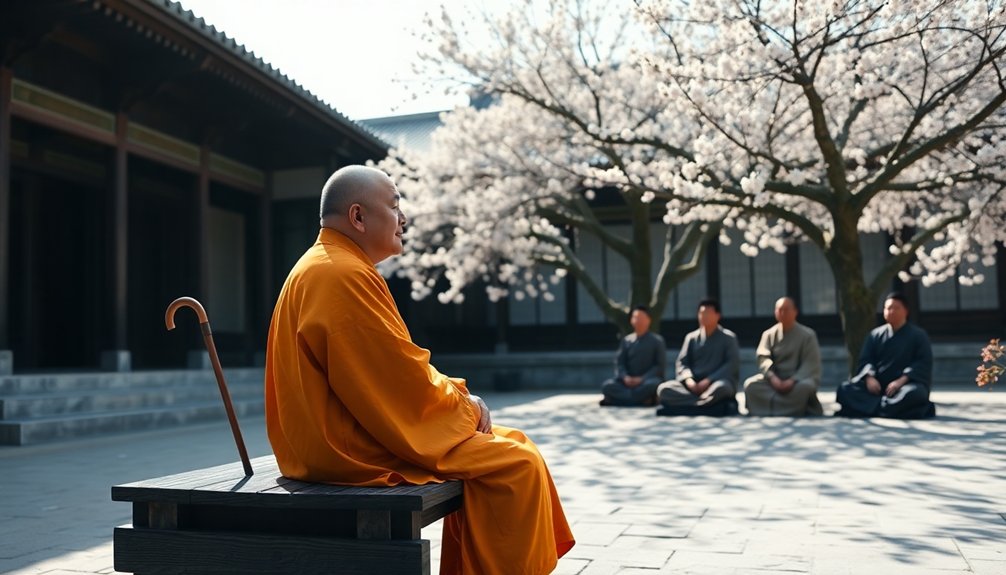
The journey of Venerable Seonggwan exemplifies the transformative power of resilience in the face of stigma. After losing his left arm in a tragic accident, he battled depression and contemplated suicide.
However, he chose to renounce worldly life, learning essential lessons from the villagers while living as a beggar.
Through his experiences, he overcame the stigma of being labeled a “one-armed maimed monk.” He’d inspire others by returning to driving and establishing the Seoho Welfare Center for the Elderly.
His life teaches us:
- The importance of community support
- The strength found in compassion
- The ability to rise above adversity
Seonggwan’s journey shows that resilience can lead to profound change, both personally and for others. Additionally, his story highlights the significance of self-compassion in overcoming feelings of inadequacy and stigma.
The Influence of Reincarnation on Disability Perception
As you explore the connection between reincarnation and disability perception, consider how beliefs about karma shape societal attitudes.
In many cultures, disabilities are seen as punishments for past actions, leading to stigma and exclusion.
This perspective not only impacts individuals’ self-worth but also hinders activism for their rights. Additionally, practicing empathy and understanding can help shift these perceptions and foster a more inclusive society.
Karma and Disability Stigma
While many people view disabilities through a lens of compassion and support, cultural beliefs around karma often paint a different picture.
You might find that, in Buddhism, disabilities are seen as consequences of past actions, which can lead to perceptions of punishment.
This view doesn’t just affect individual mindset but also fosters stigma that can result in:
- Shame and worthlessness assigned to those with disabilities
- Social exclusion and abandonment by families
- Reduced activism for disability rights due to the belief in karma implications
Cultural Impact on Perception
Reincarnation profoundly shapes how disabilities are perceived in many Buddhist cultures, influencing societal attitudes and personal beliefs. Within these cultural narratives, disabilities often get viewed as karmic retribution, leading to a negative social perception of affected individuals.
Many believe that those with disabilities face these challenges due to past-life actions, fostering stigma and shame. Traditional beliefs can result in abandonment or disownment, as families may see disabled members as burdens. This backdrop stifles activism for disability rights, as acceptance of suffering is often prioritized over seeking change.
Additionally, the absence of a formal definition of disability in places like India exacerbates these issues, perpetuating cultural stigmas and limiting opportunities for those who need support the most.
Advocating for Disability Rights in Buddhist Communities
Advocating for disability rights in Buddhist communities is gaining traction, thanks to dedicated organizations working to reduce stigma and promote inclusivity.
You’ll find that these initiatives focus on various aspects of community engagement, fostering understanding and support for individuals with disabilities.
- Empowering voices: Organizations encourage disabled individuals to share their experiences and advocate for their rights.
- Promoting inclusive practices: Workshops and training help Buddhist communities rethink their approach to disability.
- Challenging outdated beliefs: Activism confronts cultural perceptions linking disability to past life actions, fostering a more compassionate outlook.
Through these efforts, disability activism is reshaping the narrative, paving the way for greater acceptance and opportunities for everyone, including those with disabilities. Moreover, embracing radical self-acceptance can significantly enhance the emotional well-being of individuals with disabilities, fostering resilience and personal growth.
Conclusion
In the journey of life, “What doesn’t kill you makes you stronger.” When a monk faces disability, it doesn’t mark the end of their spiritual path; instead, it can open doors to deeper resilience and understanding. Through community support and adaptation, these monks often inspire others, proving that challenges can lead to profound growth. Embracing differences and advocating for inclusion enriches not just the monastic life but the broader Buddhist community as well.