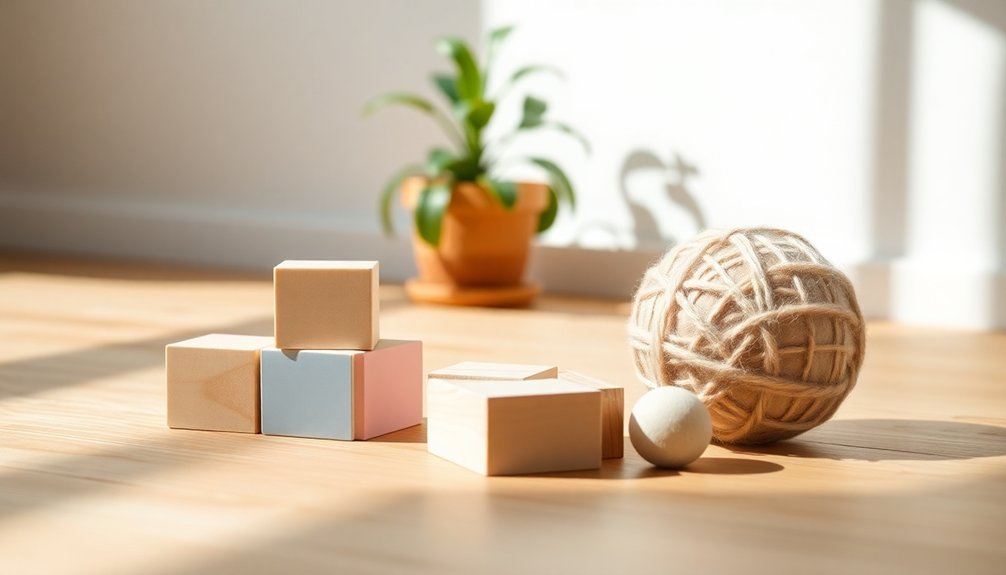
Minimalist toys can greatly boost your child’s creativity by providing fewer but more versatile options. With simple items like wooden blocks and dolls, your child can engage in imaginative play that enhances problem-solving and social skills. Fewer toys promote resourcefulness and deeper engagement, fostering a calmer environment for exploration. As you curate a balanced collection, you’ll notice the benefits of collaborative play and sharing. Discover how to create the perfect space for your child’s creativity to flourish.
The Benefits of Minimalist Toys for Creative Play
When you choose minimalist toys for your child, you’re not just reducing clutter; you’re also opening the door to enhanced creativity and imaginative play.
A minimalist toy collection, like a simple set of wooden blocks, encourages your child to construct and envision various structures, boosting their problem-solving skills and spatial awareness. With fewer toys available, your child engages in deeper imaginative play, developing resourcefulness and innovative thinking as they create unique scenarios.
Research shows that children with a limited selection of toys enjoy longer engagement times and more meaningful experiences.
Children benefit from a limited selection of toys, leading to longer engagement and richer play experiences.
Furthermore, minimalist play environments foster independent play, allowing your child to entertain themselves and develop self-directed play skills, all while minimizing toy clutter and creating a calmer space for creativity. Additionally, practicing mindfulness through breathing can help your child develop a deeper connection to their imaginative play and enhance overall focus.
Essential Toys That Spark Imagination
Essential toys that spark imagination transform playtime into a world of creativity and exploration.
Wooden blocks serve as a fantastic foundation for your child’s creativity, allowing them to build various structures and engage in endless imaginative play.
Simple dolls or animal figures foster storytelling and empathy, letting them enact different scenarios and develop social skills through role-play.
Art supplies like colored pencils and paper encourage self-expression, enabling kids to visualize their thoughts and emotions.
Sensory toys, such as kinetic sand and musical instruments, stimulate tactile engagement while enhancing fine motor skills.
Vehicles, including matchbox cars and wooden wagons, not only promote gross motor skills through pushing and pulling but also inspire imaginative adventures and storytelling in their play scenarios. Engaging in mindfulness techniques during play can further enhance a child’s focus and creativity.
Fostering Skills Through Limited Resources
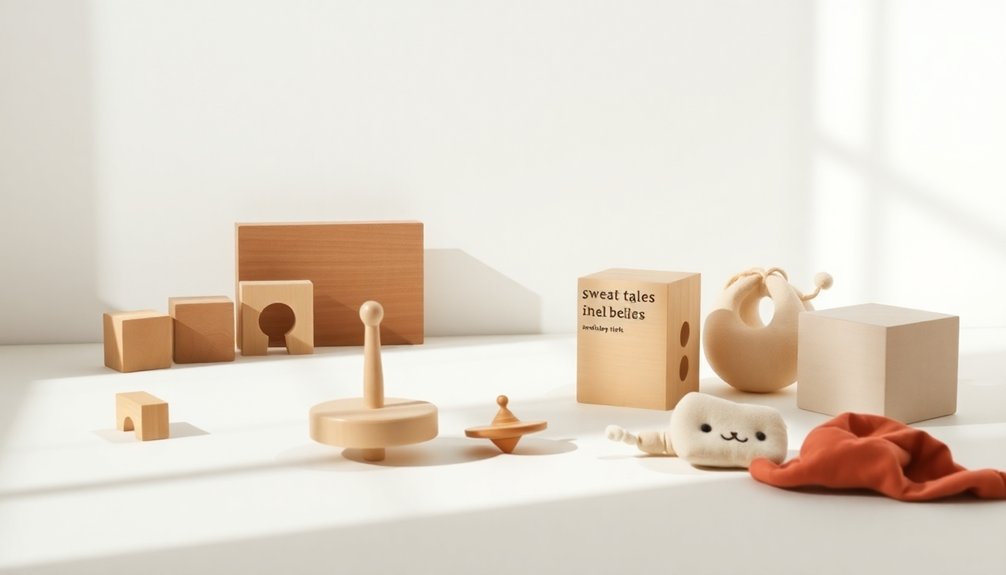
Minimalist toys can greatly foster skills through limited resources. When you embrace minimalism with kids, you’ll notice they become more resourceful and imaginative with fewer toys. This encourages creativity as they invent new scenarios using everyday items, enhancing their problem-solving skills.
Research shows that kids with fewer toys display higher levels of innovation, often transforming building toys into unique creations. By promoting independent play, these limited resources help children develop self-directed habits, reducing their reliance on external stimuli. Moreover, incorporating mindfulness practices can further enhance their experience, allowing them to engage more deeply with their play.
Plus, less clutter leads to a calmer home environment, allowing for creative exploration and bonding. Ultimately, minimalist toys empower kids to thrive, honing their skills and creativity in a more focused, enriching way.
Encouraging Collaborative Play and Sharing
While fewer toys might seem limiting, they actually encourage collaborative play and sharing among children.
In a minimalist toy environment, kids quickly learn the importance of sharing, which helps them develop essential social skills like negotiation and empathy. With fewer toys, they’re more likely to engage in cooperative play, practicing boundaries and taking turns. This fosters teamwork as they create their own games and rules, enhancing their imaginative scenarios.
Sharing toys also teaches children to appreciate their belongings, leading to a deeper understanding of value and reducing the desire for excess. Ultimately, minimalist toys create a calmer space, free from distractions, allowing for meaningful interactions and enriching creative play with peers. Additionally, fostering healthy relationships through shared experiences can further enhance their social development.
Building a Balanced Toy Collection
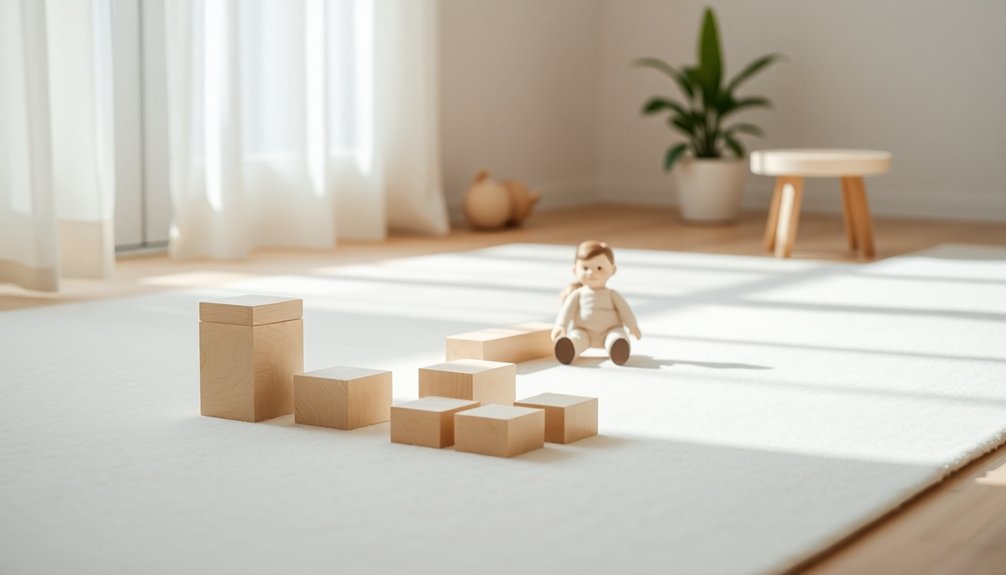
Creating a balanced toy collection is key to fostering a child’s development. A thoughtful selection can stimulate creativity and enhance various skills.
A well-curated toy collection nurtures creativity and supports essential skills in a child’s development.
Consider these essential components for your collection:
- Open-ended toys (like wooden blocks and baby dolls) that encourage imaginative play.
- Sensory items (such as kinetic sand) that promote gross motor skills and cognitive development.
- A limited number of toys to encourage resourcefulness and problem-solving.
Additionally, embracing self-acceptance can help children feel more secure in their creative choices, allowing them to explore their interests freely.
Conclusion
In a world overflowing with flashy toys, embracing minimalist options can feel like discovering a hidden treasure trove of creativity. You’ll release your child’s imagination, transforming simple blocks into castles and cardboard boxes into rockets that soar through galaxies! By limiting choices, you’re not just decluttering; you’re crafting an environment where collaboration and sharing become second nature. So, go ahead—dive into the minimalist toy revolution and watch your little ones thrive in a universe where less truly is more!