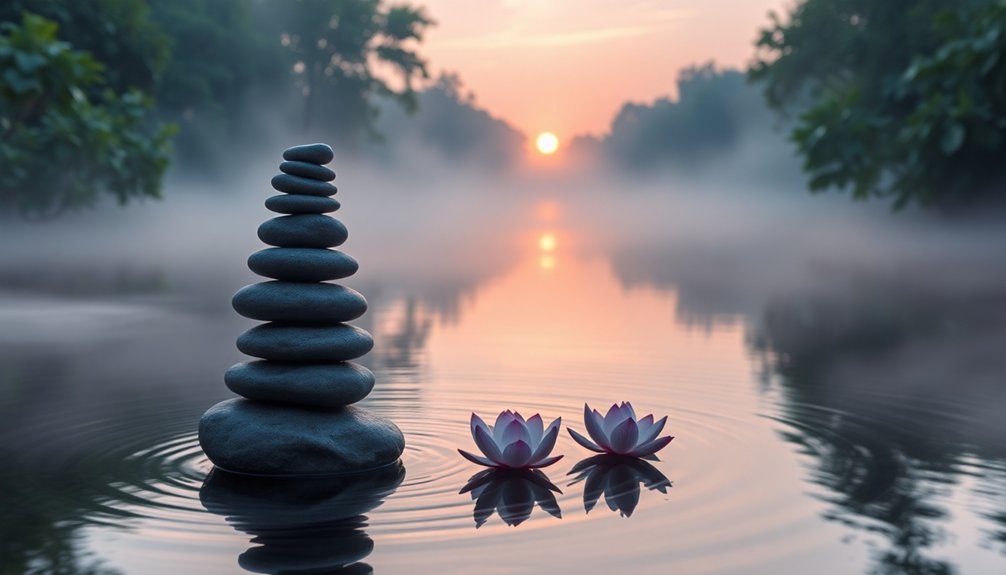
Feeling Zen is all about embracing mindfulness and simplicity to find inner peace in your daily life. You can engage fully in your activities, practice mindful breathing, and transform mundane tasks into moments of serenity. Letting go of ego-driven desires helps cultivate emotional balance, while minimalism clears your mind and reduces stress. By making small changes, you can enhance your well-being and tranquility. There’s so much more to explore on your journey to inner peace.
Zen Is More Than Just Meditation: It’s a Way to Inner Peace
Zen invites you to engage fully in daily activities, transforming them into moments of mindfulness. As you walk, eat, or work, practice mindful breathing to anchor yourself in the present.
Engage fully in each moment, transforming everyday activities into opportunities for mindfulness and present awareness.
This journey toward inner peace can feel like a rejuvenating embrace of simplicity, allowing you to let go of control and rigid expectations. By cultivating awareness and fluidity, you’ll discover that even mundane tasks can become opportunities for serenity. Reducing external validation enhances personal decision-making and boosts self-confidence, further contributing to your path towards inner peace.
Embracing this adaptable approach fosters a more fulfilling life, enhancing your emotional well-being and happiness in each moment.
The Mindfulness Effect: How Zen Psychology Calms the Mind
Zen practices not only encourage mindful engagement in daily activities but also emphasize the profound impact of mindfulness on mental health.
As you begin your Zen journey, you’ll discover how mindfulness reduces stress and enhances emotional well-being. Engaging in techniques like zazen and mindful breathing activates your body’s relaxation response, promoting calmness.
Research shows that mindfulness-based therapies effectively tackle anxiety, depression, and burnout by improving your focus and emotional regulation. Regular practice reshapes brain structures linked to emotional well-being, leading to better mental health outcomes. Additionally, self-compassion is vital in cultivating a positive mindset and improving resilience during challenging times.
Simplicity Clears the Mind: Zen Minimalism and Mental Health

Embracing simplicity can considerably clear your mind and enhance your mental health. Zen Buddhism emphasizes minimalism, suggesting that a clutter-free environment reduces stress and boosts life satisfaction.
By minimizing distractions, you free up cognitive resources to focus on what truly matters, allowing you to fully engage with the present moment. Shifting from material accumulation to mindful simplicity fosters deeper connections with yourself and others, promoting emotional well-being. This approach not only cultivates psychological flexibility but also helps you adapt to challenges while maintaining calm under pressure. When you simplify your thoughts, you create a clearer mind, leading to improved mental health outcomes. Additionally, adopting mindful purchasing practices can significantly reduce the likelihood of unnecessary accumulation, further enhancing your sense of peace.
Letting Go of Ego: The Zen Secret to Emotional Balance
Letting go of ego is essential for achieving emotional balance, as attachment to our self-image often leads to suffering and turmoil.
Zen philosophy teaches that detaching from ego-driven desires fosters inner peace. By observing your thoughts and feelings without getting entangled, you cultivate a healthier relationship with your consciousness.
This mirrors mindfulness practices like zazen and mindful breathing, which enhance your ability to let go of ego. As you embrace a more fluid mindset, you’ll find emotional stability and calmness.
Recognizing thoughts as transient helps reduce their emotional impact, allowing you to navigate life with greater ease. In this way, letting go of ego becomes a powerful tool for achieving emotional balance and serenity in your daily life. Additionally, transforming adversity into opportunities can further enhance your emotional resilience and aid in maintaining inner peace.
Living Zen Today: Finding Inner Peace Without Changing Everything

Sure, here’s the revised content following your directions:
—
While many believe finding inner peace requires a complete life overhaul, it’s actually possible to incorporate small, intentional changes into your daily routine.
Start by setting aside time for mindful breathing. Just a few minutes of breathing deeply can create mental space, allowing you to respond rather than react in stressful situations.
Setting aside a few minutes for mindful breathing can foster mental clarity and improve your response to stress.
Integrate moments of stillness in your everyday life—whether it’s during meals or while walking—where you can fully engage with your experience.
Even simple rituals, like connecting with nature, can cultivate calmness and clarity. Engaging in mindful consumption helps you make intentional choices that foster a sense of peace and sustainability.
Neuroscience shows that these small practices reshape your brain, enhancing emotional regulation and leading to lasting inner peace without drastic changes.
Embrace these adjustments, and watch your sense of tranquility grow.
Conclusion
Finding inner peace through Zen isn’t about overhauling your life; it’s like tending to a garden—just a little pruning and weeding can create a flourishing space. Embrace mindfulness, simplify your surroundings, and let go of your ego. By incorporating these Zen principles into your daily routine, you’ll cultivate a serene mindset that blossoms over time. Remember, the journey to tranquility doesn’t have to be complicated; it’s often the simplest changes that yield the greatest peace.