
Your father’s lessons shape your values and skills, instilling accountability and integrity. He models honesty, encouraging you to admit mistakes and learn from them. Emphasizing the importance of education, he fosters a love for lifelong learning, preparing you for life’s challenges. Through community connections and family bonds, he teaches the value of generosity and service, while nurturing a strong work ethic. Discover how these foundational lessons continue to impact your personal growth and relationships.
The Importance of Accountability and Admitting Mistakes
While it might feel uncomfortable, admitting mistakes is essential for both parents and children. When you model accountability by owning up to your errors, you create a safe space for your kids to do the same.
This transparency fosters trust and teaches them that everyone can learn from their experiences. Research shows that when children see their parents take responsibility, they develop a strong sense of integrity and accountability themselves. Additionally, self-compassion can help both parents and children navigate mistakes more gracefully, reinforcing the idea that flaws are a natural part of personal growth.
Valuing Education and Lifelong Learning
Acknowledging mistakes sets the stage for growth, but it’s equally important to embrace the value of education and lifelong learning. Your parents taught you that learning is a gift and a responsibility. They showed you that education should never be taken for granted.
Here are some key lessons they instilled in you:
- Education goes beyond formal schooling; it happens every day.
- Parents taught the importance of curiosity and inquiry.
- Regular discussions about school foster a culture of learning.
- Reading and engaging with ideas is essential for growth.
- Continuous self-improvement through knowledge leads to personal development. Additionally, developing a self-growth plan can help structure your learning and personal development goals effectively.
Building Strong Community Connections
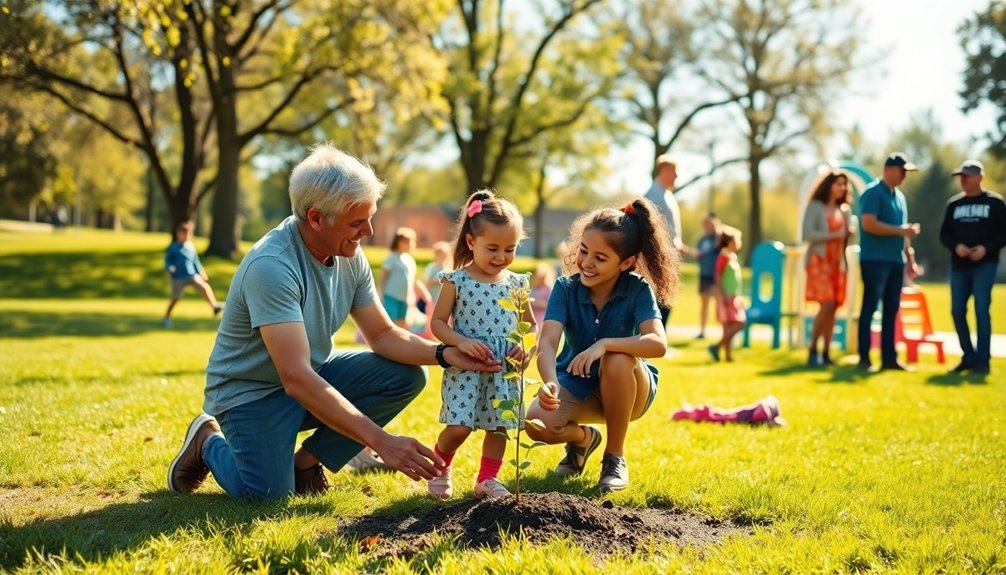
Building strong community connections starts with supporting your neighbors and getting involved in local initiatives. When you engage with those around you, you foster lasting relationships that create a more cohesive environment. This sense of belonging not only strengthens your community but also boosts everyone’s well-being. Participating in volunteering opportunities can significantly enhance your connection with like-minded individuals and contribute to a shared sense of purpose.
Neighbors Supporting One Another
Creating a supportive neighborhood starts with actively engaging with those around you. Building strong community connections involves nurturing relationships that create a safety net for everyone.
Here are some ways neighbors can support one another:
- Share meals during illness
- Offer childcare assistance
- Organize neighborhood clean-ups
- Host community events
- Encourage inclusivity among diverse groups
When you foster these connections, you’re not just building friendships; you’re creating an extended family. Parents and neighbors alike benefit from a supportive environment, leading to lower crime rates and enhanced well-being.
Engaging in Local Initiatives
Supportive neighborhoods lay the groundwork for engaging in local initiatives that strengthen community ties even further.
When you participate in community service activities like food drives or clean-up events, you foster collaboration among engaged community members. These efforts not only meet shared needs but also enhance social bonds and trust.
As you work together, you’ll likely notice a growing sense of belonging and pride in your neighborhood, which can boost your mental well-being.
Additionally, local initiatives often tackle specific issues like poverty or environmental concerns, allowing you to create solutions that reflect your community’s unique challenges.
Ultimately, these connections lead to increased civic participation, empowering you to advocate for policies that benefit everyone.
Building Lasting Relationships
When you take the time to connect with your neighbors, you’ll find that strong community relationships can considerably enrich your life.
Here are some wonderful lessons you’ll discover while building strong community connections:
- Sense of Belonging: Strengthens mental health and well-being.
- Increased Trust: Fosters collaboration and social cohesion.
- Civic Engagement: Lowers crime rates and boosts public safety.
- Generosity Culture: Encourages volunteering and support for local causes.
- Diverse Perspectives: Promotes empathy and understanding across backgrounds.
Nurturing Family Bonds and Spiritual Values

Family gatherings create memories that strengthen your bonds, while shared spiritual practices unite you in faith. It’s through love and care that you build a solid foundation for future generations. Embracing these values nurtures both your family ties and your spiritual growth. Additionally, friendships enhance self-esteem and emotional well-being, contributing to a fulfilling family life.
Family Gatherings Matter Most
Although life often pulls us in different directions, gathering with loved ones remains an essential way to nurture family bonds and reinforce spiritual values.
Family gatherings provide a unique opportunity to create meaningful connections that strengthen your family identity. Here’s why they matter:
- Foster emotional bonding through shared experiences
- Reinforce core values and traditions essential for unity
- Improve communication and emotional support among members
- Create lasting memories over shared meals
- Instill a sense of belonging in children
Spiritual Practices Unite Us
Gathering with loved ones not only strengthens family bonds but also provides a prime opportunity to engage in spiritual practices that unite us. Regular church attendance and family worship create a strong foundation for shared spiritual values, enhancing family unity through collective rituals.
These gatherings, especially during holidays, often center around spiritual traditions that reinforce faith and community. Incorporating spiritual practices into daily life fosters gratitude and mindfulness, deepening your connections.
Open discussions about faith allow for growth and understanding of diverse perspectives, teaching valuable life lessons. As you pass down these spiritual values across generations, you influence your children’s moral development, shaping their future relationships and community involvement, ultimately nurturing a lasting legacy of love and unity.
Love and Care Foundations
Love and care are the cornerstones of nurturing strong family bonds and instilling spiritual values. Your parents provide a framework that shapes your understanding of love and relationships.
Here are some key lessons they taught us:
- Regular family gatherings foster unity and emotional growth.
- Emphasizing gratitude builds a foundation of support.
- Integrating spiritual values encourages kindness and respect.
- A loving home creates a legacy of joy and care.
- Shared beliefs empower resilience in life’s challenges.
Embracing Generosity and Service to Others
When you embrace generosity and service to others, you not only enrich your own life but also create a ripple effect that positively impacts your community.
Your parents likely instilled these core values, emphasizing the importance of helping those less fortunate. By modeling acts of kindness, they showed you that even small gestures can notably improve someone’s life.
Engaging in community service strengthens social bonds and teaches you the value of teamwork in achieving common goals. When you share your time, talents, and resources, you realize that your contributions, no matter how small, collectively make a difference.
Community service fosters connections and highlights the impact of even the smallest contributions toward a shared purpose.
Through acts of generosity, you learn that true wealth isn’t measured by money but by the positive influence you have on others’ lives. Additionally, fostering emotional connections through shared experiences can enhance the impact of your generosity, as it creates a deeper sense of belonging and understanding within your community.
Developing Integrity and a Strong Work Ethic
While you mightn’t realize it at first, the integrity and work ethic you develop today are often rooted in the lessons your parents taught you. They modeled hard work and dedication, showing you that achievements require effort.
Here are some key lessons they imparted:
- Integrity: Prioritizing honesty and aligning your actions with your values.
- Responsibility: Completing chores to understand that effort leads to rewards.
- Quality Work: If a job’s worth doing, it’s worth doing well.
- Continuous Learning: Emphasizing the importance of lifelong skill development.
- Accountability: Recognizing that your actions directly impact your success.
- Mindfulness: Practicing mindfulness and emotional regulation helps cultivate a balanced and focused approach to challenges.
Conclusion
To summarize, the lessons we learn from our parents shape who we are and how we interact with the world. Did you know that 70% of adults believe their parents had the most significant impact on their values and beliefs? By embracing accountability, valuing education, and nurturing connections, you can carry forward these important lessons. Remember, your journey starts at home, and the values instilled by your parents can guide you toward a fulfilling life.