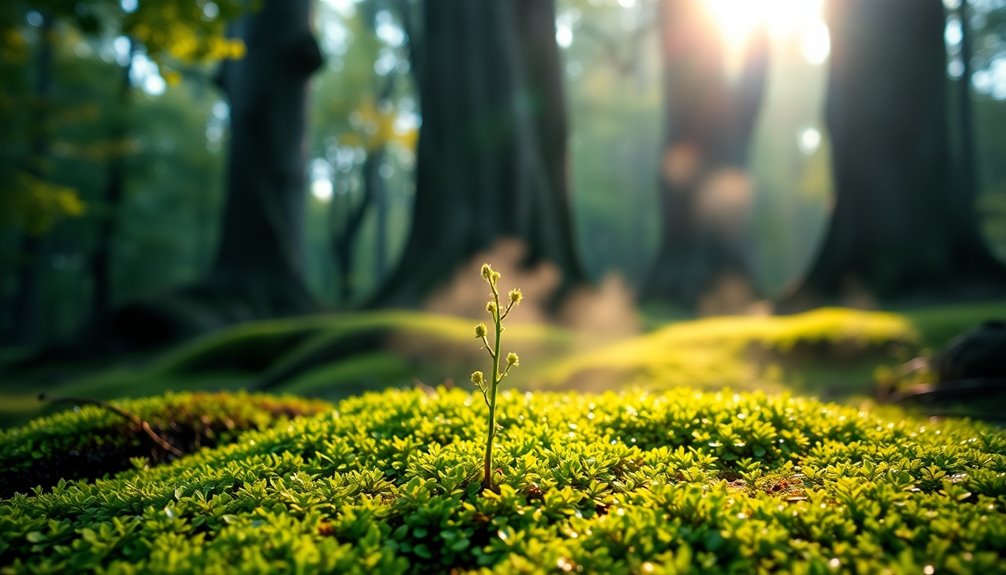
Be patient with yourself—growth takes time. Personal growth is a journey, not a race. You’ll face setbacks and challenges, but these hurdles offer valuable lessons and build resilience. Remember to celebrate small wins; they boost your motivation and reinforce your commitment. Progress isn’t always linear, and that’s okay. Embrace your unique path, and practice self-compassion along the way. This journey is rich with insights, and you’ll find even more ways to nurture your growth ahead.
Understanding the Concept of Personal Growth
Personal growth is a journey filled with discovery and transformation. You’ll find that understanding this concept begins with self-awareness practices.
By regularly reflecting on your thoughts and feelings, you’ll uncover what truly matters to you—your personal values. These values act as a compass, guiding you through decisions and challenges.
As you engage in self-awareness, you’ll notice patterns and habits that may need adjustment. Embrace this process; it’s about becoming the best version of yourself.
Remember, it’s not just about the destination but the lessons learned along the way. Each step you take enriches your understanding of who you are and what you stand for.
Celebrate these revelations—they’re essential for your growth journey. Additionally, embracing the wave ride mindset can help you navigate the ups and downs of this transformative process.
The Importance of Patience in the Growth Journey
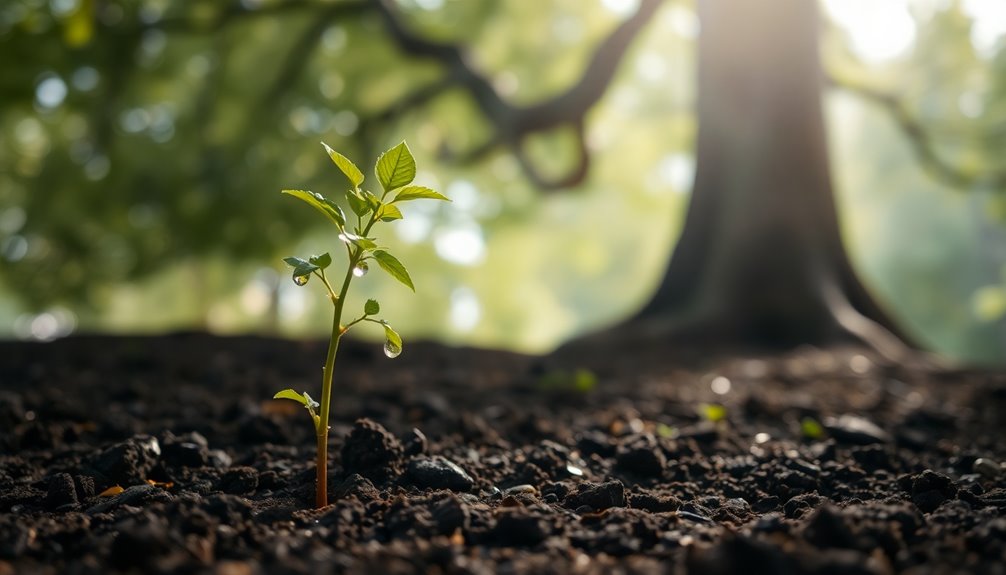
As you navigate your growth journey, it’s essential to embrace the process, knowing that progress takes time. Celebrate those small wins along the way, because they build your confidence. And remember, setbacks aren’t failures; they’re valuable lessons that help you grow stronger. Practicing self-compassion can transform your relationship with yourself, enabling you to approach challenges with kindness and understanding.
Embracing the Process
While you navigate your growth journey, it’s crucial to embrace the process, recognizing that patience is an essential ingredient for success.
By practicing self-reflection, you can appreciate each step along the way. Growth isn’t instantaneous; it unfolds gradually, teaching you invaluable lessons.
Imagine:
- The warmth of sunlight breaking through a cloudy sky
- A seed slowly sprouting into a vibrant plant
- Waves gently eroding a rocky shore
- The gradual shift of seasons from winter to spring
- A sculptor chiseling away at a block of marble
As you appreciate the process, remember that every moment shapes you.
Cultivating patience allows you to fully experience and learn from your journey, making each step worthwhile.
Recognizing Small Wins
Celebrating small wins can be a powerful motivator on your growth journey. When you take time to acknowledge effort, you reinforce your commitment to progress.
Tracking achievements, no matter how minor, helps you appreciate milestones that might otherwise go unnoticed. By recognizing effort, you honor persistence and create a positive feedback loop.
Valuing small victories fosters motivation, reminding you that every step forward counts. Cultivating gratitude for these moments not only boosts your morale but also propels you further along your path.
Don’t forget to reward yourself for these accomplishments—it’s essential for sustaining your drive. Every small win is a brick in the foundation of your growth, so embrace and celebrate them!
Learning From Setbacks
Setbacks are an inevitable part of any growth journey, and instead of viewing them as failures, you can see them as valuable learning opportunities. By embracing a growth mindset, you can use these moments for resilience building and adaptive learning.
Here are some effective strategies to help you learn from setbacks:
- Failure analysis: Break down what went wrong.
- Self-reflection practices: Journal your thoughts to gain clarity.
- Perspective shifts: View challenges as stepping stones.
- Lesson integration: Apply what you’ve learned next time.
- Overcoming obstacles: Develop strategies to tackle future challenges.
These practices foster emotional resilience and help you navigate the ups and downs of life, reminding you that each setback is just a part of your unique growth journey.
Why Progress Isn’t Always Linear?
Progress isn’t a straight line, and that’s okay.
You’ll face setbacks that can teach you valuable lessons, and your journey is uniquely yours.
Embracing this non-linear path can lead to deeper growth and understanding. Letting go of the past can also shape a brighter future, allowing you to focus on new possibilities.
Embracing Setbacks As Learning
Although it’s easy to feel discouraged when things don’t go as planned, embracing setbacks can actually lead to meaningful growth. Think of setbacks not as failures, but as opportunities for setback reflection that strengthen your growth mindset.
- A seed breaking through tough soil
- A sculptor chiseling away imperfections
- A hiker traversing rocky trails
- A musician hitting a wrong note
- A painter layering colors for depth
Each of these moments teaches you resilience and adaptability.
When you acknowledge that progress isn’t always linear, you open yourself to new insights.
Remember, every stumble can illuminate a path to greater understanding, making your journey richer and more fulfilling.
Embrace the learning, and trust that growth takes time.
Individual Journeys Are Unique
While you might compare your journey to others, it’s essential to remember that each path is distinct. Your self-discovery journeys are shaped by unique milestones and transformative experiences that reflect your emotional landscapes.
As you engage in self-reflection practices, you’ll uncover personalized strategies that resonate with your individual timelines. Progress isn’t always linear; it often unfolds in unexpected ways.
Embracing your unique growth perspectives allows you to appreciate the richness of your personal growth stories. Celebrate those tailored approaches that work for you, even if they differ from others.
Non-Linear Paths To Success
Your journey toward success often resembles a winding road rather than a straight path. Embracing this non-linear journey means accepting that progress isn’t always predictable. You might take unconventional routes or face unexpected detours, but these experiences shape who you are.
Remember, everyone has individual timelines, and your growth might unfold at a varied pace.
- Alternative pathways may lead to unique challenges.
- Flexible goals can adapt to changing circumstances.
- Diverse experiences enrich your journey.
- Non-traditional successes often emerge from unexpected places.
- Each setback can pave the way for future triumphs.
Trust that these twists and turns are part of your story, and be patient with yourself as you navigate your unique path to success.
Recognizing the Value of Small Wins
By taking quiet moments for mindful reflection, you can celebrate your achievements, no matter how minor they may seem. Acknowledge these personal milestones with daily affirmations, fostering a sense of self-acknowledgment and joy in growth.
Taking time for mindful reflection allows you to celebrate every achievement, nurturing self-acknowledgment and joy in your growth journey.
Incorporating a gratitude practice into your routine helps you appreciate every step, reminding you that progress isn’t always about giant leaps. Instead, it’s the accumulation of these small wins that builds momentum. This practice not only enhances your emotional well-being but also creates lasting neuroplastic changes that promote a healthier mindset.
Embrace this process, and you’ll find that each victory fuels your motivation to keep moving forward.
Cultivating Resilience Through Challenges
When you face challenges, embracing discomfort can lead to real growth. It’s in those tough moments that you learn the most from setbacks and discover what you’re truly capable of. Building a strong support network can make all the difference as you navigate your journey. Additionally, seeking support transforms obstacles into opportunities for growth.
Embracing Discomfort And Growth
Embracing discomfort often leads to the most profound personal growth, as challenges push you beyond your limits. By stepping into the unknown, you cultivate a growth mindset that transforms fear into opportunity. Each personal challenge becomes a stepping stone for building emotional resilience.
- Feeling the weight of vulnerability
- Exploring the depths of your inner strength
- Steering through the waves of uncertainty
- Practicing self-reflection to uncover insights
- Discovering adaptability techniques that empower you
These transformative experiences foster courage cultivation and mindset shifts, making you more resilient.
Learning From Setbacks
Although setbacks can feel overwhelming, they often serve as the best teachers on your journey to resilience. Embracing setback reflection allows you to cultivate a growth mindset, turning challenges into opportunities for emotional growth.
By practicing failure acceptance, you learn that each obstacle is a stepping stone in your personal evolution. Use constructive criticism as a tool for adaptive learning, helping you to refine your approach. This process not only fosters self-awareness but also strengthens your resilience-building capabilities.
Building A Support Network
Everyone needs a solid support network to navigate life’s challenges effectively. By leveraging networking strategies, you can enhance your resilience.
Start building connections with:
- Accountability partners who keep you on track
- Emotional support from friends and family when times get tough
- Mentorship opportunities that provide guidance and wisdom
- Community resources that offer tools for growth
- Peer support groups that foster trust and understanding
Engaging socially helps you strengthen these relationships, allowing for resource sharing and trust building.
How Self-Compassion Fuels Growth
When you practice self-compassion, you’re not just being kind to yourself; you’re laying the groundwork for personal growth. Engaging in self-kindness practices helps you develop a growth mindset, encouraging you to embrace challenges.
Through compassionate dialogue, you can replace negative self-talk with nurturing self-talk, fostering emotional nurturing. Kindness journaling allows you to reflect on your experiences and recognize your progress.
Incorporating patience techniques and self-acceptance strategies enables you to navigate setbacks with grace. Mindful awareness enhances your ability to stay present, while gratitude reflection shifts your focus towards the positive. Additionally, commitment fosters personal growth and strengthens your resolve to pursue your interests.
The Role of Mindfulness in Personal Development
Mindfulness acts as a powerful tool in personal development, guiding you to cultivate awareness and presence in your daily life. By incorporating mindfulness practices, you enhance your self-awareness and emotional regulation, enabling you to navigate challenges with ease.
Embrace techniques like:
- Mindful journaling to explore your thoughts
- Breathing exercises for stress reduction
- Attentive listening in conversations
- Mindful movement to connect with your body
- Nature immersion for grounding
These practices help you stay anchored in the present moment, fostering compassionate awareness. Additionally, regular mindfulness practices can improve emotional regulation, enabling a deeper understanding of your thoughts and feelings.
As you engage in self-reflection strategies and visualization techniques, you’ll discover deeper insights about yourself. With patience and commitment, mindfulness nurtures your growth, transforming your journey into a fulfilling experience.
Setting Realistic Goals for Long-Term Success
Cultivating mindfulness not only enhances your self-awareness but also lays the groundwork for setting realistic goals.
Start by using goal visualization to picture your success. Break your objectives into smaller, manageable steps, allowing for incremental progress. Establish realistic timelines for each phase, and celebrate personal milestones along the way.
Begin with goal visualization to envision your success, breaking objectives into manageable steps and celebrating milestones as you progress.
Utilize self-assessment techniques to track your growth, adjusting your strategies as needed. Consider enlisting accountability partners to keep you motivated and on track.
Employ positive reinforcement to reward yourself for achievements, no matter how small. By focusing on gradual changes and clear success benchmarks, you’ll maintain your motivation and guarantee long-term success. Additionally, remember that overcoming discomfort is vital for building resilience as you progress through your goals.
Learning From Failures: a Path to Growth
When you face setbacks, it’s essential to see them as opportunities to learn rather than reasons to give up. Embracing your mistakes can build resilience, helping you bounce back stronger each time. Additionally, adopting a growth mindset can transform challenges into valuable learning experiences.
Embracing Mistakes As Lessons
Although mistakes can feel intimidating, they often serve as invaluable lessons on your journey to personal growth. Embracing a mistake mindset allows you to shift from failure acceptance to lesson learning. By adopting a growth perspective, you cultivate humility and build adaptability strength.
Consider these elements as you explore your errors:
- A flickering light bulb illuminating new pathways
- A puzzle piece fitting unexpectedly into place
- A seed sprouting from the soil amid challenges
- A river carving its way through rock over time
- A compass guiding you toward uncharted territories
Each misstep is a chance for reflection practice and experience wisdom.
Let your curiosity drive you forward, transforming setbacks into stepping stones toward a richer understanding of yourself.
Resilience Through Adversity
Embracing mistakes not only opens doors to understanding but also builds resilience in the face of adversity.
When you encounter setbacks, focus on resilience building. Each challenge you face enhances your adversity strength and emotional resilience. By developing mental toughness, you cultivate grit that helps you overcome challenges.
Implementing coping strategies and effective stress management techniques can transform obstacles into opportunities for growth. An adaptive mindset allows you to view failures as stepping stones rather than roadblocks.
Surrounding yourself with supportive systems provides the encouragement you need to keep moving forward. Remember, every setback is a chance for grit development and learning, reinforcing your ability to bounce back stronger than before.
Setting Realistic Expectations
- Realistic benchmarks that reflect your unique journey
- Personal timelines that account for your life’s demands
- Gradual progress to build confidence and skill
- Milestone mapping to visualize your achievements
- Self-assessment tools for evaluating your growth
With a balanced approach, you can allocate time wisely and embrace expectation management.
The Impact of External Pressures on Self-Patience
**
When you face external pressures, it’s easy to lose sight of the patience you owe yourself. Societal expectations and cultural pressures can create a self-criticism cycle that undermines your growth.
You may find yourself caught in the comparison trap, feeling inadequate when measuring your progress against others. Time constraints and the perfectionism impact can lead to achievement anxiety, making it feel impossible to meet unrealistic standards.
Social media effects amplify this, as you constantly seek validation, often judging your worth by likes and comments. These external influences can distort your perception of progress, leaving you frustrated. Recognizing the power to change your internal dialogue is essential for fostering self-compassion and patience.
Strategies for Building Patience With Yourself
Building patience with yourself starts with recognizing that growth is a journey, not a race.
Building patience with yourself begins by understanding that personal growth unfolds over time, not in a hurried pace.
To foster this patience, embrace various strategies that encourage self-acceptance and emotional regulation. Here are some effective techniques you can try:
- Mindfulness techniques: Stay present and aware of your thoughts and feelings.
- Intentional breathing: Take deep breaths to calm your mind and body.
- Gratitude journaling: Reflect on what you appreciate about yourself daily.
- Visualization techniques: Picture your progress and the steps needed to achieve your goals.
- Supportive affirmations: Remind yourself that growth takes time and you’re doing your best.
How to Embrace the Journey of Self-Discovery
Embracing the journey of self-discovery means recognizing that every step you take contributes to your growth.
Utilize self-reflection techniques like journaling to uncover your personal values and core beliefs. Mindfulness practices help enhance emotional awareness, while gratitude exercises foster a positive inner dialogue.
Consider engaging in strengths assessments and identity exploration to clarify your purpose. Creative expression can ignite mindset shifts, making room for authenticity cultivation.
Set boundaries to protect your self-care practices, and enlist accountability partners to keep you motivated. Vision boards can visualize your goals and aspirations, guiding you on this journey.
Through self-acceptance strategies, you’ll learn to embrace your unique path, turning every challenge into an opportunity for deeper self-awareness.
The Connection Between Growth and Emotional Intelligence
As you navigate your journey of self-discovery, you’ll find that growth and emotional intelligence are deeply intertwined. Embracing this connection can enhance your emotional awareness and interpersonal skills.
Here are some key aspects to reflect upon:
- Mindfulness practices that help you stay present
- Self-awareness techniques to understand your emotions better
- Self-reflection practices for deeper insights into your behavior
- Empathy development to strengthen your connections with others
- Emotional regulation strategies to manage your feelings effectively
Adopting a growth mindset allows you to view challenges as opportunities.
Embracing a growth mindset transforms challenges into valuable opportunities for personal development.
By implementing self-acceptance strategies and building emotional resilience, you create a solid foundation for lasting growth.
Celebrating Milestones Along the Way
While you journey through self-discovery, it’s essential to pause and celebrate your milestones, no matter how small they may seem.
Milestone celebrations remind you of your progress and fuel a growth mindset. Incorporate a gratitude practice and reflective journaling to acknowledge achievements. Visual progress, like charts or photos, can motivate you further.
Create reward systems that align with your goals, making each step feel worthwhile. Lean on community support and share your wins with accountability partners who uplift you.
Personal affirmations can reinforce your journey, while celebration rituals help you embrace each milestone. By recognizing these moments, you cultivate resilience and joy, making the path of growth not just rewarding but also enriching.
Celebrate—you deserve it!
Creating a Supportive Environment for Growth
- Supportive relationships that uplift and inspire you
- Encouragement strategies that reinforce your efforts
- A nurturing environment filled with positivity
- Healthy boundaries to protect your mental space
- Motivational resources like books or podcasts
Incorporating self-care practices enhances this environment, allowing you to thrive.
Consistent positive reinforcement from yourself and others can make all the difference.
Remember, when you create this atmosphere, you set the stage for lasting growth and transformation.
Be patient; your evolution takes time!
Conclusion
As you navigate your growth journey, remember that patience is key. Studies show that 70% of people don’t achieve their goals because they give up too soon. Embrace each small win and recognize that setbacks are part of the process. By cultivating resilience and surrounding yourself with support, you’re not just growing—you’re transforming. Celebrate every milestone, no matter how small, and trust that your efforts will lead to meaningful change. You’ve got this!