
Creating a family binder keeps everyone grounded by streamlining communication and reducing stress. Start by including essential contact information, organizing important documents, and setting up a meal plan. Incorporate a family calendar to manage schedules effectively. Personalize the binder with colors and designs that reflect your family’s personality. Regularly update and maintain the binder to keep information relevant. You’ll find more tips and insights to make it work perfectly for your family.
Why a Family Binder Is Essential for Organization
A family binder is essential for organization, especially when life gets hectic. It enhances family communication, ensuring everyone’s on the same page.
By consolidating schedules, you’ll improve time management, reducing stress for everyone involved. A well-maintained binder fosters family unity, making it easier to align goals and make decisions together.
You’ll find that resource sharing becomes seamless, whether it’s planning vacations or managing daily tasks. Plus, when conflicts arise, having a central reference can aid in conflict resolution, allowing you to address issues calmly and effectively.
Ultimately, a family binder keeps your household running smoothly, creating a supportive environment where everyone feels included and informed. Embrace this tool for better organization and stronger connections within your family. Additionally, supportive communities provide emotional safety nets, encouraging deeper connections among members and fostering resilience during life’s challenges.
Key Components to Include in Your Family Binder

When setting up your family binder, it’s vital to include key components that keep everything organized.
Start with essential contact information, a family schedule overview, and a section for important documents. These elements will help you manage your family’s needs efficiently. Additionally, incorporating healthy boundaries can enhance communication and emotional well-being within your family.
Essential Contact Information
Gathering essential contact information is essential for your family binder, ensuring everyone knows who to reach in case of emergencies or important situations.
Start by compiling a list of key contacts that can help your family navigate various needs. Here are three important components to include:
- Emergency Contacts: List family members, neighbors, and friends who can assist in urgent situations.
- Health Contacts: Include doctors, specialists, and pharmacies, along with any relevant health information.
- Local Services: Document neighborhood resources, childcare options, and service providers for easy access.
Family Schedule Overview
Creating a family schedule overview is essential for keeping everyone on the same page and managing daily activities effectively.
Start by listing each family member’s commitments, including school, work, and extracurricular activities. This helps you visualize everyone’s time and identify potential conflicts.
Next, carve out dedicated family time—whether it’s a weekly game night or a weekend outing. Make sure to highlight shared activities that everyone can enjoy, fostering connection and teamwork.
Color-code each family member’s schedule for easy reference, and consider using a digital calendar that everyone can access.
Regularly review and update your family schedule to adapt to changes, ensuring that everyone feels involved and informed.
This simple tool can make a big difference in family harmony.
Important Documents Storage
While it may seem overwhelming, organizing important documents in your family binder is crucial for easy access and peace of mind.
Implementing effective storage solutions is key to document security and organization. Here are three essential components to include:
- Filing Systems: Use labeled sections for documents like medical records and school information.
- Digital Backups: Scan important documents and save them in a secure cloud service to guarantee you have access permissions when needed.
- Decluttering Strategies: Regularly review and archive outdated documents to maintain an organized binder.
Choosing the Right Format: Digital vs. Physical
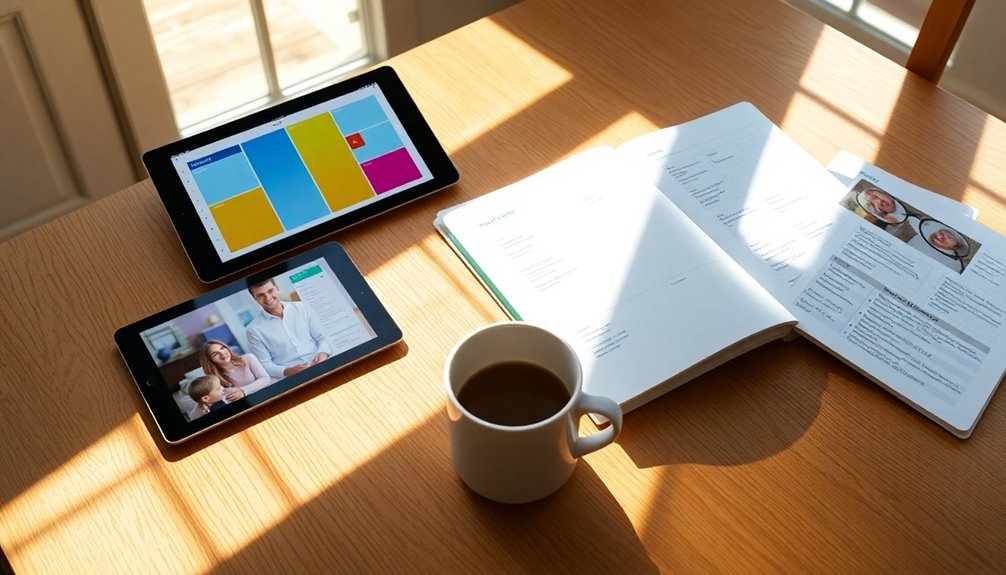
Deciding between a digital or physical format for your family binder can greatly impact how you organize and access important information.
If you prefer digital tools, they offer convenience and easy updates, allowing you to access documents from anywhere. Plus, you can easily share files with family members.
On the other hand, if you have strong paper preferences, a physical binder can provide a tangible experience that some find comforting. It’s easier to flip through pages and highlight important sections.
Consider your family’s habits and needs—do they thrive on tech, or do they cherish printed documents?
Whichever route you choose, make certain it aligns with your lifestyle for maximum efficiency. Additionally, incorporating mindfulness practices into your organization routine can enhance focus and reduce stress while managing family information.
Steps to Gather Important Family Documents
Here are three essential steps to follow:
- List Required Documents: Prioritize items like birth certificates, insurance papers, and medical records.
- Choose Storage Solutions: Decide between digital tools or physical binders. Make sure everything is easily accessible and secure.
- Implement Organization Tips: Use decluttering strategies to keep only what’s necessary. Group documents by category for easy retrieval.
Incorporating regular decluttering practices into your routine will help maintain the organization of your family binder over time.
With these steps, you’ll create a thorough family binder that keeps everyone grounded, making it easier to manage important information when needed.
How to Create a Family Calendar for Everyone?
**
How can you keep your family organized and on the same page? Start by choosing a calendar app that offers shared access for everyone. This way, you can input family events and appointments in one central location.
Use color coding to represent each family member, making it easy to see who’s doing what at a glance. Incorporate visual reminders for important dates and tasks, ensuring nothing slips through the cracks.
Utilize scheduling tools to manage time effectively and allow for task delegation—assign specific responsibilities to family members. Regularly review the calendar together to keep everyone informed and engaged.
With these strategies, you’ll enhance time management and foster teamwork within your family. Additionally, understanding habit triggers can help everyone establish consistent routines around family activities.
Meal Planning Made Easy: Tips for Your Binder
While planning meals might seem intimidating, it can actually simplify your family’s week and reduce stress. By organizing your meal prep in your family binder, you create a streamlined approach to cooking.
Here are three essential tips:
- Recipe Organization: Keep your family favorites and themed dinners categorized. This makes finding meals quick and easy.
- Grocery Lists: Create a list based on your planned meals to guarantee you have everything you need, accommodating any dietary restrictions.
- Cooking Schedules: Use meal prep containers to portion control snacks and meals, making it easier for everyone to grab what they need.
Incorporating nutrient-rich options into your meal plan will further support your family’s overall health.
With these strategies, you’ll not only save time but also promote healthy eating for your family.
Organizing Medical Records and Health Information
To keep your family’s health information accessible and organized, it’s crucial to create a dedicated section in your binder for medical records.
Start by including vaccination records and medication lists for each family member to guarantee you have all essential info at hand. Add insurance details to simplify any billing questions and keep track of health tracking metrics like weight and blood pressure.
Don’t forget to include appointment reminders for regular check-ups or specialist visits. You might also want to gather wellness resources that can support your family’s health journey. Incorporating mindfulness techniques can also help reduce stress during medical visits and improve your family’s overall well-being.
Essential Emergency Contacts to Include
Alongside your family’s medical records, having a list of emergency contacts is essential for quick access during critical situations.
This list not only aids in family communication but also guarantees that you’re prepared when time is of the essence.
Here are three key emergency contacts to include:
- Local emergency services: Always have the number for police, fire, and medical services handy.
- Family members: Include immediate relatives who can assist or provide support if needed.
- Trusted neighbors or friends: Having someone nearby who can help in an emergency is invaluable.
Additionally, practicing self-compassion during stressful times can help keep everyone grounded and focused.
Keep this list updated and accessible in your family binder to make sure everyone knows who to reach out to when it counts!
How to Manage School and Extracurricular Activities?
Managing school and extracurricular activities can feel overwhelming, but it doesn’t have to be.
By organizing important dates, prioritizing responsibilities together, and setting clear boundaries, you can create a smoother routine for your family. Additionally, utilizing SMART criteria for setting family goals can enhance productivity and focus, making it easier to stay on track.
Let’s explore how to streamline this process effectively.
Organize Important Dates
Keeping track of important dates for school and extracurricular activities can feel overwhelming, but a well-organized system makes it manageable.
Start by creating a centralized calendar to guarantee everyone’s on the same page. Here are three steps to help you stay organized:
- Birthday Tracking: List all family members’ birthdays and set reminders a week in advance for planning celebrations.
- Anniversary Reminders: Mark significant anniversaries and plan special activities to honor these milestones.
- Holiday Planning: Schedule family gatherings or events well ahead of time to avoid conflicts with school activities.
Prioritize Responsibilities Together
Once you’ve organized important dates, it’s time to tackle how to prioritize responsibilities for school and extracurricular activities. Start by having accountability discussions to clarify family roles and shared responsibilities.
Use collaborative planning sessions to set mutual goals, ensuring everyone’s input is valued. Implement weekly check-ins to assess progress and adjust priorities as needed.
During these meetings, engage in teamwork exercises that foster communication strategies, making it easier to delegate tasks effectively. Focus on priority setting, so everyone knows what’s most important.
Encourage open dialogue about challenges and successes, reinforcing a team mentality. By prioritizing responsibilities together, you’ll create a balanced environment where everyone feels supported and engaged.
Set Clear Boundaries
While juggling school and extracurricular activities can be exciting, it’s essential to set clear boundaries to prevent overwhelm. Establishing healthy boundaries helps everyone stay grounded and focused.
Here are three steps to guide you:
- Create Family Agreements: Discuss and outline commitments together, ensuring everyone understands their responsibilities and limits.
- Schedule Downtime: Carve out time for relaxation and family bonding, balancing busy schedules and personal time.
- Evaluate Regularly: Check in frequently to assess if activities are still enjoyable and manageable, adjusting as needed.
Incorporating Family Goals and Projects
To effectively incorporate family goals and projects into your binder, start by engaging each family member in a discussion about their aspirations. Create vision statements that reflect these goals, ensuring everyone feels included.
Use collaborative planning during family meetings to identify joint projects that resonate with everyone. Establish clear project timelines and assign shared responsibilities, so each member knows their role.
Implement goal tracking methods to monitor progress, and pair family members as accountability partners for added motivation. Schedule regular progress reviews to celebrate achievements and reassess plans as needed. This structured approach not only keeps everyone grounded but also strengthens family bonds through teamwork and open communication, reinforcing the idea that cherishing relationships enhances overall happiness.
Personalizing Your Binder: Design and Aesthetics
When personalizing your family binder, start by choosing a color palette that reflects your family’s personality.
Don’t be afraid to add fun decorations like stickers or photos to make it truly yours.
This customization not only enhances the aesthetics but also makes organizing enjoyable for everyone.
Choose Your Color Palette
Choosing the right color palette for your family binder can transform a simple organizational tool into a reflection of your family’s personality.
Consider how color psychology influences mood and emotional associations. Selecting colors that resonate with your family’s values can enhance your binder’s appeal.
Here are three tips to guide your choices:
- Identify Color Preferences: Discuss favorite colors among family members to create a sense of unity.
- Explore Color Symbolism: Use colors that represent your family’s traits—blue for calmness, green for growth.
- Aim for Color Harmony: Combine colors that complement each other, following current color trends for a modern look.
Incorporate Fun Decorations
While organizing your family binder, incorporating fun decorations can make it not only functional but also a source of joy.
Start with colorful dividers that separate sections visually and add a pop of color. Use decorative stickers to highlight important dates and family milestones, creating themed pages that reflect your family’s interests.
Integrate family artwork for a personal touch that brings warmth to each section. Fun fonts can make headings stand out, while creative labels help everyone find what they need easily.
Don’t forget personalized covers to showcase your family’s personality. Playful tabs can enhance organization and make managing the binder even more enjoyable for everyone involved.
Let your creativity shine!
Tips for Maintaining and Updating Your Family Binder
To keep your family binder effective and organized, regularly setting aside time for updates is essential. Here are some binder maintenance tips to help you stay on track:
- Schedule Monthly Reviews: Dedicate time each month to review and update information, ensuring everything is current and relevant.
- Use Color-Coding: Implement color-coded tabs for easy navigation, making it simpler to find what you need during updates.
- Incorporate a Checklist: Create a checklist of items to review regularly, such as emergency contacts, schedules, and important documents.
Engaging Your Family in the Binder Process
To make your family binder a true team effort, get everyone involved from the start.
Encourage each family member to share their ideas and assign fun responsibilities that match their interests.
Don’t forget to schedule regular check-ins to keep the momentum going and guarantee everyone stays engaged.
Involve Everyone’s Ideas
Engaging your family in the binder process not only fosters collaboration but also guarantees everyone feels valued. By involving everyone’s ideas, you create a shared vision that reflects the entire family’s input.
Here are three effective ways to gather input:
- Family Brainstorming Sessions: Set aside time for idea sharing, where everyone can voice their thoughts and suggestions.
- Collaborative Input: Encourage each family member to contribute creatively, whether through drawings, lists, or notes.
- Feedback Loop: Regularly check in for family feedback on the binder’s content, ensuring it evolves with everyone’s needs.
This inclusive planning approach strengthens connections and encourages creative contributions, making the binder a true reflection of your family’s values and aspirations.
Assign Fun Responsibilities
Assigning fun responsibilities can transform the binder process into an exciting family project. By rotating responsibilities, you not only lighten the load but also make it enjoyable for everyone.
Consider assigning chores that involve creative assignments, like designing a family calendar or crafting a chore chart. Each member can take on different family roles, ensuring everyone feels valued and engaged.
Incorporate fun tasks that spark interest, such as planning a monthly family game night or setting up a cooking challenge. These teamwork projects help build collaboration and strengthen family bonds.
When everyone participates, the binder becomes a shared endeavor, turning routine organization into a memorable family experience. Embrace the joy of working together!
Schedule Regular Check-Ins
Rotating fun responsibilities sets the stage for effective communication about the family binder. Scheduling regular check-ins helps guarantee everyone stays engaged and on the same page.
Consider setting a check-in frequency that works for your family, whether it’s weekly or monthly. Use these meetings to discuss various topics:
- Binder Updates: Review what’s working and what needs tweaking.
- Upcoming Events: Share important dates and commitments.
- Family Goals: Discuss personal and collective objectives.
These discussions not only keep everyone informed but also foster a sense of ownership and teamwork in the binder process.
Troubleshooting Common Organization Challenges
While creating a family binder can streamline your organization, you might encounter a few common challenges along the way.
First, consider your family dynamics; not everyone may embrace the same organization strategies. Use effective delegation to assign roles tailored to each family member’s strengths.
When time management feels overwhelming, prioritize goal setting that aligns with your family’s needs. Routine building helps create consistency, reducing stress and encouraging communication techniques that foster collaboration.
If conflicts arise, practice conflict resolution methods to address issues promptly.
Remember, adapting your binder to fit evolving family roles can enhance its effectiveness, ensuring it remains a valuable tool for everyone involved.
Embrace these strategies, and you’ll keep your family grounded and organized.
Conclusion
As you flip through your family binder, feel the weight of organization lift off your shoulders. Each section, a colorful page, holds memories, schedules, and plans, weaving your family’s story together. With every update, you’re not just managing chaos; you’re crafting a shared journey. Embrace this creative process, and watch how it transforms your family’s dynamics, turning scattered moments into a harmonious symphony. Immerse yourself, and let your family binder become the heart of your home.