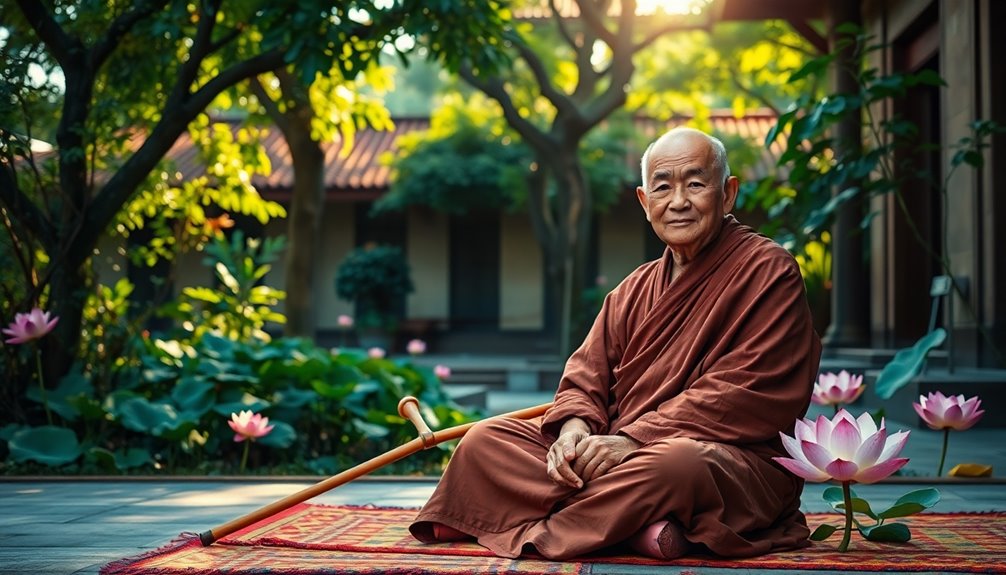
When a monk becomes disabled, they showcase remarkable resilience, turning obstacles into opportunities for spiritual growth. Their adaptation of meditation practices and community support fosters a sense of belonging and understanding. With mindfulness techniques, they cultivate inner peace, demonstrating that physical limitations don’t define their spiritual journey. This journey teaches valuable lessons about strength and acceptance. If you discover how these insights can enrich your life, a deeper understanding awaits.
The Unique Spiritual Resilience of Monks
While many people face challenges that test their faith and resolve, monks embody a unique spiritual resilience** that often leaves others in awe.
You’ll find that their approach to life is rooted in mindful acceptance, allowing them to embrace their circumstances without resistance. They don’t just endure hardships; they adapt spiritually, transforming obstacles into opportunities for growth.
This spiritual adaptation enables monks to remain grounded, even in the face of adversity. They teach you that resilience isn’t just about bouncing back; it’s about cultivating a deep understanding of the present moment. Additionally, the philosophy of impermanence highlights how adversity fosters resilience, guiding monks to navigate their challenges with wisdom and compassion.
Understanding Disability in the Context of Monastic Life
Understanding disability within monastic life reveals a nuanced perspective that emphasizes inclusion and adaptability. In this sacred environment, disability doesn’t diminish a monk’s monastic identity; rather, it challenges and reshapes it.
You’ll find that the core teachings encourage compassion and understanding, fostering a community that supports one another. Spiritual adaptation becomes essential, allowing monks to explore new ways of engaging with their practices and each other.
Embracing disability means recognizing the diverse paths to enlightenment, as each monk contributes uniquely to the collective spirit. This approach nurtures resilience, showing that even in adversity, growth and connection flourish. Letting go of past assumptions about disability can further enhance this sense of community and support.
Embracing disability reveals unique contributions to enlightenment, fostering resilience and deepening connections within the monastic community.
Ultimately, it’s about finding strength in vulnerability, reinforcing the idea that everyone has a place in the monastic community.
How Do Monks Adapt Their Practices When Faced With Disability?
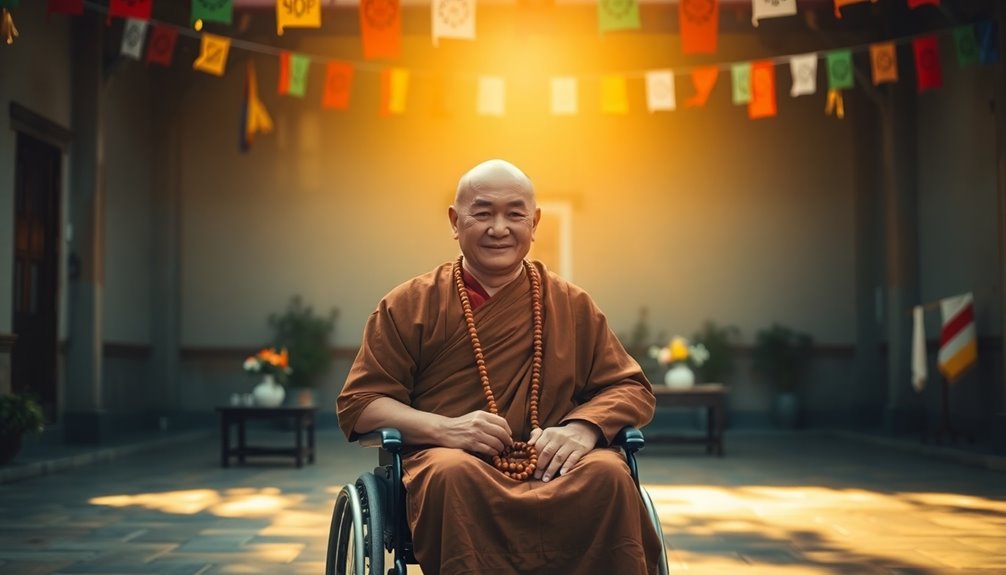
Monks often find creative ways to adapt their practices when faced with disability, drawing on their core teachings of compassion and mindfulness.
You might notice how they implement meditative adaptations, adjusting their postures or using guided visualizations to maintain their focus and connection to the present moment. These practices allow them to continue deepening their spiritual journey, regardless of physical limitations.
Spiritual adjustments can also include altering their daily routines, such as practicing shorter meditation sessions or embracing different forms of prayer that require less physical exertion. Through these adaptations, monks demonstrate resilience, showing that spirituality isn’t confined to physical abilities but is instead rooted in intention and awareness. Their commitment to growth remains unwavering, inspiring those around them, as they embody the principles of mindful simplicity, fostering deeper connections with themselves and others.
The Role of Community Support for Disabled Monks
Community support plays an essential role in helping disabled monks navigate their spiritual paths. When faced with challenges, you’ll find that your community steps in, offering practical help and emotional encouragement.
This mutual support fosters an environment of understanding, allowing monks to feel valued and connected despite their limitations. Engaging in community healing activities, like group meditations and shared rituals, strengthens bonds and promotes resilience. Additionally, strong social ties can reduce feelings of loneliness, empowering monks to face their challenges collectively.
You’ll witness how fellow monks adapt practices to include everyone, ensuring no one feels isolated. The encouragement you receive from your community can greatly enhance your journey, reminding you that spirituality thrives in connection with others.
In this supportive atmosphere, you can focus on your growth, knowing you’re not alone in your struggles.
Mindfulness and Mental Strength: Coping Mechanisms for Disability
Finding strength in mindfulness can be transformative for those facing disabilities. By practicing mindful breathing, you can center yourself, fostering emotional regulation and cultivating inner peace.
Embrace an acceptance mindset, allowing you to acknowledge your circumstances without judgment. Incorporate visualization techniques to envision your goals and possibilities, enhancing mental flexibility.
Embrace acceptance and visualize your goals, fostering resilience and mental flexibility in your journey.
Resilience training helps you bounce back from setbacks, while self-compassion encourages kindness toward yourself amidst challenges. Engaging in mindful movement can also promote physical and mental well-being, connecting your body and mind.
Additionally, a gratitude practice nurtures positivity, reminding you of the good in your life. Together, these coping mechanisms empower you to navigate the complexities of disability with strength and grace. Practicing mindfulness techniques can further enhance your ability to manage stress and anxiety effectively.
Inspirational Stories of Monks Overcoming Physical Limitations
You might be surprised to learn how monks have turned physical limitations into powerful stories of resilience.
Through adaptation and a deep sense of mindfulness, these individuals show us that adversity can lead to profound growth. Their journeys inspire us to embrace our challenges and find strength within ourselves. By cultivating a growth mindset, they demonstrate how setbacks can be reframed as valuable learning experiences that enhance resilience.
Stories of Adaptation
Although physical limitations can pose significant challenges, many monks have transformed their struggles into profound stories of resilience and adaptation.
You’ll find that their journeys often involve spiritual adaptation and physical transformation. Through mindful acceptance, they cultivate personal resilience, allowing their inner growth to flourish.
One monk, after losing mobility, embraced adaptive practices, turning his focus to teaching meditation, which deepened community dynamics. His story became a source of emotional support for others facing similar trials.
These transformative experiences highlight the importance of holistic healing, showcasing how adversity can lead to unexpected strengths.
Mindfulness Through Adversity
When faced with physical limitations, many monks discover that mindfulness becomes their guiding light through adversity. By utilizing mindfulness techniques, they cultivate emotional resilience, turning obstacles into opportunities for personal growth.
Their spiritual practices adapt, incorporating meditation benefits that enhance mental well-being. Through self-reflection, they learn to embrace their new reality, finding strength in vulnerability.
Engaging with their community, they share their stories, inspiring others to overcome challenges. Adaptive practices, such as modified meditation postures, demonstrate that physical limitations don’t define their spiritual journey.
Instead, these monks teach us that resilience blossoms through mindful acceptance, encouraging us all to navigate our own adversities with grace and determination. Consequently, they illuminate the path to inner peace, despite life’s trials.
The Intersection of Disability and Spiritual Growth
As individuals traverse the challenges of disability, they often discover that these experiences can deepen their spiritual growth in unexpected ways.
Embracing disability acceptance allows you to initiate a resilience journey that reveals your inner strength. Through adaptive practices, you’ll find new ways to connect with your spirituality, turning obstacles into transformative experiences.
Mindfulness techniques become essential tools, helping you stay present while maneuvering through challenges. As you cultivate these practices, you strengthen community bonds, fostering connections with others who share similar paths. Effective coping strategies are vital in navigating both the physical and emotional aspects of disability, providing you with the tools to face adversity head-on.
This journey not only enhances your personal evolution but also enriches your understanding of life’s complexities. Ultimately, embracing disability can lead to profound spiritual insights, encouraging you to grow in ways you never thought possible.
Finding New Purpose: How Can Disability Transform Monastic Life?
If you find yourself maneuvering disability within monastic life, you might discover new challenges that foster growth and resilience. Adapting your daily practices can open doors to fresh insights and deeper connections with others. Embracing common humanity can help you recognize that your struggles are shared by many, further enhancing your sense of belonging and support.
Embracing New Challenges
Embracing new challenges can often lead to profound personal transformation, especially within monastic life. When faced with disability, you can discover opportunities for growth through mindful adaptation and spiritual evolution.
This journey isn’t just about overcoming obstacles; it’s about redefining your purpose.
- Exploring new forms of meditation that accommodate your physical needs
- Building deeper connections with fellow monks, fostering empathy and support
- Engaging in creative expressions, such as art or writing, to share your experiences
- Cultivating resilience by setting and achieving new personal goals
These challenges can enrich your monastic path, allowing you to embrace change and find deeper meaning in your spiritual journey.
Adapting Daily Practices
When maneuvering the complexities of disability, adapting daily practices can lead to a renewed sense of purpose in monastic life. You might explore meditation adjustments that accommodate your new physical limitations, allowing you to maintain your spiritual connection.
For instance, consider seated or lying down meditations if you struggle with traditional postures.
Physical modifications to your environment can also foster a more accessible practice. Rearranging your space or using assistive devices can enhance your ability to engage in rituals and community activities.
By embracing these changes, you’ll discover that your path can still be fulfilling, allowing you to deepen your spirituality and contribute to the monastic community in meaningful ways.
Adaptation isn’t just about limitation; it’s an opportunity for growth.
Sharing Wisdom and Experience
How can sharing your unique experiences and insights reshape your role within the monastic community? Embracing disability can lead to profound personal growth and a deeper connection with others. By sharing your journey, you can foster resilience training and inspire community engagement.
Consider these aspects:
- Spiritual insight: Your challenges can illuminate paths for others in their meditative practices.
- Emotional healing: Open conversations can create a safe space for shared vulnerabilities.
- Adaptive techniques: Offering new approaches to mindful living helps others rethink their practices.
- Compassionate outreach: Your experiences can guide outreach efforts, emphasizing inclusivity and understanding.
Ultimately, your reflections can transform the monastic environment, enriching both your life and those around you.
Tools and Techniques Monks Use to Maintain Their Practices
To maintain their practices, monks employ a variety of tools and techniques that cultivate discipline and focus. Mindful breathing serves as a foundation, allowing you to center yourself in the present moment.
You’ll also find compassionate listening enhances your connection with others, fostering a sense of community engagement. Adaptive meditation techniques help you adjust your practice to fit different circumstances, while mindful movement encourages physical awareness and inner reflection.
Daily rituals reinforce these habits, making them integral to your life. Acceptance practices enable you to embrace challenges with a resilient mindset. Additionally, integrating mindfulness practices into daily routines can create significant shifts in mental well-being.
The Impact of Disability on Monastic Communities
While disability can present unique challenges, it also offers monastic communities an opportunity to deepen their understanding of compassion and inclusivity. You’ll find that the impact of disability fosters a shift in community dynamics, enriching everyone’s spiritual journeys.
- Emotional support systems become essential, as members learn to care for one another.
- Communal rituals may adapt to include all members, enhancing shared experiences.
- Inclusive leadership emerges, encouraging everyone to contribute uniquely.
- Resilience training helps everyone navigate spiritual challenges together.
Through compassion outreach and adaptive practices, monastic communities can transform their approach, turning challenges into pathways for growth. Mindfulness cultivates peace and purpose, enabling members to remain present and engaged in their shared experiences.
Engaging with disabled monks not only strengthens bonds but also cultivates a deeper, shared understanding of resilience and humanity.
Lessons Learned From Disabled Monks: Insights on Resilience
Disabled monks show us that resilience comes from embracing your inner strength and finding new purpose, even in challenging circumstances.
You can learn how they transform adversity into opportunities for growth.
Their stories remind us that true strength often lies within, waiting to be discovered.
Embracing Inner Strength
When facing adversity, the lessons from disabled monks can offer profound insights into resilience and inner strength. You can learn to cultivate your emotional resilience by embracing their practices.
Here are some key takeaways:
- Mindfulness: Stay present and acknowledge your feelings without judgment.
- Acceptance: Recognize that challenges are part of life and find peace in them.
- Community Support: Lean on your community and share your experiences; connection fosters strength.
- Adaptability: Be open to change; flexibility can lead to new ways of thriving.
Finding New Purpose
Finding new purpose often emerges from the ashes of adversity, as lessons from disabled monks illustrate. When faced with physical limitations, these monks set out on transformative journeys that redefine their lives. You might discover that challenges can spark creativity, pushing you to explore new beginnings you never thought possible.
Embracing a new purpose often involves re-evaluating your passions and strengths, allowing you to connect with others who share similar experiences. In this process, you learn to adapt, finding meaning in unexpected places.
The resilience displayed by disabled monks teaches you that setbacks aren’t the end; instead, they pave the way for growth. By embracing your new purpose, you can inspire others and cultivate a deeper understanding of life’s many facets.
How Can Non-Monks Apply These Lessons in Daily Life?
Although the life of a monk may seem distant from everyday experiences, the principles of resilience they embody can be applied by anyone seeking to navigate life’s challenges.
You can foster mindful adaptation and promote spiritual growth in your daily life by embracing a few key practices:
- Practice gratitude: Acknowledge the positives, even in tough times.
- Embrace change: Accept that life is dynamic and adapt accordingly.
- Cultivate mindfulness: Stay present to deepen your awareness and understanding.
- Seek community: Connect with others for support and shared growth.
Applying these lessons can help you face adversity with grace and strength, transforming challenges into opportunities for personal development and resilience.
Celebrating the Human Spirit: The Legacy of Resilient Monks
Resilient monks have long inspired us with their unwavering spirit and dedication to personal growth, reminding us that the human capacity for strength and adaptability knows no bounds.
Their commitment to monastic traditions showcases how individuals can thrive despite adversity, emphasizing the importance of inner peace and mindfulness. You can learn from their practices to foster your own spiritual evolution.
By embracing challenges and viewing them as opportunities for growth, you cultivate resilience in your daily life. These monks teach us that strength isn’t just physical; it’s a mindset.
Conclusion
In the tapestry of life, every thread has its place, including those woven with the challenges of disability. Monks, with their unwavering spirit, show us that resilience isn’t just about enduring storms but dancing in the rain. By embracing community support and nurturing mindfulness, they transform obstacles into stepping stones. As you journey through your own trials, remember their lessons: strength lies not in perfection, but in the grace of rising after every fall, painting your life with the colors of hope.